Who runs a Vancouver election, and who enforces the rules after the vote
The City's chief election officer runs the vote and declares the results. Elections BC enforces the money and advertising rules. Two courts handle recounts and challenges. What each one does, and what each one still has to do after October 17.
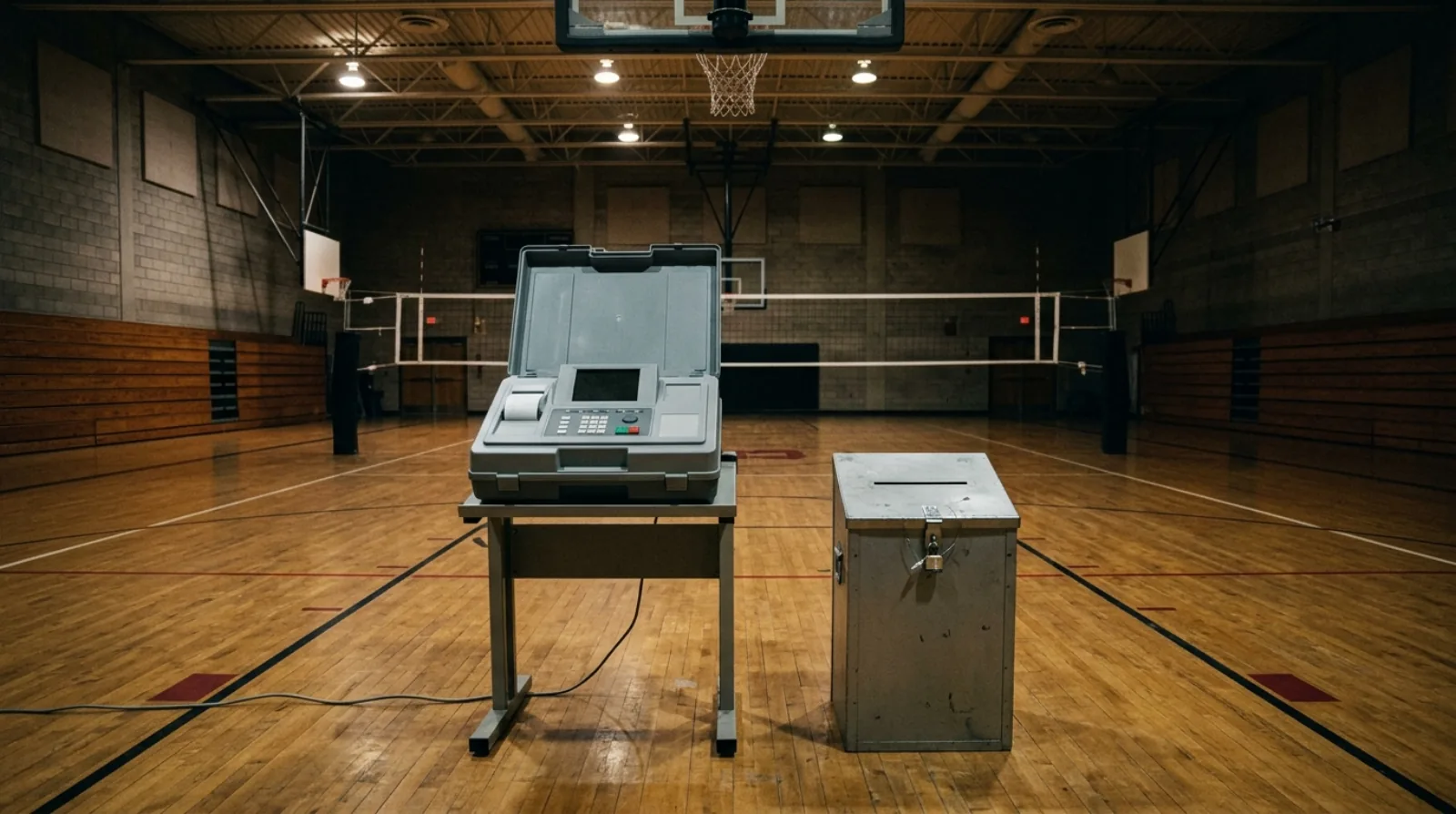
A Vancouver election is run by one office and policed by several. The City runs the vote. Elections BC, the agency that runs provincial elections, enforces the rules on campaign money and advertising. Two courts decide recounts and challenges. The province's Ministry of Housing and Municipal Affairs answers questions about the law itself.
Elections BC's Who Does What page describes the split in two sentences: "Each local government is responsible for running its own local elections, including voting, counting, reporting results, and accepting candidate nominations." And: "Elections BC is responsible for administering the campaign financing and election advertising rules."
The City's chief election officer
Section 14(1) of the Vancouver Charter says: "the City Clerk is to be the chief election officer unless the Council appoints another person."
That officer appoints the staff. Section 14(3) requires the chief election officer to appoint a deputy, a presiding election official to run each voting place, alternates, and the staff who assist them. Section 14(5) allows police officers to be appointed as election officials to help keep order.
Before starting, every election official makes a solemn declaration, a formal sworn promise, to act "faithfully and impartially" and to keep the ballot secret (section 14(8)). Section 14(7) bars candidates, their representatives and their financial agents from the job.
Section 15 lists the officer's core duties:
- prepare enough ballots,
- give each voting place enough ballots, ballot boxes, voting books and a private area to mark a ballot,
- take "all reasonable precautions" so that nobody votes more than once, and
- do everything else the election law and the City's election by-law require.
The province's 2026 Candidate's Guide to Local Elections adds the rest of the list: taking nominations, declaring who the candidates are, designing the ballot, setting up voting, counting the votes and declaring the results.
Presiding election officials
Each voting place has a presiding election official in charge. Section 16 of the Charter makes that official responsible for following the election rules "so far as possible" and for keeping the ballots and ballot boxes secure.
Section 19 gives the same official the duty to keep "peace and order". The official can limit how many people are inside, order a person who is disturbing the vote to leave, and call on police for help. Our guide to the rules at voting places covers this in more detail.
Elections BC
Elections BC administers the Local Elections Campaign Financing Act (LECFA). The province's Candidate's Guide lists its local election tasks. It registers elector organizations (local political parties) and third party sponsors, the people and groups outside the campaigns who pay for ads. It investigates advertising that breaks the rules, and it enforces contribution limits and expense limits.
Its limits are narrow. Elections BC's FAQ says it "can only accept complaints related to campaign financing and election advertising." Its complaints page asks for these in writing, by email, with the facts, the dates and the section of the law you think was broken.
Elections BC also keeps the provincial list of voters. Section 32 of the Charter lets Council adopt that list as the city's register of voters. Elections BC's 2026 calendar set August 18 as the last day to register with it for this election, and noted that voters could still register with their local government. The Who Does What page sends questions about voters lists for candidates to the local government.
The dollar limits themselves are in our guide to donations and spending limits.
Police and prosecutors
The Candidate's Guide says the police investigate serious election offences such as vote buying and intimidation, and recommend charges to Crown counsel, the government's prosecutors. Crown counsel decides whether to prosecute. A prosecution under LECFA can start only with the approval of the BC Chief Electoral Officer, the head of Elections BC, according to the same guide.
The courts
Two courts have separate jobs.
The Provincial Court handles judicial recounts under section 110 of the Charter. The deadlines and grounds are in our guide to how the vote is counted. For 2026, the window to apply closed today, October 26, and any recount must be finished by October 30.
The BC Supreme Court hears challenges to the election itself. Section 115 says the right of a winner to take office, or the validity of an election, can be challenged only by an application under that section. It sets these rules:
- Who may apply: a candidate, the chief election officer, or at least 4 voters.
- Deadline: 30 days after the official results are declared. If the results were declared on the last allowed day, October 21, the deadline is November 20.
- Grounds: a winner was not qualified to hold office; the election was not run according to the law; or there was vote buying, intimidation or voting by someone not entitled.
The court must set a hearing date between 10 and 21 days after the petition is filed. Section 117(3) says an election must not be declared invalid only because of an irregularity, if it was run in good faith and the error did not materially affect the result.
The court's options, under section 117, are to confirm the election, declare an office vacant, or declare another candidate elected. While a case is under way, section 119 lets the person declared elected take office and act in it, unless the court rules otherwise.
The province's minister
Section 127 gives the provincial minister one more power. If special circumstances, an irregularity or a procedural error require it, the minister may make an order to fix it, including a new date in place of one set by law.
After the vote: who does what, and when
| When | Who | What |
|---|---|---|
| Before 4pm, October 21 | Chief election officer | Declares the official results (section 108) |
| Until October 26 | Provincial Court | Receives applications for a judicial recount |
| From the declaration to 30 days after | City Hall | Voting books and related records open for public inspection (section 122(3)) |
| Within 30 days of the declaration | Chief election officer | Reports the results to Council (section 120) |
| Within 30 days of the declaration | BC Supreme Court | Last day to file a challenge (section 115) |
| After 8 weeks from the declaration | City | Destroys the ballots, unless a court orders otherwise (section 122(6)) |
| January 15, 2027 | Elections BC | Deadline for campaign disclosure statements |
| February 16, 2027 | Elections BC | Late filing deadline, with a $500 fee |
Section 122(2)(b) requires the City Clerk to keep the nomination documents for 5 years after voting day. Section 121 adds one last step: within 30 days after the winners take office, the City Clerk must send their names to the Gazette for publication.
Who to contact
- Voting, counting, results and signs: the City of Vancouver's election office.
- Donations, spending and ads: Elections BC, 1-800-661-8683.
- Vote buying or intimidation: the police, and the chief election officer.
- Questions about the law itself: the Ministry of Housing and Municipal Affairs.
More answers are on our FAQ page.
The Vancouver Charter, the Local Elections Campaign Financing Act and the bodies named in them are the final word on these roles. If anything here disagrees with their published text, theirs is correct.
Questions this story answers
Who is the chief election officer for a Vancouver election?
Section 14(1) of the Vancouver Charter says the City Clerk is the chief election officer unless Council appoints another person. The chief election officer appoints a deputy, the presiding election officials for each voting place and the other election officials needed to run the election.
What does Vancouver's chief election officer do?
Under sections 14 and 15 of the Vancouver Charter, the chief election officer appoints election officials, makes sure every voting place has ballots, ballot boxes and a private voting screen, takes steps to stop anyone voting twice, and declares the official results. The province's 2026 candidate guide adds nominations and ballot design.
Does Elections BC run the Vancouver election?
No. Elections BC's Who Does What page says each local government runs its own election, including voting, counting, results and nominations. Elections BC administers the campaign financing and election advertising rules in the Local Elections Campaign Financing Act for all local elections, Vancouver included.
Who do I complain to about a Vancouver election?
Elections BC says it can only accept complaints about campaign financing and election advertising, made in writing by email. Other complaints go to the City of Vancouver's election office. The province's voter's guide says to contact the police about offences such as vote buying or intimidation.
Who handles a recount in a Vancouver election?
The chief election officer may recount ballots before declaring the official results, under section 107 of the Vancouver Charter. After that, a judicial recount is decided by the Provincial Court under section 110. For 2026, the last day to apply is Monday, October 26, 2026.
Can a Vancouver election result be challenged in court?
Yes. Section 115 of the Vancouver Charter lets a candidate, the chief election officer or at least 4 voters apply to the BC Supreme Court within 30 days after the official results are declared. The grounds are an unqualified winner, an election not run according to law, or vote buying, intimidation or voting by someone not entitled.
Can a court overturn a Vancouver election for a small mistake?
Section 117(3) of the Vancouver Charter says the court must not declare an election invalid only because of an irregularity, if it finds the election was run in good faith and the irregularity did not materially affect the result. The court can confirm the election, declare an office vacant, or declare another candidate elected.
When do Vancouver candidates file their campaign finance reports?
Elections BC's 2026 key dates list January 15, 2027 as the deadline to file campaign financing disclosure statements with Elections BC. A late filing is accepted until February 16, 2027, with a $500 late filing fee. Elections BC reviews and publishes the statements.
Can the public inspect Vancouver election records?
Section 122(3) of the Vancouver Charter makes the voting books, voters lists used at voting places and related records available for public inspection at City Hall for 30 days after the official results are declared. A person must sign a statement first, and may not take a copy. Ballots themselves cannot be inspected.
What happens to Vancouver ballots after the election?
Section 122(6) of the Vancouver Charter says the ballots, the voting books and the related declarations must be destroyed as soon as practicable after 8 weeks from the official declaration of results. A court order, or a court challenge under section 115 that is still open, stops the destruction.
Sources
The pages this story draws on. Open one to check a claim yourself.
- Vancouver Charter, Part I: sections 14 to 19, 32, 107 to 122 and 127bclaws.gov.bc.ca
- Elections BC, Who Does What (local elections)elections.bc.ca
- Elections BC, 2026 General Local Elections key dateselections.bc.ca
- Elections BC, Local elections FAQselections.bc.ca
- Elections BC, How to make a complaintelections.bc.ca
- BC Ministry of Housing and Municipal Affairs, Candidate's Guide to Local Elections in B.C. 2026www2.gov.bc.ca
Found an error? Tell the editors with the corrections form. A correction is noted on the story it changes. Read our standards.
Topics
More from voche.me