Environment Canada issues coastal flooding statement for Metro Vancouver, highest risk Monday
A low-pressure system moving into the region may push coastal water levels above the highest astronomical tide near noon Monday, November 30, Environment Canada says.
Original. voche.me wrote this from the first source: the votes, the minutes, an official notice or document, or the page of the group that published it. Every source is linked under the story. Read the original report on weather.gc.ca.
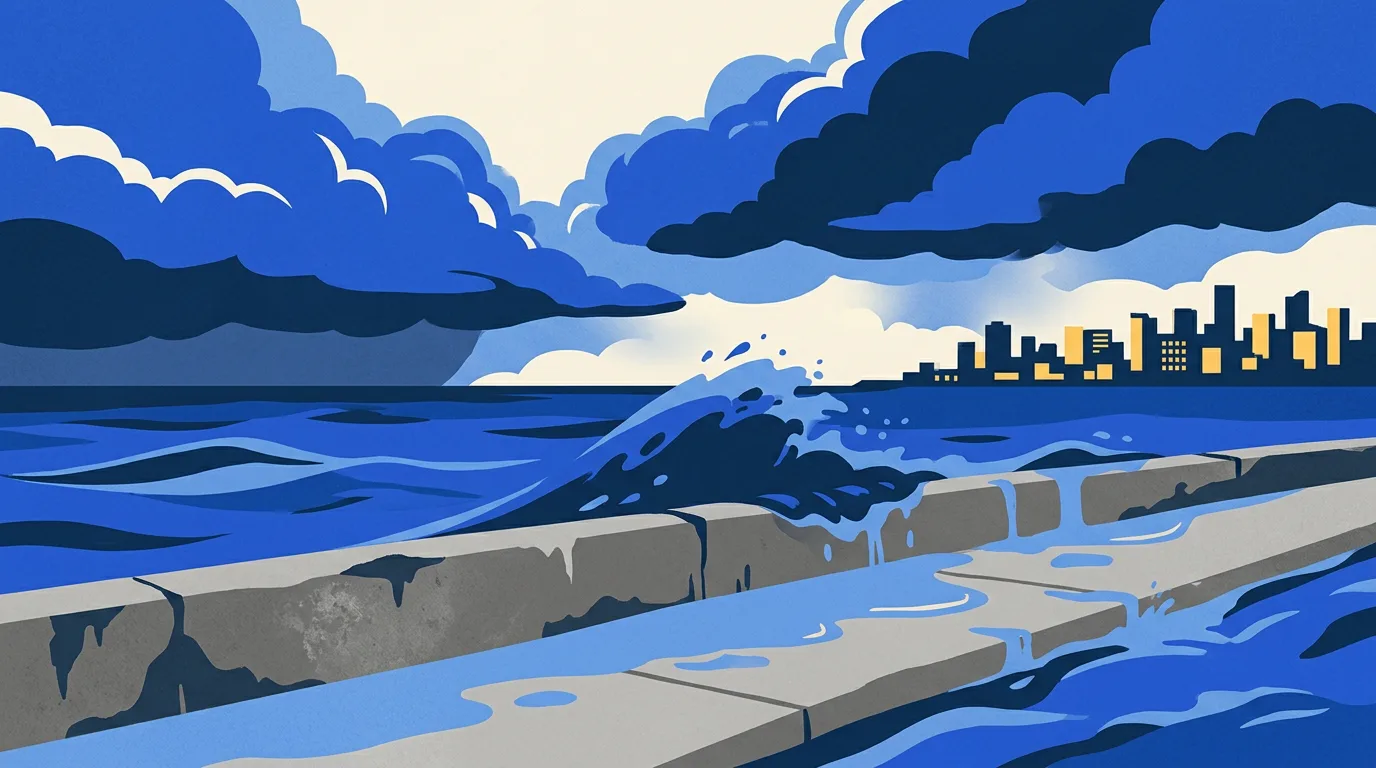
Environment Canada issued a Coastal Flooding Statement at 5:18 PM on Saturday, November 28, 2026 for the coastline of Metro Vancouver, including Vancouver and Musqueam First Nation. The statement covers Sunday through Tuesday, November 29 to December 1, as a low-pressure system approaches the region.
What the statement says
The statement says higher than normal water levels are possible along the Metro Vancouver coastline. Environment Canada warns that coastal waters may exceed the highest astronomical tide during the noon high tides, with Monday, November 30 as the most likely day for the highest water levels.
A coastal flooding statement is issued when conditions may lead to elevated water levels along the shore. It is below a watch or warning, but signals that residents near the water should monitor for updates.
What to watch on Monday
Monday's noon high tide carries the greatest risk in this event. If the low-pressure system tracks close to the coast as forecast, water levels along Vancouver's shoreline could exceed the highest normal tide mark. Areas near the sea wall, beaches, and low-lying land along the waterfront may see water where it is not usually present.
The forecast for Monday shows rain throughout the day, with a high of 10 degrees Celsius. Rain continues Tuesday before conditions ease mid-week.
What residents can do
Residents near the water should check Environment Canada's alert page at weather.gc.ca before Monday's noon tide and again Sunday evening. If the statement is upgraded to a watch or warning, the page will reflect that change.
Anyone who sees severe weather conditions can report them to Environment Canada through the contact information on their alert page, or on social media with the tag #BCStorm.
The statement covers the stretch from Sunday evening through Tuesday, December 1. Environment Canada will update or lift the statement as the low-pressure system's track becomes clearer.
Questions this story answers
What is the coastal flooding statement for Metro Vancouver?
Environment Canada issued a Coastal Flooding Statement at 5:18 PM on Saturday, November 28, 2026. It covers the coastline of Metro Vancouver, including Vancouver and Musqueam First Nation. The statement says higher than normal water levels are expected from Sunday through Tuesday, November 29 to December 1, 2026, as a low-pressure system moves into the region.
Which day has the highest flooding risk?
Monday, November 30, 2026, is the highest-risk day according to Environment Canada. The statement says coastal waters may exceed the highest astronomical tide during the high tides near noon on Monday. This means water levels along the Metro Vancouver coastline could be above the normal maximum on that day.
What areas of Vancouver are affected by the coastal flooding statement?
The statement covers the coastline of Metro Vancouver, including Vancouver and Musqueam First Nation. Residents and businesses located near the water, including areas along the sea wall, beaches, and low-lying coastal zones, should be aware of the elevated water level risk during the Sunday to Tuesday period.
What should residents near the water do during this coastal flooding statement?
Environment Canada asks residents to continue monitoring alerts and forecasts at weather.gc.ca. If you are near the shoreline during high tide on Monday around noon, be aware that water levels may be higher than usual. The statement may be upgraded to a warning if conditions worsen, so checking for updates on Sunday morning and Monday morning is recommended.
What is the difference between a coastal flooding statement and a warning?
A statement from Environment Canada means conditions are possible but not yet confirmed. It is a step below a watch and a warning, used to alert people to monitor the situation. If Environment Canada determines flooding is more certain, they will upgrade to a coastal flooding watch or warning. The current statement was issued because a low-pressure system is approaching and the conditions could lead to coastal flooding.
What is a low-pressure system and why does it cause coastal flooding?
A low-pressure system is an area where atmospheric pressure is lower than the air around it, which is associated with storm conditions, rain, and wind. When a low-pressure system moves over coastal water, the lower air pressure allows the sea surface to rise, which can combine with high tides to push water levels higher than normal. This is what Environment Canada is warning about for Monday's noon tides.
How can residents report severe weather in Vancouver?
Environment Canada asks residents who observe severe weather to send a report through the contact details on their alert page or to post on social media with the tag #BCStorm. Reports from people on the ground help meteorologists understand how conditions are developing, which can inform whether the statement is upgraded to a watch or a warning before Monday's noon tide.
What is the weather forecast for the rest of the week in Vancouver?
Environment Canada's forecast for Vancouver shows rain Sunday night, rain on Monday and Tuesday, cloudy on Wednesday, and a 60 percent chance of showers Thursday, with a mix of sun and cloud returning on Friday. High temperatures stay in the 7 to 10 degrees Celsius range through the week.
Sources
The pages this story draws on. Open one to check a claim yourself.
- Environment Canada weather forecast and alerts for Vancouverweather.gc.ca
- Environment Canada alert reporting — BCstormweather.gc.ca
Found an error? Tell the editors with the corrections form. A correction is noted on the story it changes. Read our standards.