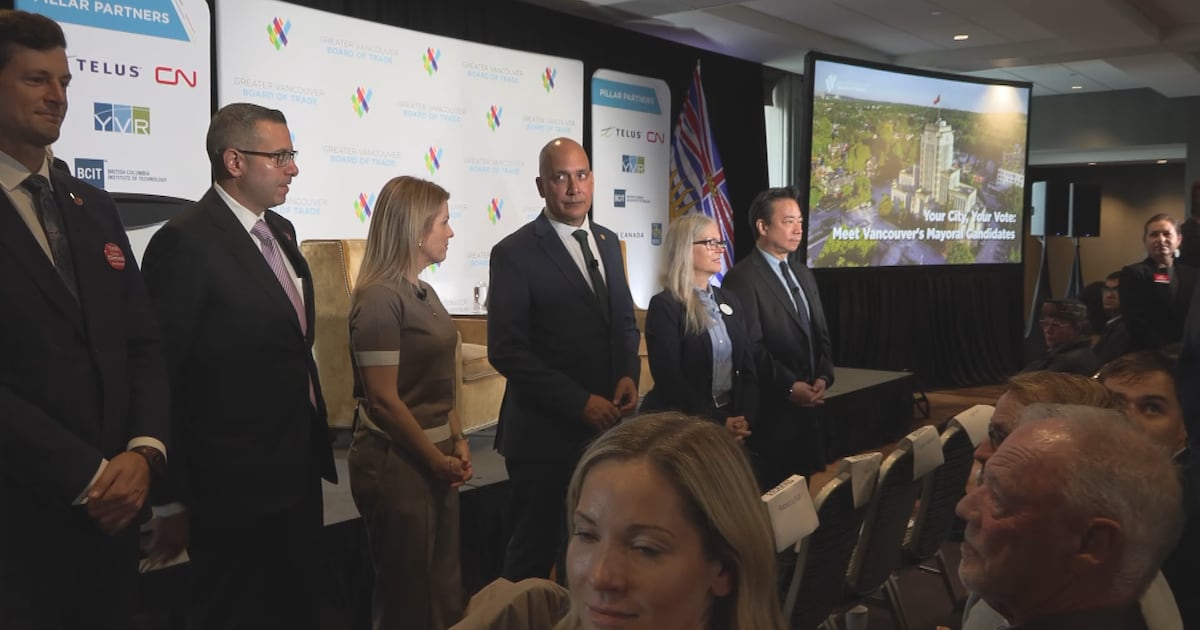
Coalition urges Vancouver mayoral candidates to commit to viaduct removal
A group of businesses and residents is pressing the next city council to follow through on a 2015 decision to tear down the Georgia and Dunsmuir viaducts and redevelop the surrounding land.
Reported. A news outlet found this. voche.me names the outlet and links its report. Read the original report on cbc.ca.

A coalition of businesses and residents near downtown Vancouver is using the October 17 election to push the next city council to act on a plan to tear down the Georgia and Dunsmuir viaducts, CBC News reported on September 29, 2026. The coalition includes the Hastings Crossing Business Improvement Association and the Hogan's Alley Society.
City council voted in 2015 to remove the two viaducts. Three years later, it approved the Northeast False Creek plan to build social and market housing and a large park on the land the viaducts occupy. The city estimated the plan would cost $1.73 billion in 2018. In a written statement to CBC, the city said costs have risen since then and that the plan depends on revenue from private condo development in the area, which has not moved forward.
The viaducts were built in the 1970s as part of a freeway plan that the city later cancelled. CBC News reported they carry about 40,000 vehicles per day and are seismically unsound.
Landon Hoyt, executive director of the Hastings Crossing Business Improvement Association, told CBC that the delay is frustrating and that cost is the central reason to move now. "The longer we wait, the more expensive it's going to be," he said. Petros Kusmu, a board member with the Hogan's Alley Society, said developing the area is an opportunity to benefit the historic Black, Indigenous and Chinese communities near Hogan's Alley, and that both provincial and federal governments are open to partnering on housing development there.
What two mayoral candidates say
Pete Fry, the Green Party of Vancouver's candidate for mayor, told CBC he is committed to the removal. He said the financial picture has changed since the plan was approved and a new model is needed for who pays and in what stages. "There's a lot of variables, but certainly I'm committed to making sure that this happens," he told CBC.
Kareem Allam, the Vancouver Liberals' candidate for mayor, said the Northeast False Creek plan can move forward but must be re-costed first, because construction costs have risen over the past decade. He told CBC the city could look to a provincial disaster-mitigation fund or federal seismic and disaster programs to help cover the gap.
CBC News reported it sought responses from the ABC Vancouver, TEAM for a Livable Vancouver, and VOTE Vancouver mayoral candidates and did not receive one by its deadline. The city said no one was available for an interview and provided its written statement instead.
Voters can read the profiles of both candidates quoted here at /candidates/pete-fry and /candidates/kareem-allam. Information on where and when to vote on October 17 is at /where-to-vote.
Questions this story answers
Why have the Georgia and Dunsmuir viaducts not been removed yet?
Vancouver city council voted in 2015 to remove the Georgia and Dunsmuir viaducts and approved the Northeast False Creek plan in 2018 to redevelop the land. The city said in a statement to CBC News that the plan depends on revenue from condo development on land owned by multiple private parties in the area. When the condo market slowed, that development did not move forward, which cut off the funding the city was counting on. At the same time, the cost of construction has risen. The city put the plan's total cost at $1.73 billion in 2018 and says costs have risen further since then. The structures were built in the 1970s and serve about 40,000 vehicles per day. They are seismically unsound, according to CBC News.
What does Pete Fry say about the viaducts?
Pete Fry, the Green Party of Vancouver's candidate for mayor, told CBC News on September 29, 2026 that he is committed to the viaduct removal. He said a new financial model will be needed to identify who pays, how, and in what stages, because the financial picture has changed since the Northeast False Creek plan was first approved. His words to CBC were: 'There's a lot of variables, but certainly I'm committed to making sure that this happens. We have to come up with a new financial model, with who's going to pay for this, and how, and what the phasing and staging would look like.' You can read his full candidate profile at /candidates/pete-fry.
What does Kareem Allam say about the viaducts?
Kareem Allam, the Vancouver Liberals' candidate for mayor, told CBC News on September 29, 2026 that the Northeast False Creek plan can be saved but needs to be re-costed before the city can move. He said construction costs have risen in the ten years since the plan was approved. He suggested the city could apply to a provincial disaster-mitigation fund or federal programs for seismic and disaster funding to help cover the gap. His full candidate profile is at /candidates/kareem-allam.
Which mayoral candidates did not respond to CBC's questions about the viaducts?
CBC News reported that it sought comment from the ABC Vancouver, TEAM for a Livable Vancouver, and VOTE Vancouver mayoral candidates and did not receive a response by its deadline on September 29, 2026. The report did not say whether those campaigns responded after the deadline. The city said no one was available for an interview but provided a written statement.
What is the Northeast False Creek plan?
The Northeast False Creek plan is a city plan approved in 2018 to remake the land that would be freed up by removing the Georgia and Dunsmuir viaducts. The plan calls for new social and market housing, a large park, and other public space in the area near the downtown core. The city put the estimated cost at $1.73 billion in 2018. That estimate has not been updated publicly since then. The plan has not moved forward because the development funding the city counted on has not been generated.
Who is pushing for the viaducts to become an election issue?
A coalition of businesses and residents near the viaduct area is calling on mayoral candidates to commit to removal. Landon Hoyt, executive director of the Hastings Crossing Business Improvement Association, told CBC News that it is frustrating to have the plan sitting unused for over ten years. Petros Kusmu, a board member with the Hogan's Alley Society, said developing the area would benefit the historic Black, Indigenous and Chinese communities connected to the Hogan's Alley neighbourhood. Kusmu said both provincial and federal governments are currently open to partnering on housing development in the area.
Are the viaducts safe to use?
CBC News reported on September 29, 2026 that the Georgia and Dunsmuir viaducts are seismically unsound. They were built in the 1970s as part of a freeway plan that was later cancelled. They carry about 40,000 vehicles per day, according to CBC News. The city's position, as stated in its written statement to CBC, is that removing them depends on generating funding through redevelopment of the surrounding land.
How can voters find out more before the October 17 election?
The Vancouver civic election takes place on October 17, 2026. Candidate profiles for the two mayoral candidates quoted in this story are at /candidates/pete-fry and /candidates/kareem-allam. Party pages are at /parties/green-party-of-vancouver and /parties/vancouver-liberals. Information on where and when to vote is at /where-to-vote.
Sources
The pages this story draws on. Open one to check a claim yourself.
Found an error? Tell the editors with the corrections form. A correction is noted on the story it changes. Read our standards.