Three Vancouver candidates describe online harassment targeting their race, religion and gender
Kareem Allam, Andy Lin and Iona Bonamis (陶思穎) spoke to The Tyee about hateful comments they have received on social media during the 2026 Vancouver municipal election campaign.
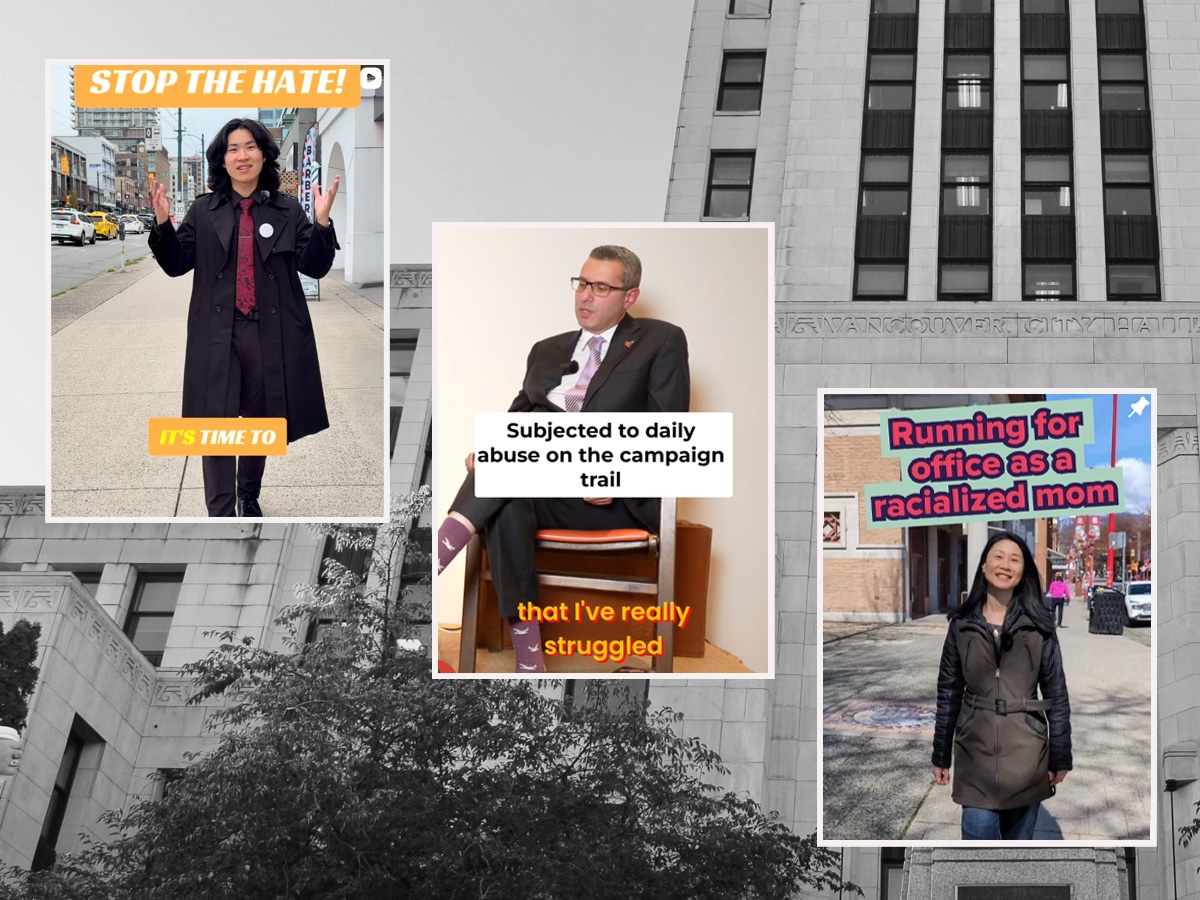
Three Vancouver 2026 municipal candidates described receiving hateful comments on social media targeting their race, religion and gender, in a reported article published by The Tyee on September 24. Kareem Allam, running for mayor with the Vancouver Liberals, told The Tyee the level of Islamophobic and racist comments had gone beyond anything he had seen in years of political campaigning. Andy Lin and Iona Bonamis (陶思穎) each described their own experiences and how they have responded.
What Allam described
Allam has worked on campaigns for current Mayor Ken Sim, former Surrey mayor Dianne Watts and former BC United leader Kevin Falcon, and told The Tyee he thought that experience had prepared him. He said the harassment intensified after high-profile Muslim American candidates won races in the United States and after he did a campaign interview with a Vancouver-based Muslim non-profit foundation. He said the comments included racist slurs and had affected his sense of belonging. "It had a much more profound impact on me and my sense of belonging, of my standing in my community, my own sense of self-perception and agency," The Tyee quoted him as saying. He told The Tyee that Vancouver Liberals candidates, including two new mothers, had also received harassment about their appearance, gender, religion and race.
Lin's and Bonamis's responses
Lin, running for City Council with Bright Future Vancouver, told The Tyee he responds directly to hateful comments. He made a social media video calling on people to stop the hate and focus on election issues, and said responses bring more people to his posts about Bright Future Vancouver's platform. Bonamis, running for City Council with OneCity and whose ancestry is Chinese, told The Tyee she ignores hateful comments for the sake of her mental health. She said racist comments increased after she filed a court challenge to have her name appear in both English and Chinese characters on the ballot. Shortly before her interview, she found out the challenge had succeeded.
What research has found
The Tyee cited a 2020 research paper from the University of British Columbia's Centre for the Study of Democratic Institutions, which looked at tweets sent to federal candidates during the 2019 federal election. The paper found that 40 per cent of those messages were uncivil and 16 per cent were abusive. The researchers described online harassment as having a chilling effect on participation, making women and racialized people more likely to censor themselves online out of fear. All three candidates told The Tyee that the harassment they face discourages others from running for office.
What a voter can do
The Vancouver municipal election is on October 17. If how candidates are treated during this campaign matters to you as a voter, the party pages and candidate profiles on this site list who is running for each office and what they stand for. Candidate profiles are at /nominations, and voting-day places and hours are at /where-to-vote.
Questions this profile answers
What did Kareem Allam say about the harassment he received?
Kareem Allam told The Tyee that the volume of hateful comments aimed at him for being Muslim and for having parents from Sudan and Egypt went beyond anything he had seen in years of political work. He has helped candidates including current Vancouver Mayor Ken Sim, former Surrey mayor Dianne Watts and former BC United leader Kevin Falcon win elections, and said he thought that experience had prepared him. He said the harassment intensified after high-profile Muslim American candidates won races in the United States and after he did a campaign interview with a Vancouver-based Muslim non-profit foundation. He told The Tyee the comments included racist slurs and had affected his sense of belonging and self-perception.
What did Andy Lin say about how he handles harassment?
Andy Lin told The Tyee he responds directly to hateful comments rather than ignoring them, and that he made a social media video calling on people to stop the hate and focus on the election issues. He said harassment about his appearance, gender and sexuality was something he had prepared for, and added that people being insulted for physical attributes rather than their policies is a sign they are on the right track. He said the attention from people replying to hateful comments also brings more traffic to his posts about Bright Future Vancouver's platform. Lin is running for Vancouver City Council with Bright Future Vancouver.
What happened in Iona Bonamis's court challenge?
Iona Bonamis and six other candidates filed a court challenge asking to have their names appear in both English and Chinese characters on the Vancouver ballot. The Tyee reported that a similar challenge was heard by B.C. courts during the 2022 election. Shortly before her interview with The Tyee, Bonamis found out she and the other candidates had won the case. She said racist comments on her social media posts had increased after she announced the challenge. She is running for Vancouver City Council with OneCity. The ballot name challenge is separate from the October 17 election itself; voters cast ballots on October 17 regardless of the outcome.
What does the UBC research say about online harassment of candidates?
A 2020 research paper from the University of British Columbia's Centre for the Study of Democratic Institutions, which The Tyee cited, studied tweets sent to federal candidates during the 2019 federal election and found that 40 per cent of those messages were uncivil and 16 per cent were abusive. High-profile candidates, including party leaders, received most of the abusive messages. The paper found online harassment can reduce people's willingness to express political views, which the researchers described as a chilling effect on democratic participation. Women and racialized people were found to be more likely to censor themselves online out of fear of harassment.
Was Ken Sim's situation part of this story?
The Tyee noted that Vancouver's integrity commissioner found Mayor Ken Sim had harassed COPE councillor Sean Orr on two occasions in 2025, and that ABC councillors, who form the majority on city council, refused to sanction Sim. The Tyee also reported that Sim is currently facing a separate lawsuit from Orr related to a February incident in which Sim and ABC Coun. Lenny Zhou told Chinese-language media that Orr had been photographed distributing illegal drugs, a claim Orr said is false. Both Sim and Zhou eventually apologized and said they had received misinformation, according to The Tyee. These are allegations and a civil lawsuit at this stage; no court or regulator has made a final ruling on them.
Does Muhammad Ahmad face harassment?
Kareem Allam told The Tyee he has also seen Islamophobic and racist comments on campaign videos for Muhammad Ahmad, who is also Muslim and running for Vancouver mayor with Bright Future Vancouver. The Tyee reported this as Allam's observation. Muhammad Ahmad is one of eight candidates running for mayor on October 17, 2026. His candidate profile on voche.me lists his campaign details.
Do all three candidates agree on what should change?
Kareem Allam, Andy Lin and Iona Bonamis all told The Tyee that online harassment discourages people from running for office, which limits the range of voices in elected government. The Tyee noted that their city is growing more diverse and that having diverse candidates matters for representation. The three candidates offered different personal strategies: Allam spoke about the emotional impact; Lin described engaging directly with abusive comments; Bonamis said she ignores them for the sake of her mental health. The 2020 UBC paper The Tyee cited recommends changes to social media platform policies and to the way political parties support candidates facing harassment.
When is voting day and where can I find out how to vote?
Voting day for the Vancouver 2026 municipal election is October 17. Advance voting places, voting-day locations, hours, and rules for voting by mail are listed on the City of Vancouver's election page and on voche.me's where-to-vote page at /where-to-vote. If the experiences these candidates described influence how you think about who to vote for, the candidate profiles on voche.me list each candidate's party, office they are running for, and campaign details.
Sources
- The Tyee: Harassment and Hate on the Municipal Campaign Trail (Katie Hyslop, 24 September 2026)
- voche.me: Where to vote
- voche.me: Candidate profiles