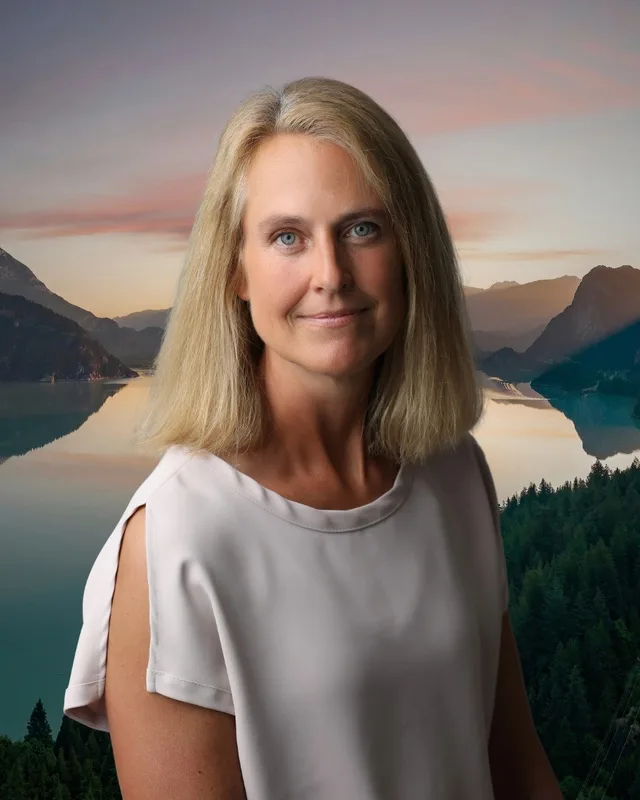
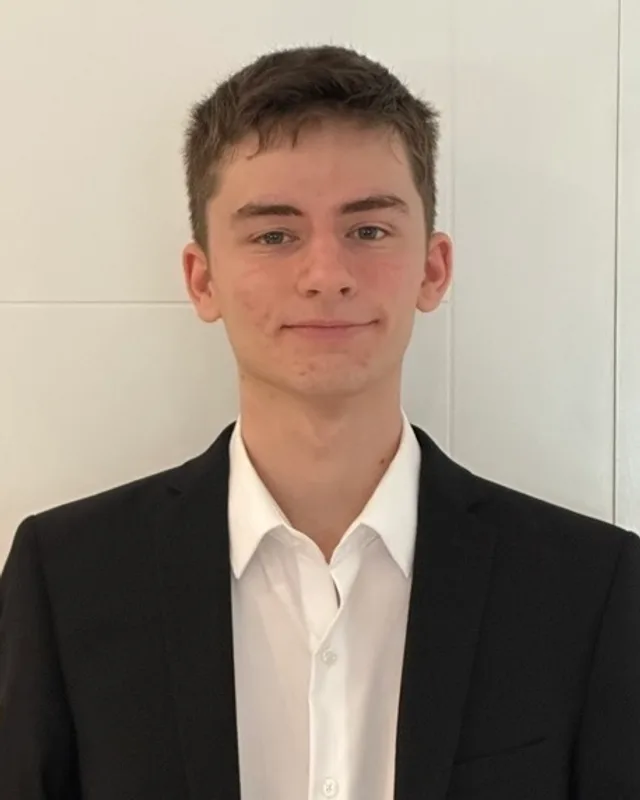
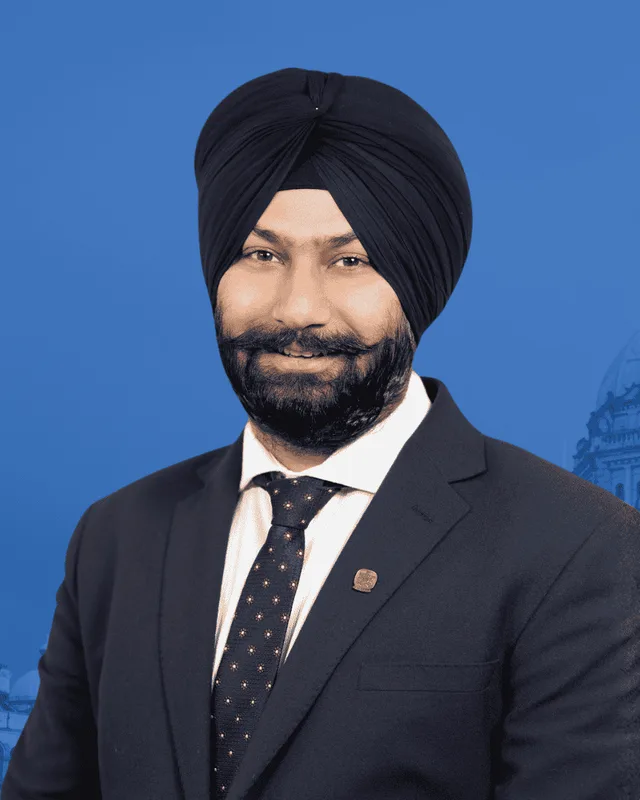
Kelowna-Lake Country-Coldstream. 4 candidates, one seat.
This district elects one MLA. Voters mark one name on Saturday, October 24, 2026, and the candidate with the most votes wins the seat.
Kelowna-Lake Country-Coldstream is a provincial electoral district in the Okanagan Valley, north of downtown Kelowna and south of Vernon. It takes in the District of Lake Country, the District of Coldstream, Winfield, part of Rutland and Kelowna International Airport. The 2021 census counted 58,705 people, and the Electoral Boundaries Commission gives its area as 2,227 square kilometres.
Kelowna-Lake Country-Coldstream lies in the Okanagan Valley, between the northern edge of Kelowna and the City of Vernon. The Electoral Boundaries Commission's 2023 final report says it includes the Districts of Coldstream and Lake Country and the part of Kelowna outside downtown that lies north of Highway 33, with the neighbourhood of Winfield, part of Rutland and Kelowna International Airport. The report says its eastern boundary follows the border of Electoral Area D of the Regional District of Central Okanagan. The commission counts 58,671 people in the district, a deviation of 9.1% from the average district population, and gives its area as 2,227 square kilometres.
On the lake side, the commission placed the boundary with Kelowna Centre at McKinley Road, following a natural area into Okanagan Lake. It moved the line there after learning that a development was planned for McKinley Landing Ridge.
Water shapes the district. BC Geographical Names places Winfield at the south end of Wood Lake on the east side of Okanagan Lake, and Oyama at the north end of Wood Lake, on the Canadian Pacific and Canadian National railways. Kalamalka Lake lies north of Wood Lake, and a channel dug in 1908 connects the two. Highways 97 and 33 appear on the commission's map of the district. The City of Kelowna says the Okanagan Rail Trail, a path on a former rail line, will span 49.5 kilometres from Coldstream to downtown Kelowna once it is complete.
The Okanagan Nation Alliance lists the Okanagan Indian Band among its member communities. It places the Band at the head of Okanagan Lake, with reserves spread from Armstrong to Winfield and on the west side of Okanagan Lake, and it gives the Band's land base as 11,282.5 hectares. The Band's own website calls it the Okanagan Indian Band, abbreviated OKIB, located at the head of Okanagan Lake in Vernon, and says that most members who live on reserve live on Indian Reserve 1 at Vernon.
Syilx names for this land are recorded in two places. The Lake Country Museum and Archives quotes a 1958 book by the Winfield Women's Institute, which says the Syilx called the flat land at Winfield K'Laokum, meaning the open flat, and called Wood Lake Pelme-wash. BC Geographical Names records the traditional name of the two lakes now called Kalamalka Lake and Wood Lake as Chelootsoos, which means long lake cut in the middle.
Disease reached the valley before most settlers did. The Vernon Museum says the Syilx people near the north end of Okanagan Lake had dwindled in number after a smallpox epidemic in 1862, and that the land offered in military settlers' free grants had been pre-empted from the area's Syilx inhabitants. The Lake Country Museum says it is estimated that a smallpox pandemic in the 1860s killed one third of the Indigenous population of British Columbia.
Ranches, post offices and place names, 1863 to 1920
Charles F. Houghton, Forbes George Vernon and Charles Albert Vernon reached Victoria in 1863. The Vernon Museum says military settlers of captain's rank or higher could apply for a free grant of 1,450 acres. A magistrate sent the three men to the north end of Okanagan Lake, and Houghton chose a valley with a good-sized stream of pure water, which he named Coldstream. BC Geographical Names records that the property passed to the Vernon brothers in 1869 and that Trutch's 1871 map of British Columbia shows the stream as Houghton's Coldstream.
South of there, Thomas Wood registered a pre-emption of 320 acres on 14 April 1871 at the south end of the lake that now carries his name, and called his ranch Winfield. The Lake Country Museum says he sold his interest in the O'Keefe Ranch and bought the first 160 acres of what became 3,800 acres, and that the Postill family began with 300 acres that grew to 5,000. BC Geographical Names says Price Ellison, who came from Manchester in 1876, raised stock and grew wheat near the present Ellison and at one time owned or controlled 80% of the property in the area.
Post offices set many of the names. BC Geographical Names records that the Oyama post office opened on 1 May 1906, named for Prince Iwao Oyama (1842 to 1916), a Japanese field marshal who commanded in Manchuria in the Russo-Japanese War, and that Okanagan Centre's opened on 1 November 1907 under J. D. Kearns. Winfield's first post office, Alvaston, opened on 1 October 1909 and closed on 1 April 1919. The Lake Country Museum says that in 1920 a public meeting chose Winfield over Woodsdale, after several ballots, as the name for the district. The same office dates Andrew Carr's settlement at Carr's Landing to c1895 and his death to c1910.
Railway, lake boats and packinghouses, 1892 to 1935
The Lake Country Museum says the Shuswap and Okanagan Railway reached Okanagan Landing in 1892, linking the valley by boat and rail to the Canadian Pacific main line at Sicamous. Orchards followed. The Rainbow Ranche stood close to Okanagan Centre. Frank Hewer, an early owner and manager, kept its farm diary in 1908, and James Goldie bought his share in 1909. The museum says its orchards and packinghouse employed one crew of Japanese orchardists under a Japanese foreman and one crew mostly of English immigrants under an English foreman, and that apples went by boat to Vernon.
A channel between Wood Lake and Kalamalka Lake opened on 3 September 1908. The museum says the City of Vernon, a boat that had run on Kalamalka Lake since April 1908, was the first through. The Vernon Fruit Union set up in Oyama in 1913, and the Sterling and Pitcairn plant was built beside the channel in 1914. Boats carried fruit north to the Canadian Pacific station at Vernon.
At Okanagan Centre the Okanagan Land Company began orchard development shortly before the First World War. In 1919 the Canadian Pacific Railway built a barge transfer slip there, so refrigerator cars from two new packinghouses could be loaded straight onto railway barges. In January 1935 the company began a passenger train service to Kelowna. The sternwheeler Sicamous was withdrawn as a passenger boat, and mail reached Okanagan Centre by truck from then on.
Coldstream Ranch and Kalamalka Lake Park, 1891 to 1986
The District of Coldstream was incorporated on 21 December 1906, and BC Geographical Names says W.C. Ricardo was its first reeve. Forbes George Vernon sold the Coldstream estate to Lord Aberdeen in 1891. The Canadian Encyclopedia says Aberdeen had large acreages of fruit trees and hops planted, that the estate had 732 acres of orchards by 1908, and that he subdivided part of the property into small parcels to encourage settlement. It adds that Coldstream Ranch Ltd still holds land, some of it under cultivation.
The Vernon Museum places the Cosens Bay area on the northeastern shore of Kalamalka Lake. It says Cornelius Cosens acquired land there in 1893, that the land later became part of the ranch, and that it was used mainly for cattle grazing and, during the Second World War, as a commando training site. Before it was a park, the ranch allowed the public onto Cosens Bay, Juniper Bay and Lonely Bay, now Jade Bay.
In 1972 Marathon Realty Co. Ltd. of Vancouver sought to buy and subdivide much of the ranch. The Cosens Bay Committee formed that year, chaired by Coldstream Alderman Peter Leahy. On 14 April 1975 Minister Bob Williams announced that the province would buy 2,274.74 acres for $1,975,000. Cabinet adopted the name Kalamalka Lake Park in September 1975, and the park officially opened in 1986. BC Parks describes it as bordering the District of Coldstream and says 432 varieties of vascular plants have been identified there.
BC Geographical Names records that the Ellison post office opened on 1 May 1912 under Thomas Clinton and closed on 15 May 1920. The Regional District of Central Okanagan's history lists an Ellison Heritage School Centre built in 1912, and Elections BC's 2024 results file lists the Ellison Heritage Comm Centre as a voting place inside this district.
BC Geographical Names says Rutland is named for John (Hope) Rutland, an Australian who arrived in the 1890s and farmed wheat there. In the 1900s he sold to a syndicate that subdivided the land and named the district after him. The Rutland post office opened on 1 October 1908 under D. E. McDonald.
The airport began with a vote. Kelowna International Airport says residents voted in 1946 to buy the 320-acre Dickson Ranch in Ellison for $20,000. The first flight departed from Ellison Field in fall 1947, and the terminal building opened in 1949 beside a 3,000-foot grass airstrip. Canadian Pacific Airlines began daily DC-3 service to Vancouver in 1958, and in 1960 the City paved the runway to 5,350 feet in a $312,000 project. By 1997 the airport handled more than 800,000 passengers a year.
Regional district areas, the 1973 city boundary and Lake Country, 1967 to 1995
The Regional District of Central Okanagan was incorporated by Letters Patent issued on 24 August 1967. Electoral Area A took in Winfield, Oyama and Okanagan Centre, and Electoral Area C took in Rutland, Belgo, Ellison and Joe Rich. Supplementary Letters Patent of 29 May 1969 divided Area C and created Area I, which took in Belgo, South Okanagan Mission, Ellison and Joe Rich.
The provincial government moved the City of Kelowna's boundary on 15 December 1973. The regional district's review says the new boundary took in Rutland, part of the Ellison District and the southern part of Area A, commonly called Winfield. Of greatest contention was how far north the line should run, and the review says the Rutland community was upset at being made part of the city.
Winfield, Oyama, Okanagan Centre and Carr's Landing, formerly Electoral Area A, formed the District of Lake Country in 1995. The district's website gives the date of incorporation as May 1995, and the regional district's review describes the four communities forming the district in February 1995. The review adds that the new district asked the province several times to move its southern boundary so that the Hiram Walker distillery plant would lie inside Lake Country. The boundary was never adjusted.
A college campus and a rail line become a university and a trail, 1993 to 2018
UBC Campus Planning says Okanagan College opened its new physical campus on the site in 1993. In 2004 the provincial ministry announced plans to create a University of British Columbia campus in the Okanagan by transferring Okanagan University College's North Kelowna campus. UBC acquired the campus in July 2005, and classes began in September 2005 with 3,500 students. The same month the Okanagan Nation Alliance officially welcomed UBC to Syilx territory in a ceremony. Elections BC's 2024 results file lists the UBCO Centre Ballroom as a voting place inside this district.
The City of Kelowna says the CN Rail line through the district was built to carry the valley's produce and lumber to markets across the country. The Kelowna Pacific Railway operated it, serving Coldstream, Lake Country, the Okanagan Indian Band and Kelowna, and it ceased rail service in July 2013 while in receivership. In September 2013 CN began the process of discontinuing the stretch from Lumby Junction in Coldstream to Kelowna.
Kelowna, Lake Country, the Regional District of North Okanagan and the province finalized the purchase of the corridor on 1 June 2015, at a negotiated cost that combined $22 million in money with a land donation, against an original asking price of $50 million. On the same day the BC Supreme Court denied the Okanagan Indian Band's injunction application to reclaim reserve lands, and the Band joined the planning team as an owner. The majority of the Okanagan Rail Trail opened officially on 27 September 2018, including the Kelowna section from Ellis Street to Old Vernon Road.
The name Kelowna-Lake Country-Coldstream first appears at the 2024 provincial general election. The Electoral Boundaries Commission wrote in its April 2023 final report that Coldstream and Greater Vernon are closely tied, but that their combined populations were too large for a single district. It wrote that it was important for all of Coldstream to be in one riding, and it proposed combining Coldstream with Kelowna-Lake Country and changing the name. Elections BC's conversion table matches the district's 81 voting areas to the 2017 to 2024 districts: 66 in Kelowna-Lake Country, 19 in Vernon-Monashee and 5 in Kelowna West.
Elections BC's volume for 1987 to 2001 lists John Weisbeck of the BC Liberal Party as the winner in Okanagan East in 1996, with 9,382 votes (38.37%). In 2001, after the Electoral Districts Act (SBC 1999 c. 31) raised the number of districts from 75 to 79, he won the new district of Kelowna-Lake Country with 14,093 votes (63.19%). Al Horning of the BC Liberal Party won it in 2005 with 12,247 votes (50.37%), and Norm Letnick of the same party won in 2009, 2013, 2017 and 2020. Letnick received 14,679 votes (55.73%) in 2020, against 7,121 (27.04%) for Justin Kulik of the BC NDP.
The 19 voting areas from Vernon-Monashee were in a district whose members were Eric Foster of the BC Liberal Party from 2009 to 2020 and Harwinder Sandhu of the BC NDP from 2020 to 2024. In 2020 Sandhu received 10,222 votes (36.56%) and Foster 9,798 (35.05%).
In 2024 Tara Armstrong of the Conservative Party won Kelowna-Lake Country-Coldstream with 14,303 votes (53.92%). Anna Warwick Sears of the BC NDP received 9,350 votes (35.25%), Kevin Kraft, an independent, 1,724 (6.5%), and Andrew Rose of the BC Green Party 1,151 (4.34%). Turnout was 58.25% of 45,598 registered voters. The legislature's member records list Armstrong as an Independent in the 43rd Parliament, from 2025.
Members for Kelowna-Lake Country, which covered 66 of this district’s 81 voting areas before 2024
Parliament
It sat
Member
Elected as
Party on the legislature’s record
42nd
2020 to 2024
Norm Letnick
BC Liberal Party
BC United
41st
2017 to 2020
Norm Letnick
BC Liberal Party
BC Liberal Party
40th
2013 to 2017
Norm Letnick
BC Liberal Party
BC Liberal Party
39th
2009 to 2013
Norm Letnick
BC Liberal Party
BC Liberal Party
38th
2005 to 2009
Al Horning
BC Liberal Party
BC Liberal Party
37th
2001 to 2005
John Weisbeck
BC Liberal Party
Members for Vernon-Monashee, which covered 19 of this district’s 81 voting areas before 2024
Parliament
It sat
Member
Elected as
Party on the legislature’s record
42nd
2020 to 2024
Harwinder Sandhu
BC NDP
BC NDP
41st
2017 to 2020
Eric Foster
BC Liberal Party
40th
2013 to 2017
Eric Foster
BC Liberal Party
39th
2009 to 2013
Eric Foster
BC Liberal Party
“Elected as” is the affiliation Elections BC printed with the winning result. The last column is the party the legislature’s records give for that parliament, which differs when a member changed party while in office. A row with that column empty is a winner Elections BC prints whom the legislature’s records leave out. Source: Legislative Assembly of British Columbia (opens in a new tab)
Boundaries since 2024
Kelowna-Lake Country-Coldstream has 81 voting areas. They overlap these districts from 2017 to 2024: Kelowna-Lake Country (66), Vernon-Monashee (19), Kelowna West (5).
The commission that drew the boundaries counted 58,671 people in the district, 9.1% above the average for a district, over 2,227 km².
Kelowna-Lake Country-Coldstream is a provincial electoral district in the Okanagan Valley, between the northern edge of Kelowna and the City of Vernon. The Electoral Boundaries Commission's 2023 report says it includes the Districts of Coldstream and Lake Country and the part of Kelowna outside downtown that lies north of Highway 33, along with Kelowna International Airport.
Which communities are in Kelowna-Lake Country-Coldstream?
Kelowna-Lake Country-Coldstream includes the District of Lake Country, formed in 1995 from Winfield, Oyama, Okanagan Centre and Carr's Landing, and the District of Coldstream. It also includes part of Rutland and Ellison, which BC Geographical Names places just southeast of Kelowna airport. Elections BC's 2024 results file lists 15 voting places inside the district, among them Lavington, Oyama, Winfield, Okanagan Centre, Rutland and Ellison.
Who is the MLA for Kelowna-Lake Country-Coldstream?
Tara Armstrong is the member for Kelowna-Lake Country-Coldstream in the legislature's records for the 43rd Parliament. She won the seat in 2024 for the Conservative Party with 14,303 votes, and the legislature's records list her as an Independent from 2025. Norm Letnick held the earlier Kelowna-Lake Country seat from 2009 to 2024.
Who won Kelowna-Lake Country-Coldstream in the 2024 provincial election?
Tara Armstrong of the Conservative Party won Kelowna-Lake Country-Coldstream in 2024 with 14,303 votes, which is 53.92% of the valid vote. Anna Warwick Sears of the BC NDP received 9,350 votes, Kevin Kraft, an independent, 1,724, and Andrew Rose of the BC Green Party 1,151. Turnout was 58.25% of 45,598 registered voters.
Which older districts became Kelowna-Lake Country-Coldstream?
Kelowna-Lake Country-Coldstream drew its 81 voting areas from three districts that existed from 2017 to 2024. Elections BC's conversion table matches 66 to Kelowna-Lake Country, 19 to Vernon-Monashee and 5 to Kelowna West. The district first appeared on the ballot at the 2024 provincial general election, after the commission's 2023 final report.
Why is Coldstream in a district with Kelowna and Lake Country?
The Electoral Boundaries Commission placed Coldstream in Kelowna-Lake Country-Coldstream because the combined populations of Coldstream and Greater Vernon were too large for one district. Its 2023 final report says it was important for all of Coldstream to be in one riding, so it combined Coldstream with Kelowna-Lake Country and changed the name to include Coldstream.
How many people live in Kelowna-Lake Country-Coldstream?
The 2021 census counted 58,705 people in Kelowna-Lake Country-Coldstream, with a median age of 44.4 compared with 42.8 for British Columbia. Of the homes, 76.9% are owned and 23.1% are rented. The median household income was $91,000, against $85,000 for the province. The commission's own count is 58,671 people.
When was the District of Lake Country created?
The District of Lake Country was created in 1995 from Winfield, Oyama, Okanagan Centre and Carr's Landing, which had been Electoral Area A of the Regional District of Central Okanagan. The district's website gives the date of incorporation as May 1995, and the regional district's historical review describes the four communities forming the district in February 1995.
How did Coldstream get its name?
Coldstream was named by Charles F. Houghton, who reached British Columbia in 1863 and chose a military land grant along a stream of pure water in the valley that now holds the District of Coldstream. BC Geographical Names records that Trutch's 1871 map of British Columbia shows the stream as Houghton's Coldstream. The district was incorporated on 21 December 1906.
When did the Okanagan Rail Trail open through Kelowna-Lake Country-Coldstream?
The majority of the Okanagan Rail Trail opened officially on 27 September 2018, according to the City of Kelowna, including the Kelowna section from Ellis Street to Old Vernon Road. Kelowna, Lake Country, the Regional District of North Okanagan and the province finalized the purchase of the former CN corridor on 1 June 2015 for $22 million in money and land donation.