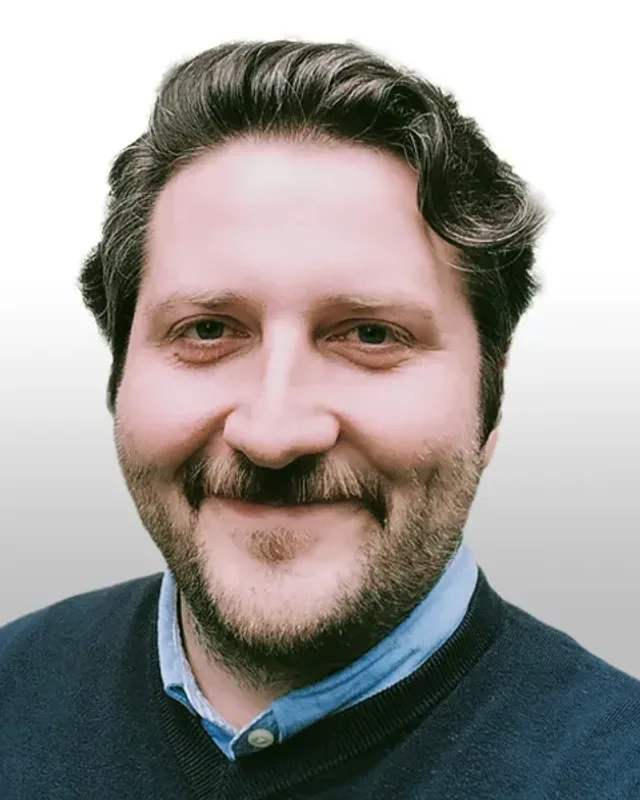
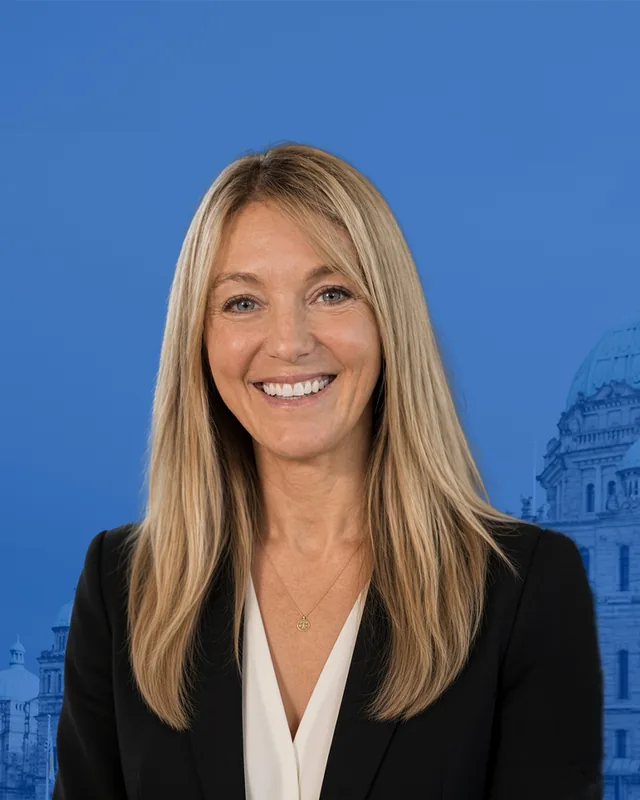
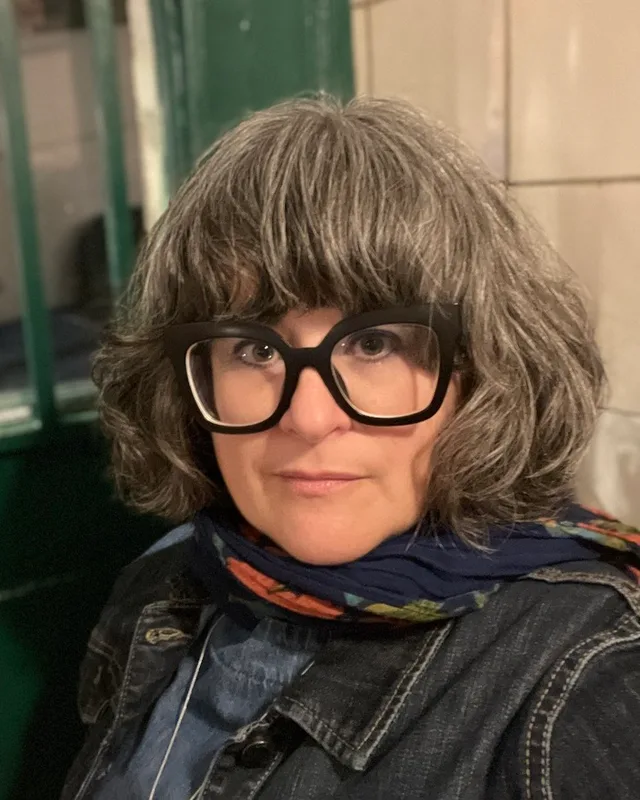
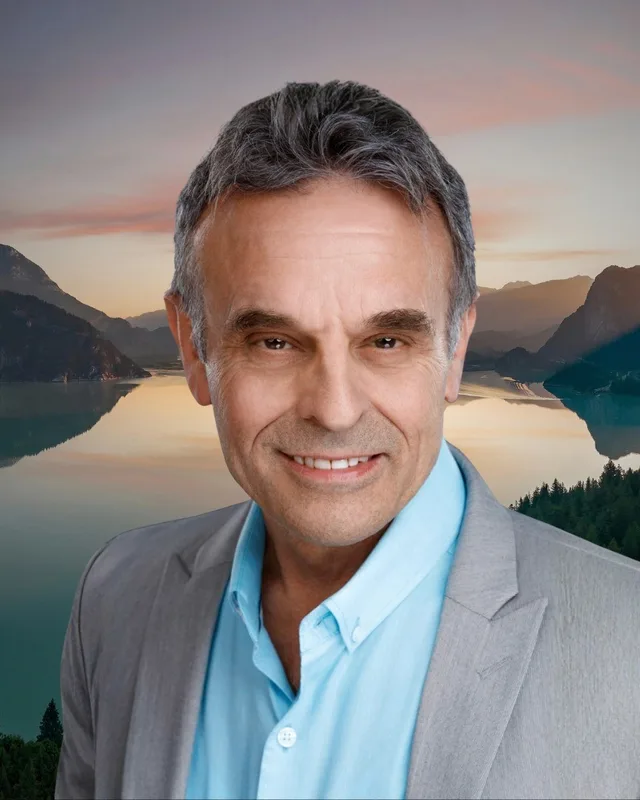
Vancouver-South Granville. 5 candidates, one seat.
This district elects one MLA. Voters mark one name on Saturday, October 24, 2026, and the candidate with the most votes wins the seat.
Vancouver-South Granville is a provincial electoral district in the City of Vancouver, south of False Creek and the Granville Street bridge. It takes in South Granville, Fairview and eastern Kitsilano, from West 16th Avenue north to False Creek, between Balsam Street and Cambie Street. The 2021 census counted 56,130 people in it, and the Electoral Boundaries Commission gives its area as 7 square kilometres.
Vancouver-South Granville lies on the south side of False Creek in the middle of the City of Vancouver. The Electoral Boundaries Commission's 2023 final report says the district lies south of the Granville Street bridge and includes South Granville, Fairview and eastern Kitsilano. It extends from West 16th Avenue in the south to False Creek in the north, with Cambie Street as its eastern border and Balsam Street as its western border. The commission counted 56,134 people over 7 square kilometres.
The City of Vancouver describes Fairview as running from Granville Island along False Creek to Science World and south to Shaughnessy, and says it holds Granville Island and Gallery Row in the South Granville shopping district. It describes Kitsilano as having extensive restaurants and shops along West 4th Avenue and West Broadway. Two bridges cross False Creek on the district's northern edge: the Granville Street Bridge, which the Vancouver Heritage Foundation says opened in 1954, and the Burrard Bridge, completed in 1932.
In 2024 Elections BC listed nine voting places inside the district: False Creek Elementary School, Grace Vancouver Church, Holiday Inn Vancouver Centre - Broadway, Holy Trinity Anglican Church, Kitsilano Neighbourhood House, L'École Bilingue Elementary School, Lord Tennyson Elementary School, the Museum of Vancouver and St. Mary Magdalene Anglican Church. The Museum of Vancouver stands in Vanier Park on Kitsilano Point, so the district reaches Kitsilano Point. Vancouver General Hospital stands at 899 West 12th Avenue.
Three Nations describe the waters around this district as part of their territory, each in its own words. The Musqueam Indian Band says on its website that on 10 June 1976 its elected leadership and membership signed the Musqueam Declaration, which defines its territory by a line around the watershed that drains into English Bay, Burrard Inlet and Indian Arm. The Squamish Nation, Sḵwx̱wú7mesh Úxwumixw, gives its traditional territory as 6,732 square kilometres that reaches south to Point Grey and takes in Burrard Inlet and English Bay. səlilwətaɬ (Tsleil-Waututh Nation), whose name means People of the Inlet, gives its traditional territory as 1,865 square kilometres and says it never ceded or relinquished its responsibility for that territory.
The Vancouver Heritage Foundation describes the False Creek area as the traditional, ancestral and unceded territory of the Squamish, Musqueam and Tsleil-Waututh peoples. It records that the sandbar which became Granville Island was an important fishing spot, where Coast Salish people used a tidal weir of vine maple fencing and stinging nettle fibre netting to hold flounder and smelt in the narrow channel along the south shore. In a statement the Foundation prints, Musqueam says its families stayed at sən̓aʔqʷ while hunting elk and waterfowl, and that salmon, sturgeon and smelt came into False Creek.
The Sen̓áḵw project's history page says Sḵwx̱wú7mesh ancestors had a village at Sen̓áḵw long before European settlers arrived in the Vancouver area in 1791, and that each year families from the upper Sḵwx̱wú7mesh villages came down to fish, hunt and gather. It gives the name as meaning the place inside the head of False Creek. The Vancouver Heritage Foundation places the village just west of the present Granville Bridge. The City of Vancouver calls the Coast Salish village on the False Creek shore Snauq, and says the Kitsilano Indian Reserve lay on the site of today's Vanier Park.
By the Sen̓áḵw page's account, more than 3.5 acres of the reserve were taken for railways in 1886 and another 7 acres in 1901. It says the Government of British Columbia forced an illegal surrender of the land in 1913, and that families were loaded on a barge and set adrift, with nobody allowed to remain. In 1977 the Squamish Chiefs and Council began the Omnibus Trust Action against the Government of Canada. In 2003 the Federal Court of Canada returned 10.48 acres of the original 80 acres as reserve land. The page says the Nation's members voted in 2019 to develop Sen̓áḵw in partnership with OPTrust and that it broke ground in 2022. The development describes its site as the foot of the Burrard Street Bridge, and it offers purpose-built rental homes.
Kitsilano, the Burrard Bridge and Vanier Park, 1930 to 1981
The City of Vancouver names three things that opened Kitsilano to settlement: the Canadian Pacific Railway, which owned most of the land east of Trafalgar Street, the streetcar line along 4th Avenue to Alma Street, and the Burrard Bridge of 1932. Heritage Vancouver says the architects Sharp and Thompson added concrete towers, torch-like entrance pylons and Art Deco details to the bridge's steel frame. The City also records that until the 1950s members of Vancouver's Sikh community lived in the blocks of Cypress and Cedar, now Burrard Street, near the sawmills on False Creek where many of them worked.
The Vancouver Heritage Foundation says the Alexandra Neighbourhood House opened in 1938 at 7th Avenue and Pine Street, the first neighbourhood house in Vancouver, on the site of an orphanage that had begun in 1891 as a women's and children's hospital. St George's Greek Orthodox Church, built in 1930 to a design by William Marshall Dodd, drew Greek families to Kitsilano and made West Broadway the commercial centre of the Greek community, the Foundation says. The Association of Neighbourhood Houses obtained the church in 1972 and began to operate it in 1974. Kitsilano Neighbourhood House was a voting place in this district in 2024.
The Museum of Vancouver's history page says that in 1968 the City Museum moved into its present building on the south shore of False Creek, now Vanier Park, and became the Centennial Museum. Gerald Hamilton designed the building, and a gift from H.R. MacMillan let him add a planetarium under a dome shaped like a woven basket hat of Northwest Coast First Nations. The museum took the name Vancouver Museum in 1981 and Museum of Vancouver in 2009. Parks Canada's register says the St. Roch, a Royal Canadian Mounted Police schooner built in 1928, stands in a purpose-built A-frame at the Vancouver Maritime Museum, 1905 Ogden Avenue. The ship crossed the Northwest Passage from the Pacific to the Atlantic, reaching Halifax in 1942, and in 1944 returned to Vancouver in eighty-six ice-free days. The register gives 15 May 1962 as the date she was recognized as a national historic site.
Fairview, the railway and Vancouver General Hospital, 1886 to 2025
The City of Vancouver says Fairview was named in 1886 by L.A. Hamilton, the Canadian Pacific Railway's Land Commissioner, whose survey set the numbered east-west avenues and named the cross streets after trees. In 1887 the railway, at the request of City Council, put its Pacific terminal yards on the north side of False Creek, and the forest on the south side gave way to shipbuilding yards, sawmills and shingle mills. The Vancouver Heritage Foundation says the first Granville Bridge opened on 4 January 1889 as a timber trestle designed by the railway, and that two years after it was built the railway cleared the Fairview Slopes for settlement while a street railway company ran the Fairview Belt Line along the bridge's east side. A second bridge replaced the first in 1909 and the present bridge opened in 1954.
The City says it bought 5.5 acres, two city blocks, from the railway in 1902 for $5,500 to build a new hospital at 10th Avenue and Heather Street. Heritage Vancouver says the Heather Pavilion, the oldest building on the Vancouver General Hospital campus, opened in 1906 as the largest and most modern hospital in western Canada. In 2002 the City designated the 1906 pavilion and the 1908 end bays and towers of its south addition as protected heritage. Heritage Vancouver's 2025 watch list says the Daily Hive reported that Vancouver Coastal Health has presented a phased plan that would demolish the pavilion in its second phase, and that the plan is preliminary and depends on rezoning, approvals and funding. Vancouver Coastal Health describes the hospital as British Columbia's referral centre for many provincial programs and a teaching hospital affiliated with the University of British Columbia.
The City says that from the early 1920s to the early 1960s the Fairview Slopes were zoned for three-storey apartments, and that in the 1950s the area south of Broadway became an apartment district with Broadway, Granville Street and Cambie Street as its shopping streets. The slopes were rezoned in 1972 from industrial to residential and commercial use, and Fairview Heights, a fifteen-block area south of the hospital, was rezoned in 1984 from duplex to low-rise apartment use. Older buildings remain, among them Fairview House at 1151 West 8th Avenue, built in 1889, Hodson Manor at 1254 West 7th Avenue, built in 1894 and moved two blocks in 1974, and the Seaforth Armoury on Burrard Street, built in 1935 and 1936.
Athletic Park, the Stanley Theatre and South Granville, 1913 to 2005
The Vancouver Heritage Foundation says Athletic Park opened on April 16, 1913, on the block northeast of 6th Avenue and Hemlock Street, as the home of the Vancouver Beavers baseball team. On October 20, 1934, a rainy exhibition game there was played by the All Americans, a team that included Babe Ruth and Lou Gehrig, before they sailed for a tour of Japan. The last game was played on June 7, 1951. The Foundation says the park was removed for the ramps of the Granville Bridge, which opened in 1954, and that Capilano Stadium, now Nat Bailey Stadium, replaced it.
Further south, the Stanley Theatre at 2750 Granville Street was completed in 1930. The Foundation says Frederick Guest, a theatre owner from Hamilton, Ontario, commissioned Henry Holdsby Simmonds to design it, and that it held over 1,200 people. Famous Players closed it in 1991. After a campaign called Save Our Stanley, the Arts Club Theatre Company bought it, and it reopened in 1998 as a playhouse with 650 seats. The Foundation says it won a City of Vancouver Heritage Award in 1999 and was renamed the Stanley Industrial Alliance Stage in 2005 after a donation of $1.5 million.
The South Granville Business Improvement Association says it was established in 1999, and describes the street as one of Vancouver's original High Streets. The City's page for Fairview names Gallery Row in the South Granville shopping district and lists the South Granville Business Improvement Association and the South Granville Seniors Centre among the community resources the City supports and funds.
The City of Vancouver says Granville Island was created in 1916 from soil dredged from False Creek. The Vancouver Heritage Foundation says the National Harbour Commission built a seawall around the sandbars in 1916 and filled it with mud from the creek bed, and that the island was called Industrial Island. BC Equipment Ltd, its first tenant, arrived in 1917. The Foundation says that in the 1930s 40 industrial companies on the island employed 1,200 people, making rope, chain and fibre and supplying logging, mining and shipping. It says the name Granville Island came into use during the Second World War, and that in the 1950s fires, trucking and the move of industry to the suburbs ended the island's industrial years. Plans to fill in False Creek reached as far as the Sutcliffe Park area, which joined the island to the mainland.
The City says that in 1972 administration of the 15 hectare island passed from the National Harbours Board to Canada Mortgage and Housing Corporation, and that in 1973 Council adopted policies for redeveloping False Creek. The Heritage Foundation dates the corporation's ownership to 1973, so the two sources differ by one year. The City says the Public Market opened in 1979, followed by the Maritime Market, Emily Carr College of Art, theatres, artists' studios and craft galleries. The Foundation says the market reopened in 1978. Emily Carr University's timeline says the university moved from Granville Island to its campus at Great Northern Way in 2017.
The Government of British Columbia announced the locations of six Broadway Subway stations on 18 September 2019. Two lie inside this district. South Granville is on the northeast corner of Broadway and Granville Street. The station then named Fairview-VGH is on the southwest corner of Broadway and Laurel Street near Oak Street, to serve Vancouver General Hospital. TransLink announced the final station names in September 2020, and Fairview-VGH became Oak-VGH.
The 2019 release said service would begin in 2025. A release of 21 September 2026 says the 5.7-kilometre extension of the Millennium Line is scheduled to open for passenger service in fall 2027, and that trackwork would be complete that week. The release says the extension runs from VCC-Clark Station to Broadway and Arbutus Street with six underground stations.
Vancouver-South Granville is a new name. The Electoral Boundaries Commission recommended it in its 2023 final report, which says the district incorporates parts of the former Vancouver-Point Grey, Vancouver-False Creek and Vancouver-Fairview districts. The commission moved the border of Vancouver-Point Grey east to Balsam Street, renamed Vancouver-Fairview as Vancouver-Little Mountain, and considered but declined a suggestion to extend Vancouver-Point Grey's eastern boundary into the western part of Vancouver-South Granville, because population density there would have made neighbouring districts differ markedly in size. Elections BC's conversion table matches the district's 68 voting areas to the 2017 to 2024 districts: 42 in Vancouver-Fairview, 15 in Vancouver-False Creek and 13 in Vancouver-Point Grey.
The district has had one election. In the 2024 provincial general election Brenda Bailey of the BC NDP won with 17,208 votes (64.31%). Aron Lageri of the Conservative Party received 6,678 votes (24.96%) and Adam Hawk of the BC Green Party received 2,872 (10.73%). Turnout was 63.82% of 42,014 registered voters. The legislature's record lists Bailey in the 43rd Parliament. In the 42nd Parliament it lists her for Vancouver-False Creek, which she won in 2020 with 11,484 votes (46.77%).
Vancouver-Fairview supplies the most voting areas. Elections BC's volume for 1987 to 2001 prints Bernie Simpson of the New Democratic Party as its winner in 1991 with 8,016 votes (44.16%) and Gary Farrell-Collins of the Liberal Party as its winner in 2001 with 12,864 (54.94%). The legislature's record lists Margaret MacDiarmid of the BC Liberal Party for the 39th Parliament and George Heyman of the BC NDP for the 40th, 41st and 42nd. For the 38th Parliament the two records differ. The volume for 2002 to 2013 prints Gregor Robertson of the New Democratic Party as the winner of 17 May 2005 with 13,009 votes (46.59%), and prints that he resigned on July 15, 2008, which led to the by-election of 29 October 2008. In that by-election it prints Jenn McGinn of the New Democratic Party as the winner with 5,752 votes (46.98%). The legislature's record of the 38th Parliament names McGinn as the only member for Vancouver-Fairview, with no Robertson. This profile chooses neither account.
Members for Vancouver-Fairview, which covered 42 of this district’s 68 voting areas before 2024
Parliament
It sat
Member
Elected as
Party on the legislature’s record
42nd
2020 to 2024
George Heyman
BC NDP
BC NDP
41st
2017 to 2020
George Heyman
BC NDP
BC NDP
40th
2013 to 2017
George Heyman
BC NDP
BC NDP
39th
2009 to 2013
Margaret MacDiarmid
BC Liberal Party
BC Liberal Party
38th
2005 to 2009
Jenn McGinn
BC NDP
BC NDP
38th
2005 to 2009
Gregor Robertson
BC NDP
Members for Vancouver-False Creek, which covered 15 of this district’s 68 voting areas before 2024
Parliament
It sat
Member
Elected as
Party on the legislature’s record
42nd
2020 to 2024
Brenda Bailey
BC NDP
BC NDP
41st
2017 to 2020
Sam Sullivan
BC Liberal Party
BC Liberal Party
40th
2013 to 2017
Sam Sullivan
BC Liberal Party
BC Liberal Party
39th
2009 to 2013
Mary McNeil
BC Liberal Party
BC Liberal Party
“Elected as” is the affiliation Elections BC printed with the winning result. The last column is the party the legislature’s records give for that parliament, which differs when a member changed party while in office. A row with that column empty is a winner Elections BC prints whom the legislature’s records leave out. Source: Legislative Assembly of British Columbia (opens in a new tab)
Boundaries since 2024
Vancouver-South Granville has 68 voting areas. They overlap these districts from 2017 to 2024: Vancouver-Fairview (42), Vancouver-False Creek (15), Vancouver-Point Grey (13).
The commission that drew the boundaries counted 56,134 people in the district, 4.4% above the average for a district, over 7 km².
Vancouver-South Granville lies in the City of Vancouver, south of the Granville Street bridge, according to the Electoral Boundaries Commission. It extends from West 16th Avenue in the south to False Creek in the north, and its borders follow Cambie Street in the east and Balsam Street in the west. The commission counted 56,134 people in it over 7 square kilometres.
Which neighbourhoods are in Vancouver-South Granville?
Vancouver-South Granville includes South Granville, Fairview and eastern Kitsilano, according to the Electoral Boundaries Commission. Elections BC also placed 2024 voting places at the Museum of Vancouver in Vanier Park and at Kitsilano Neighbourhood House, which puts parts of Kitsilano inside the district. The City of Vancouver lists Granville Island as part of Fairview.
Who won Vancouver-South Granville in 2024?
Brenda Bailey of the BC NDP won Vancouver-South Granville in the 2024 provincial general election with 17,208 votes, which was 64.31% of the valid votes. The legislature's record lists her in the 43rd Parliament. Before 2024 the legislature lists her for the former district of Vancouver-False Creek, which she won in 2020 with 11,484 votes (46.77%).
How did Vancouver-South Granville vote in 2024?
In Vancouver-South Granville in 2024, Brenda Bailey of the BC NDP received 17,208 votes, Aron Lageri of the Conservative Party received 6,678 and Adam Hawk of the BC Green Party received 2,872. Turnout was 63.82% of 42,014 registered voters, and 55 ballots were rejected. These are the only results on file under the district's name, because it was first used at that election.
Who held the seat before Vancouver-South Granville was created?
Vancouver-South Granville is new for 2024, and 42 of its 68 voting areas came from the former Vancouver-Fairview, which George Heyman of the BC NDP won in 2013, 2017 and 2020. Another 15 voting areas came from Vancouver-False Creek, which Brenda Bailey won in 2020, and 13 came from Vancouver-Point Grey.
How did the 2023 boundary changes affect Vancouver-South Granville?
The Electoral Boundaries Commission added Vancouver-South Granville in its 2023 final report, drawing it from parts of Vancouver-Point Grey, Vancouver-False Creek and Vancouver-Fairview. The same report moved the border of Vancouver-Point Grey east to Balsam Street and renamed Vancouver-Fairview as Vancouver-Little Mountain. It declined to extend Vancouver-Point Grey's eastern boundary further into the western part of Vancouver-South Granville.
Whose territory is Vancouver-South Granville on?
The Vancouver Heritage Foundation describes the False Creek area, where Vancouver-South Granville lies, as the traditional, ancestral and unceded territory of the Squamish, Musqueam and Tsleil-Waututh peoples. The Squamish Nation says it had a village at Sen̓áḵw before 1791, and that in 2003 the Federal Court of Canada returned 10.48 acres of Kitsilano Indian Reserve No. 6 to the Nation as reserve land.
Who lives in Vancouver-South Granville?
The 2021 census counted 56,130 people in Vancouver-South Granville, with a median age of 40. Of its households, 60.6% rent their homes and 50.9% are one person living alone. Apartments in buildings with fewer than five storeys make up 65.9% of its homes, and 30.8% of its residents are immigrants.
What is the history of Granville Island in Vancouver-South Granville?
Vancouver-South Granville includes Fairview, where the City of Vancouver places Granville Island. The City says the island was created in 1916 from soil dredged from False Creek. The Vancouver Heritage Foundation says it was first called Industrial Island and that its first tenant, BC Equipment Ltd, arrived in 1917. The City says the Public Market opened in 1979, and the Foundation says the market reopened in 1978.
When will the Broadway Subway reach Vancouver-South Granville?
A British Columbia government release of 21 September 2026 says the Broadway Subway is scheduled to open for passenger service in fall 2027. Two of its stations lie inside Vancouver-South Granville: South Granville, at Broadway and Granville Street, and Oak-VGH, at Broadway and Laurel Street near Vancouver General Hospital.