This district elects one MLA. Voters mark one name on Saturday, October 24, 2026, and the candidate with the most votes wins the seat.
Oak Bay-Gordon Head is a provincial electoral district in Greater Victoria on southern Vancouver Island. It takes in the Municipality of Oak Bay, the Saanich neighbourhoods of Gordon Head and Cadboro Bay and the Victoria neighbourhood of Gonzales, and the main campus of the University of Victoria lies inside it. The 2021 census counted 56,470 people, and the Electoral Boundaries Commission gives the area as 302 square kilometres.
Oak Bay-Gordon Head lies on the south-east corner of Vancouver Island, in Greater Victoria. The Electoral Boundaries Commission's 2023 final report says the district consists of the Municipality of Oak Bay, the Saanich neighbourhoods of Gordon Head and Cadboro Bay and the Victoria neighbourhood of Gonzales. The report names the Strait of Juan de Fuca and Haro Strait as its borders on the north, south and east, and says the western border follows Richmond Avenue, Shelbourne Street and Cedar Hill Road. The commission gives the district an area of 302 square kilometres, a population of 56,466 and a deviation of 5.0% from the average.
Much of the district meets the sea. The District of Oak Bay says the municipality is bordered by the Strait of Juan de Fuca to the south and Haro Strait to the east. Its Uplands Park covers 30.635 hectares of Garry oak meadow beside the ocean, and the District describes it as holding one of the greatest concentrations of rare plant species in Canada. Parks Canada places the Chinese Cemetery at Crescent Road and Penzance Street in Oak Bay, on a site that slopes to the shore of the Strait of Juan de Fuca. BC Geographical Names places Gonzales Point on the south-east side of Oak Bay, and places Cadboro Bay on the south-east side of Saanich.
Inland, Elections BC's results file for 2024 lists the UVic Student Union Building, Oak Bay High School, Frank Hobbs Elem School and Monterey Rec Centre among the 15 places where people voted inside the district. The April 2024 rider's guide of the Victoria Regional Transit Commission lists route 1 South Oak Bay/Downtown, route 13 Ten Mile Point/UVic and routes 27 and 28 Gordon Head/Majestic/Downtown, and it names a UVic Exchange as the stop for the university.
The Songhees Nation introduces itself on its website as the Songhees Nation of the lək̓ʷəŋən People and describes its land as unceded lək̓ʷəŋən territory. The Nation's page on the Signs of Lək̓ʷəŋən says the land of the lək̓ʷəŋən People is known today as the Esquimalt and Songhees Nations. The Esquimalt Nation gives its traditional name as Xʷsepsəm and says its members are part of the Lekwungen peoples. It adds that its ancestors signed the Douglas treaties in 1850. The District of Oak Bay acknowledges the traditional territory of the Coast and Straits Salish Peoples and names the Lekwungen peoples known today as the Songhees and Esquimalt Nations.
Saanich Archives writes that the District of Saanich lies within the traditional territories of the Lək̓ʷəŋən and SENĆOŦEN speaking peoples. It reports that the treaty covering Gordon Head was signed by the South Saanich tribe north of Gordon Point and by the Checkonein tribe south of it, including Cadboro Bay. The W̱SÁNEĆ Leadership Council, whose board has representatives from Tsartlip, Tseycum and Tsawout, says that in SENĆOŦEN the name PKOLS means White head or White rock. Saanich Archives calls the mountain that carries this name the most prominent topographical feature of Gordon Head.
Saanich's planning boards for Cadboro Bay say Songhees people lived at what is now Cadboro Bay for thousands of years and had a name for the bay that means snow patches. The boards say they lived there until 1911, when the last Songhees people were moved to the reserve in Esquimalt. The Songhees Nation's own site gives the same year for the Nation's move from its earlier reserve to its current one. The boards also record archaeological sites around Cadboro Bay and the remains of fortifications that protected the village.
BC Geographical Names records that Manuel Quimper named Gonzales Point in 1790 after his first mate aboard the Princesa Real, Gonzalo de Lopez de Haro. The same office records that officers of the Hudson's Bay Company named Cadboro Bay in the early 1840s, giving the date as c1842, after the company's brigantine Cadboro, the first vessel to anchor in the bay. A 1968 history of Oak Bay by G. Murdoch, hosted by the District of Oak Bay, says the company kept 1,118 acres of arable land in the north of what became Oak Bay, including its Uplands Farm, which was founded between 1843 and 1850. It calls the company's buildings the first structures in Oak Bay.
The same history says John Tod, a Chief Trader of the company, built the first private residence in the territory in 1850, at 2564 Heron Street, and that it is the oldest building still standing in Oak Bay. In Gordon Head, Saanich Archives names James Todd, a son of John Tod, as the first registered landowner. He bought two sections in 1852 and named his farm Spring Farm after the springs on the property. The Archives dates the Douglas treaties to the years 1850 to 1854. It says the one signed by the Checkonein tribe covers the lands between Point Gonzales and Mount Douglas.
Strawberries and daffodils in Gordon Head, 1872 to the 1960s
Saanich Archives says Michael Finnerty moved to Gordon Head in 1872, when forest ran unbroken from Cedar Hill Cross Road to the sea. He farmed 300 acres in the area that became the University of Victoria and sold milk, first to the Royal Jubilee Hospital and later to 250 homes in Victoria. Gordon Head School opened in August 1891 after parents petitioned for a school closer than Cedar Hill.
William Charles Grant was the first to grow strawberries in Gordon Head, in the 1890s. The Archives says his first pickers were First Nations people, some of them Songhees, and that a dozen or more canoes might be drawn up on the beach at Margaret Bay each June. When the value of the crop fell, growers formed the Saanich Fruit Growers' Association in 1914. City water reached Gordon Head in 1921, and so did electricity. By 1945 daffodils had become an important crop. The Archives writes that single-family houses have gradually covered the area since the 1950s, helped by the sewers introduced in the late 1960s.
The District of Oak Bay's heritage statement for the Prospect area records that the Oak Bay Land and Improvement Company was formed in 1891 to develop land near Oak Bay Beach, and that the Oak Bay tramway line opened in the same year. The Mount Baker Hotel opened in 1893. In 1898 the architects John Gerhard Tiarks and Francis Mawson Rattenbury bought 15 acres running from Oak Bay Avenue north to present day San Carlos Avenue. BC Geographical Names records that Oak Bay was incorporated on 2 July 1906 as The Corporation of the District of Oak Bay.
The 1968 history says a building boom ran from 1910 through 1912. It says the laying out of the Uplands subdivision on former Hudson's Bay Company farmland was completed in 1912, planned by a firm from Chicago. In the same year the Royal Victoria Yacht Club began its clubhouse on the Uplands shore beside Loon Bay, and the club held its opening celebration in early spring 1913.
The Chinese Cemetery at Harling Point, 1903 to 1961
Parks Canada says the Chinese Consolidated Benevolent Association established a cemetery at Harling Point in Oak Bay in 1903, and that the Association still owns and maintains it. The site covers 3.5 acres and slopes to the shore of the Strait of Juan de Fuca. Parks Canada describes it as the largest concentration of pre-1950 Chinese mortuary features in Canada. After the Sino-Japanese war began in 1937, remains could no longer be shipped to China. The cemetery was formally closed in 1961 with the burial of the remains of 849 Chinese pioneers, and it then became a memorial to Chinese-Canadian pioneers.
Cadboro Bay: telegraph cable, explosives and a hotel, 1866 to 1951
Saanich's Cadboro Bay planning boards say Victoria's first telegraph cables came ashore in 1866 at Telegraph Cove, which was then called Telegraph Bay, after crossing Haro Strait from San Juan Island. In 1895 the Giant Powder Company opened an explosives plant at Telegraph Bay. The plant stayed there until 1920, when it moved to James Island. The house at 3565 Telegraph Bay Road, built in 1911 for the works manager, still stands.
The Cadboro Beach Hotel was built in 1909 and operated from 1920 to 1931, until a fire destroyed it on 18 August 1931. The boards date the start of today's commercial Cadboro Bay Village Centre to 1915. In that year Frank Hobbs, who had bought a store built by Fred Patton in 1914, moved across Sinclair Road and built a new grocery store and post office. He ran the store and post office for 31 years and served 14 terms on the Saanich School Board. Frank Hobbs School opened in 1951 with 88 pupils.
From airfield and army camp to the University of Victoria, 1931 to 1964
The University of Victoria Archives say an airfield was added to the rural land of Gordon Head in 1931. Its two long runways formed an X where the University Centre and Centennial Stadium now stand. The Gordon Head Army Camp became operational in the autumn of 1940, and from 1940 to 1943 it was known as the Officer's Training Centre of Western Canada.
The university's historical outline says Victoria College moved in 1946 from Craigdarroch to the Lansdowne campus of the Provincial Normal School. In 1959 the University Development Board bought the Gordon Head Army Camp and adjoining property from the federal government for $115,500. Judge Joseph B. Clearihue turned the first sod on 20 January 1962. The Clearihue Building opened on 18 January 1963 and the Student Union Building on 30 March 1963. The historical outline says Victoria College became the degree granting University of Victoria on its new Gordon Head campus on 1 July 1963. The McPherson Library opened on 14 November 1964.
A petition to join Oak Bay and a restored name, 1950 to 2022
The 1968 history of Oak Bay records that in 1950 the Cadboro Bay and Gordon Head Ratepayers Association asked to join its areas to Oak Bay. A petition signed by 75% of the ratepayers of those districts made the request. Oak Bay put the question to its own ratepayers in December, and the bylaws were defeated. Gordon Head and Cadboro Bay stayed in Saanich.
The W̱SÁNEĆ Leadership Council's page of 12 September 2022 says the Council brought a proposal to change the official name of Mount Douglas Park to include the original SENĆOŦEN name, and that the District of Saanich Council approved the request on August 15. The park is now known as PKOLS (Mount Douglas Park). The page says PKOLS was a significant gathering place for SENĆOŦEN and Lekwungen people.
Oak Bay-Gordon Head has appeared on the ballot since the 1979 general election. The Electoral Boundaries Commission's 2023 final report states: "We do not recommend any changes to the boundaries of Victoria-Swan Lake or Oak Bay-Gordon Head." Elections BC's conversion table matches the district's voting areas from 2017 to 2024 as 75 in Oak Bay-Gordon Head and 1 in Victoria-Beacon Hill. In 2024 Diana Gibson of the BC NDP won with 14,519 votes (49.10%), ahead of Stephen Andrew of the Conservative Party with 8,542 (28.89%) and Lisa Gunderson of the BC Green Party with 6,509 (22.01%). Turnout was 69.8% of 42,442 registered voters. Murray Rankin of the BC NDP held the seat from 2020 to 2024 and won it in 2020 with 14,748 votes (51.12%).
Andrew Weaver won in 2013 with 10,722 votes (40.43%) ahead of Ida Chong of the BC Liberal Party with 7,767 (29.29%), and again in 2017 with 15,405 votes. Elections BC's results list him under the BC Green Party, and the legislature's list records him as an Independent for the 40th and 41st Parliaments. Chong held the seat from 1996 to 2013. Elections BC's volumes print her winning totals as 12,340 votes (46.59%) in 1996, 14,588 (57.31%) in 2001, 13,443 (47.52%) in 2005 and 11,877 (46.53%) in 2009. Elizabeth Cull of the NDP won a by-election on 13 December 1989 with 10,807 votes (45.26%) after the resignation of Brian Smith on 15 November 1989, and won again in 1991 with 10,522 (39.61%).
The Constitution (Amendment) Act of 1978, assented to on 29 June 1978, created the district of Oak Bay-Gordon Head. Brian Ray Douglas Smith of Social Credit won it in 1979 with 12,730 votes (49.43%), in 1983 with 14,008 (52.50%) and in 1986 with 13,735 (53.00%). Before that, Elections BC's first volume records an act of 1938 that formed a district named Oak Bay, which first elected a member in 1941. Herbert Anscomb won it that year with 2,676 votes (55.88%), and he was the member again in 1945 and 1949.
“Elected as” is the affiliation Elections BC printed with the winning result. The last column is the party the legislature’s records give for that parliament, which differs when a member changed party while in office. A row with that column empty is a winner Elections BC prints whom the legislature’s records leave out. Source: Legislative Assembly of British Columbia (opens in a new tab)
Boundaries since 2024
Oak Bay-Gordon Head has 75 voting areas. 75 of them overlap the district of the same name used from 2017 to 2024.Others overlap these districts from 2017 to 2024: Victoria-Beacon Hill (1).
The commission that drew the boundaries counted 56,466 people in the district, 5.0% above the average for a district, over 302 km².
Oak Bay-Gordon Head is a provincial electoral district in Greater Victoria on the south-east corner of Vancouver Island. The Electoral Boundaries Commission's 2023 final report says it consists of the Municipality of Oak Bay, the Saanich neighbourhoods of Gordon Head and Cadboro Bay and the Victoria neighbourhood of Gonzales. The commission gives the district an area of 302 square kilometres and a population of 56,466.
Which communities are in Oak Bay-Gordon Head?
Oak Bay-Gordon Head includes the Municipality of Oak Bay, the Saanich neighbourhoods of Gordon Head and Cadboro Bay and the Victoria neighbourhood of Gonzales, according to the commission's 2023 final report. Elections BC's 2024 results file lists the UVic Student Union Building and Oak Bay High School among the 15 places where people voted inside the district, so the University of Victoria campus is inside Oak Bay-Gordon Head.
Who is the MLA for Oak Bay-Gordon Head?
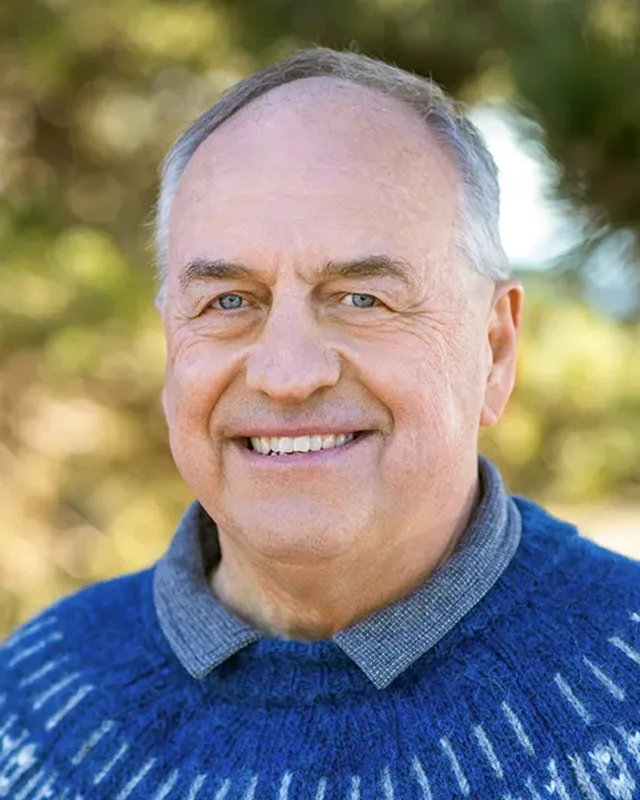
Diana Gibson of the BC NDP is the member of the Legislative Assembly for Oak Bay-Gordon Head. She won the district at the 2024 provincial general election with 14,519 votes, which Elections BC records as 49.10% of the votes cast. Stephen Andrew of the Conservative Party came second with 8,542 votes, and Lisa Gunderson of the BC Green Party received 6,509.
Who held the seat before Diana Gibson?
Murray Rankin of the BC NDP held Oak Bay-Gordon Head from 2020 to 2024, according to the legislature's list of members. He won the district in 2020 with 14,748 votes. Andrew Weaver held it before him, from 2013 to 2020, after winning in 2013 and 2017. Ida Chong of the BC Liberal Party held it from 1996 to 2013.
How did Oak Bay-Gordon Head vote in 2024?
At the 2024 provincial general election Diana Gibson of the BC NDP received 14,519 votes, or 49.10%. Stephen Andrew of the Conservative Party received 8,542 votes, or 28.89%, and Lisa Gunderson of the BC Green Party received 6,509, or 22.01%. Elections BC records a turnout of 69.8% of the 42,442 registered voters in Oak Bay-Gordon Head.
How did the 2023 boundary change affect Oak Bay-Gordon Head?
The Electoral Boundaries Commission's 2023 final report recommended no changes to the boundaries of Oak Bay-Gordon Head. Elections BC's conversion table matches the district's voting areas from 2017 to 2024 as 75 in Oak Bay-Gordon Head and 1 in Victoria-Beacon Hill. The commission gives the district a population of 56,466, which is 5.0% from the average for a district.
Whose territory is Oak Bay-Gordon Head on?
The District of Oak Bay names the Lekwungen peoples in its territorial acknowledgement, and Saanich Archives places Gordon Head in the territory of the Lək̓ʷəŋən and SENĆOŦEN speaking peoples. The Songhees Nation describes its land as unceded lək̓ʷəŋən territory, and the Esquimalt Nation, whose traditional name is Xʷsepsəm, says its ancestors signed the Douglas treaties in 1850.
Who lives in Oak Bay-Gordon Head?
The 2021 census counted 56,470 people in Oak Bay-Gordon Head, with a median age of 46.8 against 42.8 for British Columbia. Owners live in 68.6% of homes and renters in 31.4%. Immigrants are 24.2% of residents, compared with 29% in the province, and 2.6% of residents identify as Indigenous. The United Kingdom is the most common country of birth among immigrants, with 2,685 people.
When was Oak Bay incorporated?
BC Geographical Names records that Oak Bay was incorporated on 2 July 1906 as The Corporation of the District of Oak Bay. Oak Bay lies inside the Oak Bay-Gordon Head district, which also takes in the Saanich neighbourhoods of Gordon Head and Cadboro Bay. The district name Oak Bay-Gordon Head has appeared on the ballot since the 1979 general election, after an act of 1978 created it.
How did the University of Victoria come to Gordon Head?
The University Development Board of Victoria College bought the Gordon Head Army Camp and adjoining property from the federal government in 1959 for $115,500. Construction began on 20 January 1962. According to the university's historical outline, Victoria College became the degree granting University of Victoria on its new Gordon Head campus on 1 July 1963, inside the Oak Bay-Gordon Head district.