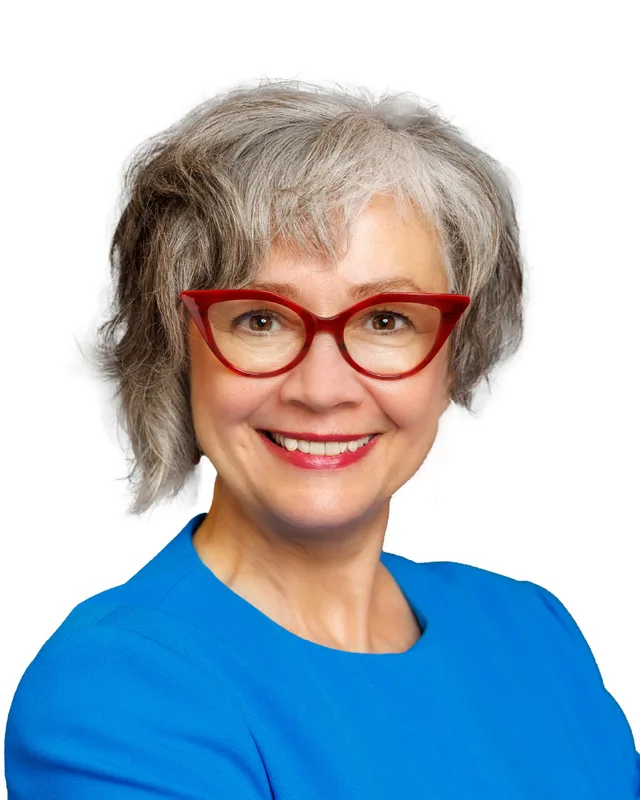
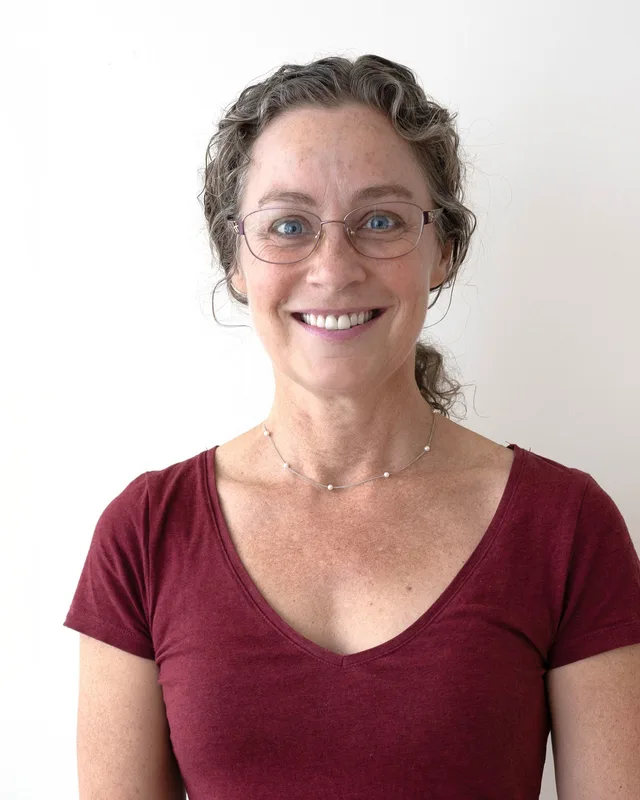
New Westminster-Coquitlam. 4 candidates, one seat.
This district elects one MLA. Voters mark one name on Saturday, October 24, 2026, and the candidate with the most votes wins the seat.
New Westminster-Coquitlam is a provincial electoral district on the Fraser River. It takes in downtown New Westminster, Queen's Park, Sapperton and the Brunette Creek area, together with the south-western part of the Coquitlam neighbourhood of Cariboo. The 2021 census counted 57,990 people in it, and the Electoral Boundaries Commission gives its area as 13 square kilometres.
The Electoral Boundaries Commission's final report of 3 April 2023 describes New Westminster-Coquitlam as downtown New Westminster south and east of Sixth and Tenth Avenues. The report says it includes the neighbourhoods of Queen's Park, Sapperton and Brunette Creek and the south-western part of the Coquitlam neighbourhood of Cariboo. Its boundaries run along Austin Avenue and Blue Mountain Street in the north and east, and they follow the Fraser River to the south and west. The commission counts 58,003 people in 13 square kilometres, a population 7.9% from the average district.
The City of New Westminster's heritage statements describe the ground. Downtown is the riverfront area between the Fraser River to the south and west, Royal Avenue to the north and the Pattullo Bridge to the east, and its streets slope steeply down to the water. Queen's Park is on higher ground, bounded by Sixth Avenue, Royal Avenue and Sixth Street, with the 75.5-acre park itself on its east side. Quayside is a riverside neighbourhood between 10th and 14th Streets, south of Stewardson Way and Columbia Street. Sapperton fills the north-eastern end of the city. The Glenbrooke Ravine and the former penitentiary site lie to its west, the Brunette Creek industrial area and the river to its south, and the Brunette River and the Coquitlam boundary to its east.
The commission moved the Cariboo neighbourhood of Coquitlam into the district between its preliminary and final reports, to balance the populations of neighbouring districts. Elections BC's 2024 results file lists two Coquitlam voting places under the district: Alderson Elementary School, at 825 Gauthier Avenue according to the Ministry of Education, and the Ramada Inn Coquitlam. Fraser River Middle School, at 800 Queens Avenue, was a voting place in New Westminster. The provincial transportation ministry says the Brunette Avenue interchange on Highway 1 is a key connection between Coquitlam and New Westminster, with a route for cyclists and pedestrians to Braid Street SkyTrain Station and for emergency vehicles to Royal Columbian Hospital. Among people counted by main way of getting to work in the 2021 census, 23.8% in the district used public transit, compared with 9.3% across British Columbia.
Qayqayt, Kwantlen and Stó:lō places on the river before 1860
The City of New Westminster's heritage statement for the McBride-Sapperton neighbourhood says the Qayqayt, Kwantlen and Stó:lō First Nations lived in the Brunette River valley for thousands of years and used the mouth of the Brunette for seasonal fishing. The statement for Quayside, on the Fraser River south of Columbia Street, records that reserves were allocated to the Qayqayt in 1859. One was a 22-acre parcel near the present Kruger paper mill site and another was on Poplar Island. BC Geographical Names lists an Indigenous name for the Brunette River, Che'tsh lus, and gives no language group or meaning for it.
Recent names in the district use First Nations languages. New Westminster Schools says its board approved the name Skwo:wech, the Halq'eméylem word for sturgeon, on 25 May 2021 for the new elementary school in Sapperton. Chief Rhonda Larrabee of the Qayqayt First Nation was consulted, and the school district gathered more than 250 suggestions. The City's aquatic and community centre at 65 East Sixth Avenue, which opened on 29 April 2024, is named təməsew̓txʷ, the hən̓q̓əmin̓əm̓ words for sea otter house. A panel with members from the Qayqayt, Kwantlen, Musqueam and Squamish Nation helped choose it. Musqueam and Kwantlen also gave the Pattullo Bridge replacement its name, stal̕əw̓asəm, which the project office explains as a space where you can view the river.
The Royal Engineers survey Sapperton, Queen's Park and the waterfront, 1859 to 1863
The City's heritage statement for McBride-Sapperton says the Royal Engineers were stationed at New Westminster from 1859 to 1863. Their camp stood on the site later used for the penitentiary and was known as Sapper's Town, which gave Sapperton its name. The soldiers were called sappers. The Engineers surveyed Sapperton into blocks in 1860, and the first trail from the camp, North Road, was built in 1859. Heritage Burnaby says Colonel R.C. Moody planned the road to link New Westminster with Burrard Inlet as a way to help defend the city against an American attack, and it calls North Road the oldest road in the Lower Mainland. The City's statement says North Road later became East Columbia Street, the main shopping street of Sapperton.
The Engineers also marked out the land that became Queen's Park. The Queen's Park statement says they set out wide streets, boulevards, land reserves and squares there in 1859 and surveyed 75.5 acres for the park itself in 1860. The first house in the neighbourhood went up in 1862. Residents told the City's consultants that the boulevards on Second and Fifth Streets frame the grounds between Queens and Royal Avenues, which were meant for a legislative building that was never built. Fraser Health says Royal Columbian Hospital first opened in 1862, and the Sapperton statement says the new legislative council held its first session on the future penitentiary grounds in 1864. Veterans Affairs Canada says the Royal Westminster Regiment dates its founding to 1863.
A penitentiary, a hospital, a brewery and a sawmill in Sapperton, 1865 to 1905
The McBride-Sapperton statement says St. Mary the Virgin Anglican Church, designed and built by former sappers in 1865, marked the start of Sapperton as a permanent community. The BC Penitentiary opened on a hillside above the Fraser River in 1878, the same year the Brunette Sawmills were established. The Jamieson Brewery was founded in 1879 at Brunette and Columbia Streets and later became the New Westminster Brewery. The statement says Sapperton became part of the City of New Westminster in 1889. That year the Royal Columbian Hospital opened in Sapperton, moved from its first site downtown, and a nursing school was added there in 1901.
Industries set up along the Brunette River and the railway. The statement lists the Brunette Sawmills, the BC Distillery, Swift's slaughterhouse, the brewery and the Canada Western Cordage factory, which opened in 1921. BC Geographical Names says the Brunette River was named in 1860 by a settler on its banks named Holmes, because the water, which drains peat bogs above Burnaby Lake, is brown. By the 1970s, the statement says, years of industrial and household waste had left the river severely polluted. It was mainly through the efforts of the Sapperton Fish and Game Club that the river became clean enough for fish to spawn again.
The Canadian Pacific Railway branch line reached New Westminster in August 1886, according to the City's statement for Quayside, with a station at Columbia and Eighth Streets. The Downtown statement says Columbia Street between Fourth and Eighth Streets took on its present appearance between 1887 and 1892. Queen's Park gained a street railway in 1891. The Queen's Park statement says the mansion Blossom Grove became Columbian Methodist College in 1893, which the City's statements describe as the first post-secondary institution in British Columbia. The college closed in 1936 and its buildings were torn down. The same statement says Queen's Park became the first fully serviced neighbourhood in the city, with a sewer system in 1912 and street curbs in 1913.
The Armoury of the Royal Westminster Regiment was built from 1895 to 1896 at Sixth Street and Queens Avenue by the contractor David Bain. Parks Canada designated it a Recognized Federal Heritage Building on 18 June 1987 and says it is unique because armouries of its time were normally brick and this one is built entirely of wood. A fire on 10 and 11 September 1898 destroyed a third of the city, the City's statement for Quayside says, and one estimate left almost half the population homeless. The Downtown statement says the fire destroyed all but two buildings downtown. Many people rebuilt farther from downtown along the new streetcar lines, and the Dominion Trust Block of 1907 became Downtown's first high-rise.
A river port, the Pattullo Bridge and Columbia Street, 1913 to 1958
Harbour improvements finished in 1913 gave New Westminster a deep sea port, and Pacific Coast Terminals opened its freshwater port operation downtown in 1929. The Quayside statement says the terminals could handle cargo such as lumber, wood pulp, flour and grain, and that ships came from ports such as Yokohama, Hamburg and Liverpool. Local 502 of the longshore union was chartered in 1944. The Pattullo Bridge opened in 1937 and linked New Westminster to Surrey and the highway to the United States. The Downtown statement says that until the George Massey Tunnel was built, the route through New Westminster was the main link between Vancouver and the south.
Retail grew with the port. The Downtown statement says Columbia Street had the highest sales per square foot in the province from 1946 to 1952 and was called the Golden Mile, and that Eaton's opened there in 1949. A new City Hall opened at Sixth Street and Royal Avenue in 1953. Woodward's opened in Uptown in 1954, and a downtown business association formed that year. In Sapperton, the McBride-Sapperton statement says Hume Park was created in the 1930s as a Depression-era employment project in a gravel quarry, Pacific Veneer opened in 1938 and became the city's largest employer in the 1950s, and Labatt's bought the Westminster Brewery in 1958 and expanded it into the largest and most modern brewery in British Columbia.
The port and the penitentiary close and SkyTrain arrives, 1967 to 1990
The McBride-Sapperton statement says the Centennial Community Centre was built in 1967 and the Canada Games Pool in 1972. The waterfront lands were sold in 1979, and Pacific Coast Terminals moved its operations to Port Moody in 1981. The Quayside statement says use of the docks fell from the late 1970s, in part because they had been built for general cargo and became too narrow for bulk and container ships. The BC Penitentiary, a federal prison, operated from 1878 to 1980. The City says the federal government sold the site in 1985 and that it was developed in stages for housing, with two significant buildings kept as heritage buildings. A City notice of 2018 says the penitentiary cemetery was established in 1913 for inmates unclaimed by family, that burials continued until 1968, and that the City restored it.
TransLink says SkyTrain began service on 11 December 1985 with eight days of free rides, and charged fares from 3 January 1986. The line connected downtown Vancouver, Burnaby and New Westminster. Douglas College opened its downtown campus in 1984 and the City bought the sternwheeler Samson V that year to make it a floating museum. The Westminster Quay Public Market opened in 1986, and the Plaza 88 development, with a shopping centre and three condominium towers, was finished that year. The McInnes Street overpass opened in 1987, the same year Tower 1, the oldest building in Quayside, was built. The Skybridge carried SkyTrain across the Fraser River to Surrey in 1990.
From the Millennium Line to the new hospital tower, 1998 to 2026
Waterfront Esplanade park opened in 1998 on land that had been the deep sea port, and Sapperton Landing Park was established in 2001. The Millennium Line began running in 2002 with Sapperton and Braid stations in McBride-Sapperton. The Fraser River Discovery Centre opened in 2008, and in 2010 Interfor closed the last mill on the New Westminster waterfront. Westminster Pier Park opened in 2012 on the abandoned Pacific Coast Terminals wharves, and Anvil Centre opened in 2014 with a conference centre, a theatre, the Canadian Lacrosse Hall of Fame and the City Museum and Archives.
École Qayqayt Elementary stands at 85 Merivale Street on the site of St. Mary's Hospital, which the Sisters of Providence opened in 1886 and which closed in 2005. A provincial release of 2013 said the school was named after the local First Nation band. Skwo:wech Elementary moved into its new building at 331 Richmond Street in 2022, and təməsew̓txʷ Aquatic and Community Centre opened on 29 April 2024. The centre covers 10,644 square metres and has an eight-lane 50-metre pool, and it replaced the Canada Games Pool and the Centennial Community Centre.
On 22 May 2026 the Province announced that the new Jim Pattison Acute Care Tower at Royal Columbian Hospital would open to patients on 31 May 2026. The release describes a tower of 10 storeys with 388 beds and 17 operating rooms, and says the units for births, children, newborn intensive care and surgery would open that fall. The project office for the Pattullo Bridge replacement says the stal̕əw̓asəm Bridge is open and that removal of the Pattullo Bridge is underway, to be finished by the end of 2027.
New Westminster-Coquitlam is a new district name. The commission's preliminary report called the district New Westminster-Maillardville. After the commission received feedback that Maillardville should not be in a New Westminster district because of its historic ties to Coquitlam, the final report of 3 April 2023 returned Maillardville to a Coquitlam district and renamed this one. Its only result so far is the 2024 provincial general election. Jennifer Whiteside of the BC NDP won with 12,757 votes (59.13%), ahead of Ndellie Massey of the Conservative Party with 6,438 votes (29.84%) and Maureen Curran of the BC Green Party with 2,380 votes (11.03%). Turnout was 54.05% of 40,020 registered voters.
Of the district's 67 voting areas, 56 belonged to the earlier district of New Westminster and 11 to Coquitlam-Maillardville. The New Westminster district has the longer record. The Elections BC volume for 1871 to 1986 prints John McRae (Rae) Eddie of the NDP as the winner in 1966 with 5,751 votes (44.65%). Dennis Geoffrey Cocke of the New Democratic Party then won in 1969 with 7,280 votes (40.75%), and again in 1972, 1975 and 1979. He won a fifth time in 1983 with 11,455 votes (56.52%). The same volume prints Anita Mae Joan Hagen of the New Democratic Party as the winner in 1986 with 10,120 votes (49.75%).
The volume for 1987 to 2001 prints Anita Hagan of the NDP as the winner in 1991 with 10,384 votes (49.89%) and Graeme Bowbrick of the NDP in 1996 with 10,418 votes (46.69%). Joyce Murray of the Liberal Party followed in 2001. The district then elected Chuck Puchmayr in 2005, Dawn Black in 2009, Judy Darcy in 2013 and 2017 and Jennifer Whiteside in 2020, all for the BC NDP. Whiteside's 15,903 votes in 2020 were 60.25% of the valid vote. Whiteside won the new district in 2024, and the legislature's record lists her as its member in the 43rd Parliament.
Members for New Westminster, which covered 56 of this district’s 67 voting areas before 2024
Parliament
It sat
Member
Elected as
Party on the legislature’s record
42nd
2020 to 2024
Jennifer Whiteside
BC NDP
BC NDP
41st
2017 to 2020
Judy Darcy
BC NDP
BC NDP
40th
2013 to 2017
Judy Darcy
BC NDP
BC NDP
39th
2009 to 2013
Dawn Black
BC NDP
BC NDP
38th
2005 to 2009
Chuck Puchmayr
BC NDP
BC NDP
37th
2001 to 2005
Joyce Murray
BC Liberal Party
35th
1992 to 1996
Anita Mae Joan Hagen
BC NDP
“Elected as” is the affiliation Elections BC printed with the winning result. The last column is the party the legislature’s records give for that parliament, which differs when a member changed party while in office. A row with that column empty is a winner Elections BC prints whom the legislature’s records leave out. Source: Legislative Assembly of British Columbia (opens in a new tab)
Boundaries since 2024
New Westminster-Coquitlam has 67 voting areas. They overlap these districts from 2017 to 2024: New Westminster (56), Coquitlam-Maillardville (11).
The commission that drew the boundaries counted 58,003 people in the district, 7.9% above the average for a district, over 13 km².
New Westminster-Coquitlam is a provincial electoral district on the Fraser River. The Electoral Boundaries Commission's 2023 final report describes it as downtown New Westminster south and east of Sixth and Tenth Avenues, with the south-western part of Coquitlam's Cariboo neighbourhood. Its boundaries run along Austin Avenue and Blue Mountain Street in the north and east. The commission gives its area as 13 square kilometres.
Which neighbourhoods are in New Westminster-Coquitlam?
New Westminster-Coquitlam includes the New Westminster neighbourhoods of Queen's Park, Sapperton and Brunette Creek, together with downtown, according to the Electoral Boundaries Commission's 2023 final report. It also includes the south-western part of the Coquitlam neighbourhood of Cariboo. Riverbend Housing Co-op, in the Quayside neighbourhood on the river, was one of its voting places in 2024.
Who is the MLA for New Westminster-Coquitlam?
Jennifer Whiteside of the BC NDP is the member for New Westminster-Coquitlam. She won the district in the 2024 provincial general election with 12,757 votes, 59.13% of the valid vote. The legislature's record lists her as its member in the 43rd Parliament. Before 2024 she represented the earlier district of New Westminster, which she won in 2020.
How did New Westminster-Coquitlam vote in 2024?
Jennifer Whiteside of the BC NDP won New Westminster-Coquitlam in 2024 with 12,757 votes, 59.13% of the valid vote. Ndellie Massey of the Conservative Party received 6,438 votes, 29.84%, and Maureen Curran of the BC Green Party received 2,380 votes, 11.03%. Turnout was 54.05% of 40,020 registered voters. Elections BC publishes these results.
Which districts did New Westminster-Coquitlam replace?
New Westminster-Coquitlam is built mostly from the earlier district of New Westminster. Elections BC matches 56 of its 67 voting areas to New Westminster and 11 to Coquitlam-Maillardville. The district was first used at the 2024 provincial general election. The commission's preliminary report had called it New Westminster-Maillardville before the final report changed the name.
How did the 2023 boundary change affect New Westminster-Coquitlam?
The commission's final report of 3 April 2023 moved Maillardville back into a Coquitlam district because of its historic ties to Coquitlam. To keep neighbouring populations balanced, it moved Coquitlam's Cariboo neighbourhood into New Westminster-Coquitlam. The report renamed the district from New Westminster-Maillardville to New Westminster-Coquitlam and counts 58,003 people in it.
Who lives in New Westminster-Coquitlam?
The 2021 census counted 57,990 people in New Westminster-Coquitlam. Of its residents, 37.2% are immigrants, compared with 29% across British Columbia, and the Philippines is the most common country of birth among them, with 2,965 people. The census shows 50.3% of households own their home and 49.7% rent. The median age is 39.6, against 42.8 for the province.
What is Sapperton named after?
Sapperton, a neighbourhood in New Westminster-Coquitlam, is named after the Royal Engineers' camp on the site later used for the BC Penitentiary. The soldiers were called sappers and the camp was known as Sapper's Town, according to the City of New Westminster's heritage statement. The Royal Engineers were stationed at New Westminster from 1859 to 1863, and Sapperton joined the city in 1889.
What is Royal Columbian Hospital's history in New Westminster-Coquitlam?
Royal Columbian Hospital, in the Sapperton neighbourhood of New Westminster-Coquitlam, first opened in 1862, and Fraser Health calls it British Columbia's oldest hospital. The City's heritage statement says it moved to Sapperton in 1889. On 22 May 2026 the Province announced that its new Jim Pattison Acute Care Tower, with 388 beds, would open to patients on 31 May 2026.
Which First Nations have lived in the area of New Westminster-Coquitlam?
The City of New Westminster's heritage statement says the Qayqayt, Kwantlen and Stó:lō First Nations lived in the Brunette River valley beside Sapperton for thousands of years. The Quayside statement records that reserves were allocated to the Qayqayt in 1859. The district's təməsew̓txʷ Aquatic and Community Centre carries a hən̓q̓əmin̓əm̓ name meaning sea otter house.
Where did people vote in New Westminster-Coquitlam in 2024?
Elections BC's 2024 results file lists 11 voting places for New Westminster-Coquitlam, besides the district electoral office. They include the Royal Westminster Regiment Armoury, Sapperton Pensioners Hall, Skwo:wech Elementary, École Qayqayt Elementary, Fraser River Middle School, Riverbend Housing Co-op and the təməsew̓txʷ Aquatic and Community Centre. Two voting places, Alderson Elementary School and the Ramada Inn Coquitlam, are in Coquitlam.