This district elects one MLA. Voters mark one name on Saturday, October 24, 2026, and the candidate with the most votes wins the seat.
Delta North is a provincial electoral district in the northeast part of the City of Delta, south of the South Arm of the Fraser River. It takes in North Delta, Townsend and Annacis Island, with Highway 91 on the west, 120th Street on the east, and Kittson Parkway and 64th Avenue on the south. The 2021 census counted 58,815 people in it, and its area is 28 square kilometres.
Delta North lies in the northeast part of the City of Delta. The Electoral Boundaries Commission's 2023 final report says it contains the northeast part of the City of Delta and Annacis Island, and that it includes North Delta and Townsend. The report names its borders: the South Arm of the Fraser River in the north, Kittson Parkway and 64th Avenue in the south, Highway 91 in the west and 120th Street in the east. The commission counted 58,813 people in the district, 9.4% from the average district population. The City of Delta calls North Delta the most populous of its three communities, alongside Ladner and Tsawwassen.
The commission writes that its boundary divides the suburb of Sunshine Hills, and that it does not believe this harms effective representation. It adds that moving the area south of 64th Avenue into Delta South keeps the area around Watershed Memorial Park in one electoral district. The City of Delta lists Watershed Park at 11600 Kittson Parkway as its largest park, with eleven kilometres of gravel trails. Elections BC's 2024 results list 12 voting places inside the district, among them Sunshine Hills Elementary, Seaquam Secondary, Sands Secondary, North Delta Secondary and the North Delta Recreation Centre.
Highway 91 forms the western border. According to the Transportation History website, the Alex Fraser Bridge carries Highway 91 over the Fraser River and links Richmond and New Westminster with North Delta. The commission's map of the area also marks 72 Avenue and 64 Avenue, and labels Annacis Island.
The City of Delta describes the land it stands on as the shared, traditional, ancestral and unceded territories of the scəw̓aθən (Tsawwassen), xʷməθkʷəy̓əm (Musqueam) and other Coast Salish Peoples. Mayor George V. Harvie first read this acknowledgement at the council meeting of 10 May 2021, and the City says it developed the wording with Tsawwassen First Nation and Musqueam Indian Band. The Tsawwassen First Nation says on its website that its people have been here since time immemorial, and that on 3 April 2009 they ratified the first urban First Nations treaty in British Columbia. Musqueam says its ancestors have lived in the Fraser River estuary, the wide mouth of the river, including much of Metro Vancouver, for thousands of years.
The Delta Heritage Advisory Commission's passport for Sunbury and Annieville describes archaeological deposits that stretch over 1000 metres along the Fraser River bank between the St. Mungo and Glenrose cannery sites. The passport says the middens at these sites, which are deposits left by people over many years, hold a record of more than 5,000 years of salmon fishing and habitation by ancestors of the Coast Salish.
The Kennedy Trail and the municipality of Delta, 1861 to 1879
Early travellers reached this shore by river. The City's heritage passport says James Kennedy cut a settlement trail in 1861 from the Brownsville Wharf on the Fraser River to pasture land at Mud Bay. The contract for the 14.5 kilometre road asked for a width of 3 metres, with all stumps dug out or cut level with the ground, marshy spots covered with logs, and bridges made of round poles. A plaque for the Kennedy Trail stands at Gibson Elementary School on 90 Avenue in North Delta.
BC Geographical Names records that Delta was incorporated as a district municipality on 10 November 1879. It gives the origin of the name as the land built up by material the Fraser River deposited, as the Gosnell Year Book of 1897 described it. The municipality became a city on 22 September 2017 by Order in Council 362. The Canadian Encyclopedia names North Delta, Ladner and Tsawwassen as the three main communities of Delta.
Canneries and the Annieville waterfront, 1878 to the 1940s
The passport for Sunbury and Annieville says the community of Annieville began with the establishment of Finlayson and Birrell's salmon canneries in 1878. Immigrants from Norway settled there in the 1890s, and fishing and cannery work set the pattern of life until the 1940s. The passport lists farming, brick making and mink ranching among the other early industries.
St. Mungo Cannery opened in 1899. The St. Mungo Fish Processing Company of Glasgow, Scotland, built and owned it, and named it after Glasgow's patron saint. It changed owners several times until 1957, when its cannery section moved to Steveston and B.C. Packers used the buildings as a net loft. Glenrose Cannery began in 1896 as a fishermen's co-operative called Fraser River Industrial Cannery, closed in 1901 and reopened under the Glenrose name in 1909.
The passport also records the houses of the settlers. It says Jacob Gunderson built the Gunderson Residence in 1902, five years after he arrived from Norway, and calls it one of the first permanent homes in North Delta. A sign at Mackie Park on 82 Avenue tells of George Mackie Sr., who arrived in British Columbia in 1888 and worked in sawmills and fishing. The sign says his plan for "Steel City", an industrial town in the Sunbury area, was never realized.
The passport says the people of Annieville petitioned the Delta School Board for a school in 1906. The first teacher, Miss Ella Hoffard, lived in New Westminster and rowed across the river, or walked across the ice, to work each day. Annieville School was the last one-room school in Delta. It closed in 1956, and the building was demolished in 1963. The neighbouring village of Sunbury had its own school from 1902, and the passport says most of its pupils were of Scandinavian, Japanese and Finnish origin.
Trinity Lutheran Church in Annieville was dedicated on 22 May 1910 as the congregation's second building there. The passport says it served members who lived in New Westminster, Brownsville, Annieville and Sunbury. Volunteers built Sunbury Hall in 1962 and 1963 to replace the earlier Bayview Hall, which was built in 1919.
Annieville Park was the first park in North Delta. The passport says Annieville fishermen created it, and that the Annieville and District Playground Association bought an 8 acre parcel of forested land for it in 1949. A Women's Auxiliary raised money with garden parties, raffles and bingo games, and by 1952 the park access road, 112th Street, had been cleared and graded. The association turned the park over to the Municipality of Delta in June 1958 and disbanded in 1970.
The river road, the railway and the interurban tram, 1904 to 1950
The passport for Sunbury and Annieville says the fishing and farming families of Sunbury travelled mainly by river in the early days, even after River Road was built in 1904, and that steamboats landed at a public wharf there. A photograph caption in the same passport records that River Road was moved past the Annieville cannery after the CN railway was built, in circa 1908 and 1909. The passport says the river in front of Annieville was first dredged in the mid 1930s, and that the sand spit there was not present in 1878 when the cannery was built. The river's natural action and structures built north of Annieville slowly changed the shoreline and formed Gunderson Slough, where the local fishing fleet found shelter.
The Surrey Now-Leader reports that the BC Electric Inter-Urban Railway ran tram cars from New Westminster to Chilliwack four times each day from 1912 to 1950. The line stopped at the Liverpool station in Brownsville, then at Scott Road Station and at Kennedy Station in North Delta. Students from Kennedy took the tram to high school in Cloverdale or to college in New Westminster, and the trip from Kennedy Station to Cloverdale took an hour. BC Electric started a bus company in 1925, and the tram stopped service in 1950.
Annacis Island and the Alex Fraser Bridge, 1827 to 1986
BC Geographical Names says Annacis Island was named after Francis Noel Annance, a Hudson's Bay Company clerk who travelled with Chief Factor James McMillan in 1827 to found Fort Langley. Charts of 1849 and 1853 spelled it Annance's Island, and the 1858 edition of British Admiralty Chart 1922 misspelled it Annacis. The name was adopted officially on 11 February 1936.
The Encyclopedia of British Columbia, published by KnowBC, says the Duke of Westminster developed a large part of the island as an industrial park starting in 1953, and that deep-sea shipping facilities, mostly for imports, were built there in the 1970s. Grosvenor, the property company, says on its own website that it developed and opened Canada's first industrial park on Annacis Island in 1955.
The passport says the St. Mungo cannery site in Annieville was acquired in 1981 for building the Alex Fraser Bridge, and that the cannery buildings were then demolished. The Canadian Encyclopedia lists the bridge's opening among the key developments of Delta in 1986. The Transportation History website gives the date as 22 September 1986 and says that Alex Fraser and Premier Bill Vander Zalm cut the ribbon together.
Scott Lake, Scott Road and the 2024 community plan
The Surrey Now-Leader published an account by a board member of the Delta Museum and Archives Society on 23 June 2017. It says Scott Lake was a large beaver pond on the land that holds Scottsdale Centre today, and that early road builders went around it. Residents of North Delta and New Westminster came to the lake on Sunday outings. A Mrs. Nicholson, who owned nearby North Delta property, rented out boats, and trout fishing was popular. Two arms of Cougar Creek once fed the lake, and one remains.
On 8 July 2024 Delta Council adopted a new Official Community Plan. The City says Delta was the first municipality in the region to finish an update since the Province required one, and that the plan helps it meet a Housing Target Order of 3,607 net new units over five years. The City's earlier release on its urban growth areas names four strategic growth areas: the North Delta Social Heart, Ladner Village, Tsawwassen at 56 Street, and along Scott Road. The City's housing page refers to the plan as Bylaw No. 8400.
Elections BC's volume for 1987 to 2001 first prints Delta North at the 35th general election, held on 17 October 1991. A note in the volume says that, following the recommendations of the Royal Commission on Electoral Boundaries, the number of electoral districts rose from 52 to 75 and all multi-member districts ended. The volume for 1871 to 1986 lists a district named Delta, which elected two members in 1986. Kenneth Walter Davidson, with 20,523 votes, and John Lawrence Savage, with 20,950, both for Social Credit, won there. Davidson had also held a Delta seat for Social Credit since 1975.
Norm Lortie of the New Democratic Party won Delta North in 1991 with 8,068 votes (38.65%), ahead of Murray MacLeod of the Liberal Party with 7,306 (35.00%) and Rick Green of Social Credit with 5,252 (25.16%). In 1996 Reni Masi of the Liberal Party won with 9,305 votes (45.50%) against Lortie's 8,657 (42.34%). Masi won again in 2001 with 11,919 votes (60.54%), and Lortie received 3,734 (18.97%). Guy Gentner of the BC NDP won in 2005 with 10,481 votes (47.46%) and in 2009 with 10,381 (50.48%). Scott Hamilton of the BC Liberal Party won in 2013 with 9,613 votes (44.53%), and Sylvia Bishop of the BC NDP received 9,410 (43.59%).
Ravi Kahlon of the BC NDP won in 2017 with 11,465 votes (48.83%) against Scott Hamilton's 9,319 (39.69%). He won again in 2020 with 12,215 votes (56.78%) and in 2024 with 10,988 (52.73%), ahead of Raj Veauli of the Conservative Party with 8,381 (40.22%). Turnout in 2024 was 57.89% of 36,062 registered voters.
The commission's 2023 final report moved the area south of 64th Avenue out of Delta North and into Delta South, to distribute the population of the two districts more evenly. It says that people told it after its preliminary report that the neighbourhoods south of Kittson Parkway should not be moved, and that it confirmed its proposal as necessary to balance their populations. Elections BC's conversion table matches the district's 64 voting areas to the earlier districts: 64 in Delta North and 1 in Delta South.
“Elected as” is the affiliation Elections BC printed with the winning result. The last column is the party the legislature’s records give for that parliament, which differs when a member changed party while in office. A row with that column empty is a winner Elections BC prints whom the legislature’s records leave out. Source: Legislative Assembly of British Columbia (opens in a new tab)
Boundaries since 2024
Delta North has 64 voting areas. 64 of them overlap the district of the same name used from 2017 to 2024.Others overlap these districts from 2017 to 2024: Delta South (1).
The commission that drew the boundaries counted 58,813 people in the district, 9.4% above the average for a district, over 28 km².
Delta North is a provincial electoral district in the northeast part of the City of Delta, south of the South Arm of the Fraser River. The Electoral Boundaries Commission's 2023 final report says it contains North Delta, Townsend and Annacis Island. Its borders are Highway 91 on the west, 120th Street on the east, and Kittson Parkway and 64th Avenue on the south. Its area is 28 square kilometres.
Which communities are in Delta North?
Delta North includes North Delta, Townsend and Annacis Island, according to the Electoral Boundaries Commission's 2023 final report. The commission says its boundary divides the suburb of Sunshine Hills. Elections BC's 2024 results list 12 voting places inside the district, among them Sunshine Hills Elementary, Seaquam Secondary and Sands Secondary. The City of Delta's heritage passport places the village of Annieville in North Delta.
Who won Delta North in the 2024 provincial election?
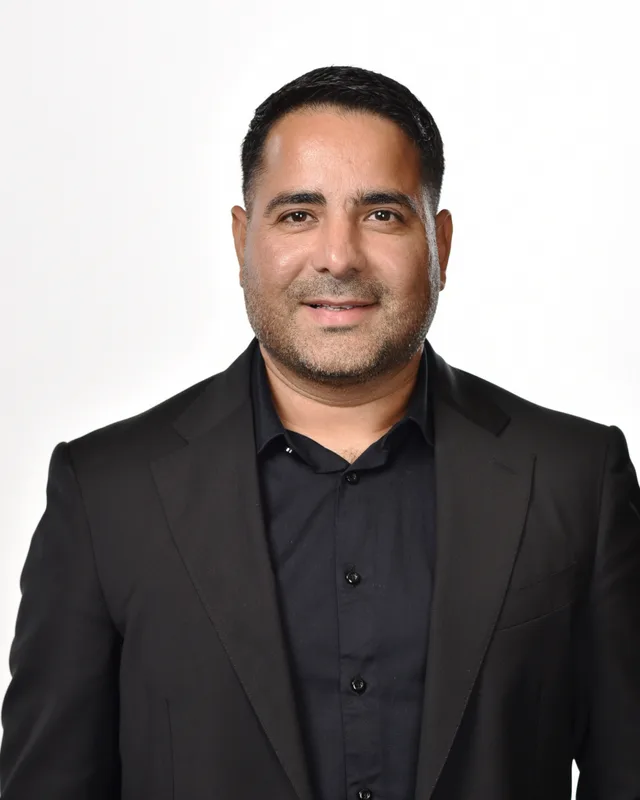
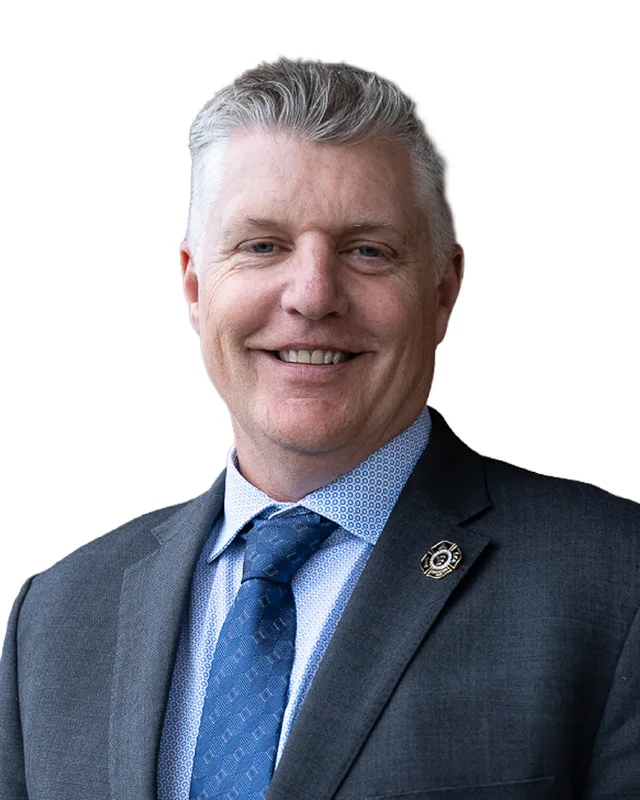
Ravi Kahlon of the BC NDP won Delta North in 2024 with 10,988 votes, 52.73% of the valid vote. Raj Veauli of the Conservative Party received 8,381 votes, Nick Dickinson-Wilde of the BC Green Party 1,292 and Manqoosh Khan of the Freedom Party of BC 177. Turnout was 57.89% of 36,062 registered voters.
Who represented Delta North before Ravi Kahlon?
Scott Hamilton of the BC Liberal Party represented Delta North before Ravi Kahlon, after winning in 2013 with 9,613 votes, 44.53%. Guy Gentner of the BC NDP won the district in 2005 and 2009. Reni Masi of the Liberal Party won in 1996 and 2001, and Norm Lortie of the NDP won in 1991. Kahlon first won in 2017 with 11,465 votes, 48.83%.
When was Delta North created?
The name Delta North first appears in Elections BC's volume for 1987 to 2001, at the 35th general election on 17 October 1991. The volume says the number of electoral districts rose from 52 to 75 and all multi-member districts ended. Norm Lortie of the NDP won Delta North that year with 8,068 votes, 38.65%. Elections BC's earlier volume lists a district named Delta, which elected two members in 1986.
How did the boundaries of Delta North change in 2023?
The Electoral Boundaries Commission's 2023 final report moved the area south of 64th Avenue out of Delta North and into Delta South, to distribute the population of the two districts more evenly. Of the district's voting areas, 64 were in the earlier Delta North and 1 in the earlier Delta South. The report counts 58,813 people in Delta North, 9.4% from the average district.
How many people live in Delta North?
The 2021 census counted 58,815 people in Delta North, with a median age of 39.6 compared with 42.8 across British Columbia. English was the first language of 45.8% of residents and Punjabi (Panjabi) of 24.8%. Immigrants made up 41.5% of the population, and the median household income was $111,000.
Whose traditional territory is Delta North on?
Delta North lies inside the City of Delta, which says it stands on the shared, traditional, ancestral and unceded territories of the scəw̓aθən (Tsawwassen), xʷməθkʷəy̓əm (Musqueam) and other Coast Salish Peoples. The City first read this acknowledgement on 10 May 2021, with wording developed with Tsawwassen First Nation and Musqueam Indian Band. Each Nation's own website, listed under sources, gives its own account of its territory.
What is the history of Annieville in Delta North?
Annieville began in 1878, when Finlayson and Birrell's salmon canneries were established, according to the City of Delta's heritage passport. Immigrants from Norway settled there in the 1890s, and fishing and cannery work set the pattern of life until the 1940s. Annieville Park, bought in 1949 by the Annieville and District Playground Association, was the first park in North Delta.
What is Annacis Island?
Annacis Island is an island in the lower Fraser River that the Electoral Boundaries Commission's 2023 final report places in Delta North. BC Geographical Names says it was named after Francis Noel Annance, a Hudson's Bay Company clerk who travelled with James McMillan in 1827 to found Fort Langley. Grosvenor says it opened Canada's first industrial park there in 1955.