First Nations leaders warn of legal battles after BC government mandate letters order DRIPA repeal
Premier Lorne Doerkson's mandate letters, released November 24, ordered Attorney General Caroline Elliott to repeal DRIPA and defend private property rights against Aboriginal title claims. First Nations leaders responded with warnings of court action and prolonged conflict.
Long read. The subject the most local outlets covered that day, with the public record behind it. Every outlet and record is linked under the story. Read the original report on www2.gov.bc.ca.
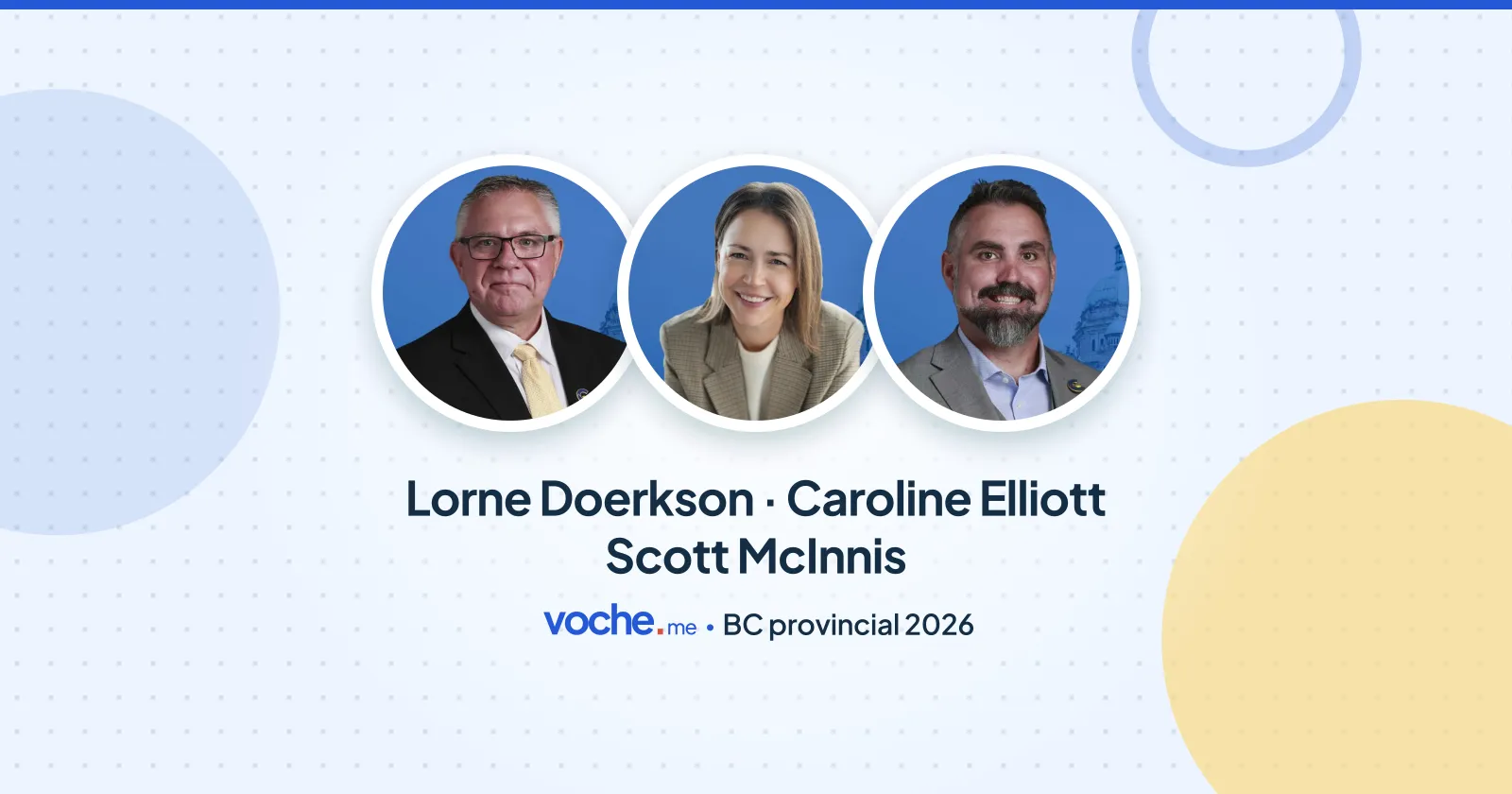
Premier Lorne Doerkson's mandate letters, made public on November 24, 2026, directed Attorney General Caroline Elliott to repeal the Declaration on the Rights of Indigenous Peoples Act and to introduce new laws reshaping how BC handles Aboriginal title. First Nations leaders responded with warnings of court action and what one called a prolonged legal battle.
Robert Phillips of the First Nations Summit said on November 27 that the direction would push First Nations toward lawyers. "Everybody will be lawyering up," he told the Nanaimo News Bulletin. Grand Chief Stewart Phillip of the Union of British Columbia Indian Chiefs, speaking the day before, said he stood by his earlier characterization of the repeal plan. "I don't regret the statement for a moment," he said, referring to his earlier description of the move as a declaration of war.
What the mandate letters say
The BC government published mandate letters for all 25 ministers and ministers of state on November 24. The letter for Attorney General Elliott, signed by Premier Doerkson, directed her to repeal DRIPA and the related section 8.1 of the Interpretation Act, with a transition framework that respects the province's constitutional obligations to First Nations.
The letter also directed her to:
- Introduce a Property Rights Defence Act to protect private property owners
- Repeal Crown litigation directives that apply to Aboriginal title matters
- Develop an Aboriginal Title Transparency Act, which would require public disclosure of the nature and location of active Aboriginal title claims and negotiations before any binding outcome affects land
The mandate letter for Minister of Indigenous Relations and Reconciliation Scott McInnis directed him to build partnerships with First Nations even as the government moves toward the repeal.
First Nations Summit: 'Everybody will be lawyering up'
Robert Phillips, political executive of the First Nations Summit and a member of the First Nations Leadership Council, said on November 27 that he wanted to meet with the premier, Elliott, and other ministers. "We need to meet with the premier, attorney general, and all the ministers, because I just want to get back to work," he told the Nanaimo News Bulletin.
Phillips said the direction on DRIPA worried him. He expressed concern about Elliott's experience with the complex legal matters the repeal would involve. The Nanaimo News Bulletin reported that Phillips warned of "dire consequences" and said the government's approach would lead to legal challenges.
Phillips said he had no interest in what he called culture wars and said his focus was on crime, safety, and economic issues.
UBCIC Grand Chief: 'Protracted legal battle'
Grand Chief Stewart Phillip, who has led the Union of British Columbia Indian Chiefs for decades, spoke on November 26, the day the mandate letters became widely reported. He told reporters he held to what he said after the October 24 election.
"I don't regret the statement for a moment," he said, according to My East Kootenay Now. He said the repeal would generate a "protracted legal battle."
Phillip described the mandate letter direction in strong terms. "This government epitomizes the history of racism in British Columbia," he said. He also said: "I've been doing this work for 51 years and I've never seen a bigger mess."
Both Phillips and Phillip have said they are open to meeting with Doerkson and his ministers. Neither has said they will accept the repeal as a condition of that work.
What DRIPA does
BC passed the Declaration on the Rights of Indigenous Peoples Act unanimously in November 2019. It requires the provincial government to work with Indigenous communities to align all BC laws with the United Nations Declaration on the Rights of Indigenous Peoples. BC is the only Canadian province with such a law.
The repeal was a central Conservative platform commitment. The platform listed it on page 46, under the party's pledge to protect private property rights. Business groups and some municipal governments had argued that DRIPA created investment uncertainty, particularly after a December 2025 BC Court of Appeal ruling found that BC's old system for registering mineral claims without consulting affected First Nations was inconsistent with UNDRIP.
The same court ruled that courts can declare a provincial law inconsistent with UNDRIP, though the law stays in force. That case is now before the Supreme Court of Canada.
Two new laws alongside the repeal
The mandate letter proposed two new laws that go beyond the repeal itself.
The Property Rights Defence Act, as described in the letter, is directed at protecting private property owners. No text has been introduced. Its scope and reach are not yet public.
The Aboriginal Title Transparency Act would require the government to publish active Aboriginal title claims and negotiations before any binding outcome affecting land. First Nations leaders have not publicly responded to this proposal separately from the broader repeal announcement.
What the platform promised
The Conservative Party of BC platform, on page 46, committed to repeal DRIPA as part of its promise to protect private property rights. The voche.me promise tracker records the repeal as not started. It will update when legislation is introduced.
You can follow the repeal commitment at the BC provincial tracker.
What comes next
The first full sitting of the BC Legislature is expected in spring 2027. That is when the government has said it will introduce the DRIPA repeal and related legislation. Between now and then, First Nations leaders including Phillips and Phillip say they want to meet with Doerkson and Elliott. Whether those meetings produce changes to the government's approach before legislation is tabled will shape how much opposition the repeal faces.
Questions this story answers
What did Premier Doerkson's mandate letters say about DRIPA?
The mandate letter for Attorney General Caroline Elliott, dated November 24, 2026, directed her to repeal the Declaration on the Rights of Indigenous Peoples Act and the related section 8.1 of the Interpretation Act. The letter also directed her to introduce a Property Rights Defence Act, repeal Crown litigation directives that apply to Aboriginal title matters, and develop an Aboriginal Title Transparency Act that would require public disclosure of active title claims and negotiations affecting land before any binding outcome. The BC government published all 25 mandate letters on November 24, 2026.
What else did the Attorney General's mandate letter direct on Indigenous relations?
Beyond repealing DRIPA, the mandate letter directed Caroline Elliott to repeal Crown litigation directives on Aboriginal title and to develop an Aboriginal Title Transparency Act. That proposed law would require the provincial government to publish the nature and location of active Aboriginal title claims and negotiations before any binding outcome affects land. The letter also directed her to introduce a Property Rights Defence Act to protect private property owners and to review provincial election laws and the Legal Professions Act.
What did First Nations Summit Political Executive Robert Phillips say?
Robert Phillips said on November 27, 2026, that he wanted to meet with Premier Doerkson, Attorney General Elliott, and all ministers to get back to work on shared priorities. He warned that the government's direction on DRIPA would drive First Nations to legal action: 'Everybody will be lawyering up,' he said, as reported by the Nanaimo News Bulletin. He also expressed concern about Elliott's experience with the complex legal matters involved in the DRIPA repeal.
What did Grand Chief Stewart Phillip of the UBCIC say?
Grand Chief Stewart Phillip, longtime president of the Union of British Columbia Indian Chiefs, stood by his earlier characterization of the DRIPA repeal plan as a 'declaration of war.' Speaking on November 26, 2026, he told reporters: 'I don't regret the statement for a moment.' He warned the repeal would trigger a 'protracted legal battle' and said, 'This government epitomizes the history of racism in British Columbia.' He also said, 'I've been doing this work for 51 years and I've never seen a bigger mess,' as reported by My East Kootenay Now.
What is the Aboriginal Title Transparency Act proposed in the mandate letters?
The mandate letter for Attorney General Elliott directed her to develop an Aboriginal Title Transparency Act. As described in the letter, the law would require the provincial government to publish the nature and location of active Aboriginal title claims and negotiations before any binding outcome affecting land. The letter describes the goal as giving the public information about title matters before those matters produce a final result. The proposed law has not been introduced. It would arrive in the legislature alongside the DRIPA repeal, expected in spring 2027.
What is the Property Rights Defence Act mentioned in the mandate letter?
The mandate letter for Attorney General Elliott directed her to introduce a Property Rights Defence Act. The letter describes it as protection for private property owners and positions it alongside the DRIPA repeal as part of the government's commitment to private property rights. The Conservative Party of BC platform promised to protect private property rights and listed the DRIPA repeal under that commitment on page 46. The Property Rights Defence Act has not been introduced. No text was available on November 28, 2026.
Who is Scott McInnis and what role does he play?
Scott McInnis is the MLA for Columbia River-Revelstoke and the Minister of Indigenous Relations and Reconciliation. His mandate letter, also dated November 24, 2026, directed him to build partnerships with First Nations even as the government prepares to repeal DRIPA. McInnis first called for DRIPA's repeal almost a year before the October 24, 2026 election while serving as the opposition critic for the same ministry. He now carries the task of maintaining relationships with First Nations leaders who want the law kept.
When is DRIPA expected to be repealed?
The first full sitting of the BC Legislature after the October 24, 2026 election is expected in spring 2027. That is when Premier Doerkson said his government will introduce legislation to repeal DRIPA. The BC Conservative platform listed the repeal under its commitment to protect private property rights, and the mandate letters of November 24, 2026 confirmed the direction. The voche.me promise tracker follows the repeal commitment at the BC provincial tracker page.
What is DRIPA and when was it passed?
DRIPA is the Declaration on the Rights of Indigenous Peoples Act. BC passed it unanimously in November 2019. It requires the provincial government to work with Indigenous communities to bring all BC laws into alignment with the United Nations Declaration on the Rights of Indigenous Peoples. BC is the only Canadian province with a law like this. In December 2025, the BC Court of Appeal ruled that BC's old system for registering mineral claims without first consulting affected First Nations was inconsistent with UNDRIP, adding urgency to the debate.
Sources
The pages this story draws on. Open one to check a claim yourself.
- BC Government: Mandate letter for Caroline Elliott, Attorney General (Nov 24, 2026)www2.gov.bc.ca
- Nanaimo News Bulletin: 'Lawyering up': BC First Nations leaders warn incoming government on DRIPA repeal (Nov 27, 2026)nanaimobulletin.com
- My East Kootenay Now: UBCIC Grand Chief warns of legal battles as BC government moves to repeal DRIPA (Nov 27, 2026)myeastkootenaynow.com
- BC promise tracker: Repeal DRIPAvoche.me
Found an error? Tell the editors with the corrections form. A correction is noted on the story it changes. Read our standards.