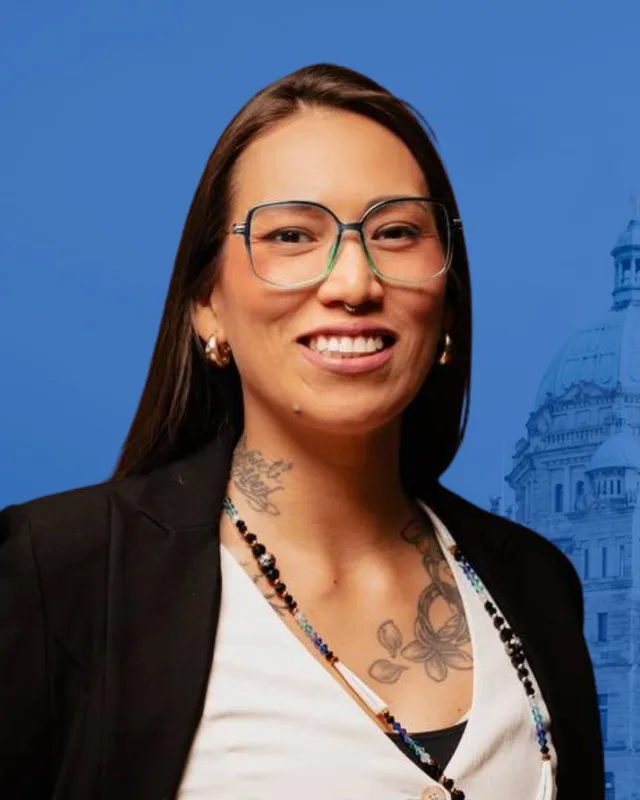
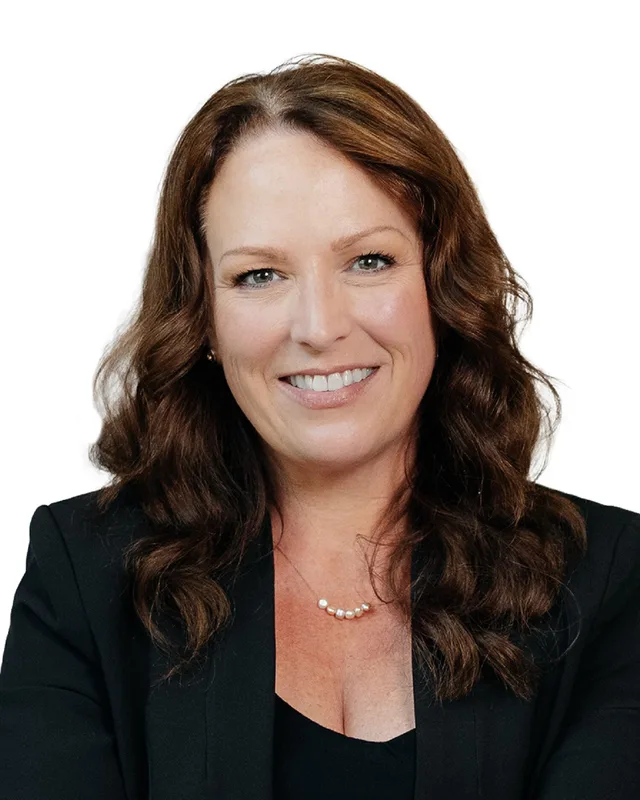
This district elects one MLA. Voters mark one name on Saturday, October 24, 2026, and the candidate with the most votes wins the seat.
Chilliwack-Cultus Lake is a provincial electoral district in the Fraser Valley. The Electoral Boundaries Commission says it takes in the communities of Sardis, Bridal Falls, Yarrow and Cultus Lake, and also the southern parts of Chilliwack. The 2021 census counted 53,050 people in it, and the commission gives its area as 1,113 square kilometres.
Chilliwack-Cultus Lake covers the southern parts of the City of Chilliwack and the communities south of the Fraser River that lie outside the city centre. The Electoral Boundaries Commission's 2023 final report names Sardis, Bridal Falls, Yarrow and Cultus Lake, and says the district is bounded in the north by the Trans-Canada Highway. Its northern boundary follows Highway 1, Vedder Road, the Southern Railway, South Sumas Road and Lickman Road to the Vedder River. The commission gives the district an area of 1,113 square kilometres and a population of 53,148, which is 1.2% below the average district.
BC Parks says Cultus Lake Park lies 11 km southwest of Chilliwack and can be reached from the Highway 1 exits at Yarrow or Sardis. The City of Chilliwack groups its neighbourhoods into urban, hillside and rural types, and lists Sardis and South Vedder as urban neighbourhoods and Yarrow as a rural one. A naming submission to the Chilliwack school district describes the place where the Chilliwack River breaks through between the Promontory and Vedder mountains and meets the Vedder River. In 2024 voters in the district used halls and schools in Promontory, Ryder Lake, Yarrow, Sardis, Vedder and Cultus Lake, according to the Elections BC results file.
The Province of British Columbia describes the Ts'elxwéyeqw Tribe as seven Stó:lō Nation and Stó:lō Tribal Council bands in the Chilliwack area: Aitchelitz, Skowkale, Shxwhá:y, Squiala, Tzeachten, Yakweakwioose and Soowahlie. Its page records 574 members. Skowkale First Nation calls its community Sq'ewqéyl and says its people are one of the tribes of the Stó:lō, known as the People of the River, whose ancestors lived in the land drained by the Chilliwack River. The Province places Soowahlie on the Chilliwack River, 12 km south of Chilliwack, with a population of 436.
BC Parks says local First Nations knew Cultus Lake as Swee-ehl-chah or Tsowallie. BC Geographical Names records that Cultus comes from Chinook Jargon and means bad, and that the Indigenous people believed the lake was the home of evil spirits. The Geographic Board of Canada adopted the name on June 30, 1914. The Chilliwack Museum and Archives adds that for the Stó:lō the lake was an important place for spirit quests.
A naming submission sent to the Chilliwack school district explains Stitó:s as a Halq'eméylem place name meaning Place of Crossing. The authors say the Ts'elxwéyeqw people built a tall lookout tower there, where the Chilliwack River meets the Vedder River. The district's new school at 5337 Tyson Road carries the name Stitó:s Lá:lém Totí:lt, and the submission translates the second part as house of learning. The school was a voting place in the district in 2024.
Sardis, Vedder Crossing and Coqualeetza, 1858 to 1910
The Chilliwack Museum and Archives says that after the 1858 gold rush many people came to the Chilliwack area. A.C. Wells, Adam Vedder and Jane Evans were among the settlers who claimed land in the 1860s along what became the Sardis corridor. By 1867 First Nations reserves had been set aside beside the Chilliwack River, which once flowed through parts of Sardis. The museum credits Mrs. Adam Swart Vedder with the name Sardis: she opened her Bible at random and found it in Revelation 3, 1. Residents petitioned for a post office in 1887, and Alex Campbell built the first store in 1891.
The museum says the Methodist Church founded the Coqualeetza Residential School in 1888 and built a large school building in 1894. The National Centre for Truth and Reconciliation dates the school from 1889 to 1940. The museum says Coqualeetza now serves as a centre for the Stó:lō Nation. It also records that A.C. Wells' Edenbank Creamery became the first co-operative creamery in British Columbia in 1896, and that hop growing on Vedder Road ended in 1997 when the last farm stopped production. The British Columbia Electric Railway reached Sardis in 1910 and brought electricity, water and telephone service.
At Vedder Crossing the Chilliwack River changed course. The museum says a flood in 1875 partly blocked the river, which sent some of its water into a small creek known as Vedder Creek. The blockage was complete by 1891 and a bridge was needed. Vedder Road was the main route to Vancouver until 1926, because Sumas Lake was drained in 1924 and a bridge over the Vedder Canal opened in 1925.
The Chilliwack Museum and Archives traces Yarrow to a post office that opened on Majuba Hill on July 1, 1900, in the home of William and Mary Jane Chadsey. In 1910 the British Columbia Electric Railway finished a line along the foot of Vedder Mountain beside Sumas Lake and named a station Yarrow. The museum gives two accounts of the name: one says it comes from the yarrow plant that grows in the area, and the other says the builder named the station after the bitterest herb in the community, because a landowner had made the work difficult.
A history site run by Yarrow residents dates the Sumas Lake Reclamation project to 1920 to 1924. The Vedder River was sent into the Vedder Canal, and the lake bed became farmland. The Sumas First Nation timeline gives the years as 1920 to 1925 and says the work created 33,000 acres of farm land and devastated the traditional way of life of the Semá:th people. The residents' chronology records that the first Mennonite families reached Yarrow in February 1928 and took temporary housing on Majuba Hill. On September 13, 1928 the new school opened with 29 students from 21 families, the museum says.
The community then built its own institutions. Mennonite Brethren built a first church in 1930. Raspberry growers formed the Yarrow Growers Association in 1936. The Yarrow Waterworks District received its charter in 1944 and later added irrigation, sidewalks, street lights and a volunteer fire department. In 1952 the community bought the former Sharon Mennonite Collegiate Institute on Wilson Road for $60,000, and it served as Yarrow Junior High School until 1964.
The Chilliwack Museum and Archives says Cultus Lake was a summer resort and picnic area until the early 1920s. One family history in the museum's account places camping at the lake in the 1870s or 1880s. In 1924 the City of Chilliwack and the Township of Chilliwhack formed a joint committee to govern the lake, and permanent buildings began to appear on leased lots. The Cultus Lake Park Board was formed in 1932. The park's own governance page says the Legislature passed the Cultus Lake Park Act on April 13, 1932, after the City and the Township petitioned for it.
The Park Board says its five commissioners now include three elected from Cultus Lake Park and two from the District of Chilliwack, and that the park holds 640 acres of land. A pavilion built near Main Beach in 1939 housed a dance hall, post office, store and library, and the museum says it was later torn down. When the military training base opened near Vedder Crossing in 1942, a severe housing shortage led owners to winterize summer cottages, and the lake became a year-round community. BC Parks says Cultus Lake received provincial park status in 1948.
A Veterans Affairs Canada plaque record says Camp Chilliwack was established in February 1942 near Vedder Crossing, in response to Japan's attack on Pearl Harbour. It housed No. 112 Canadian Army Basic Training Centre and an engineer training centre moved from Saskatchewan. The Chilliwack Museum and Archives says Vedder Crossing had stayed rural until the 1940s, and that it became a tent city when the Canadian Military Engineers arrived in April 1942. One resident remembered only two houses on the east side of Vedder Road between Promontory Road and the Vedder bridge before the camp came.
After the war the camp became Canadian Forces Base Chilliwack, which trained military engineers for the combined armed forces after 1968. The record says the Canadian Forces Officer Candidate School moved there in 1970 and the 3rd Battalion, Princess Patricia's Canadian Light Infantry, arrived in 1994. Budget cuts closed the base in 1997. A memorial on Caen Avenue, dedicated on November 11, 1997, carries the words Home of the Canadian Military Engineers.
BC Geographical Names records that the Township of Chilliwack was incorporated on April 26, 1873 and the City of Chilliwack on February 21, 1908. On January 1, 1980 the two merged into the District of Chilliwack, and the municipality became a city again in 1999. The record says the name comes from a Halkomelem word that scholars read as valley of many streams.
The University of the Fraser Valley says it began as Fraser Valley College in 1974 to 1975, and that by 1975 it had over 2,300 students across Chilliwack, Abbotsford, Mission, Hope and Agassiz. Trades programming began in Chilliwack in 1978 and an Agriculture Centre opened in 1986. In 2012 a renovated building of 150,000 square feet opened at Canada Education Park, and most Chilliwack programs moved there from Yale Road. The Agriculture Centre of Excellence followed in 2014. The Chilliwack campus was a voting place in the district in 2024.
Global News reported that on November 16, 2021 the City of Chilliwack ordered residents of Yarrow, from Boundary Road to Browne Road and all of Majuba Hill, to leave immediately. The city gave the reason as the risk of flooding after an atmospheric river, which is a long band of heavy rain. Residents were told to register at the reception centre at the Neighbourhood Learning Centre at Chilliwack Secondary School, and to leave by Boundary Road to Keith Wilson and then over the Keith Wilson Bridge.
The order followed one by Abbotsford for the Sumas Prairie, and Highway 1 between Abbotsford and Hope was closed by flooding and road debris. Yarrow lies on land that was the shore and bed of Sumas Lake before the drainage of the 1920s, which the Chilliwack Museum and Archives says turned that land into farms.
Chilliwack-Cultus Lake is a district created by the Electoral Boundaries Commission's final report of April 3, 2023, and the 2024 provincial general election is the only one held under the name. The commission renamed the two Chilliwack districts and adjusted their boundaries. In its final deliberations it moved Yarrow into Chilliwack-Cultus Lake and Popkum into Chilliwack North. Elections BC's table of old and new boundaries lists the district's overlap with the 2017 to 2024 districts as 56 voting areas with Chilliwack-Kent and 8 with Chilliwack.
The name Chilliwack-Kent was first printed in Elections BC's volume for 1987 to 2001, at the 37th general election on May 16, 2001. That was the first election held under the Electoral Districts Act (SBC 1999 c. 31), which raised the number of districts from 75 to 79. Barry Penner of the Liberal Party won it with 13,814 votes (74.88%), and the volume lists him earlier as the winner of Chilliwack in 1996. He won again in 2005 with 11,368 votes (57.14%). Elections BC's volume for 2002 to 2013 prints Chilliwack-Hope, not Chilliwack-Kent, at the 2009 and 2013 elections. Penner won Chilliwack-Hope in 2009 with 8,985 votes (53.28%) and resigned on January 9, 2012. Gwen O'Mahony of the New Democratic Party won the by-election of April 19, 2012 with 6,022 votes (41.89%). Laurie Throness of the Liberal Party won Chilliwack-Hope in 2013 with 10,053 votes (49.15%).
The name Chilliwack-Kent returned in 2017. Throness of the BC Liberal Party won it that year with 11,841 votes (52.75%). In 2020 Kelli Paddon of the BC NDP won with 8,268 votes (36.42%), ahead of Throness with 6,964 (30.68%) and Jason Lum, an independent, with 5,370 (23.65%).
In 2024 A'aliya Warbus of the Conservative Party won Chilliwack-Cultus Lake with 13,656 votes (54.58%). Paddon received 11,366 (45.42%). Turnout was 60.37% of 41,587 registered voters, and 25,022 valid votes were counted. CTV News reported on August 31, 2026 that Warbus had announced her departure from the BC Conservative caucus.
Members for Chilliwack-Kent, which covered 56 of this district’s 62 voting areas before 2024
Parliament
It sat
Member
Elected as
Party on the legislature’s record
42nd
2020 to 2024
Kelli Paddon
BC NDP
BC NDP
41st
2017 to 2020
Laurie Throness
BC Liberal Party
BC Liberal Party
38th
2005 to 2009
Barry Penner
BC Liberal Party
BC Liberal Party
37th
2001 to 2005
Barry Penner
BC Liberal Party
“Elected as” is the affiliation Elections BC printed with the winning result. The last column is the party the legislature’s records give for that parliament, which differs when a member changed party while in office. A row with that column empty is a winner Elections BC prints whom the legislature’s records leave out. Source: Legislative Assembly of British Columbia (opens in a new tab)
Boundaries since 2024
Chilliwack-Cultus Lake has 62 voting areas. They overlap these districts from 2017 to 2024: Chilliwack-Kent (56), Chilliwack (8).
The commission that drew the boundaries counted 53,148 people in the district, 1.2% below the average for a district, over 1,113 km².
Chilliwack-Cultus Lake is a provincial electoral district in the Fraser Valley of British Columbia. The Electoral Boundaries Commission's 2023 final report says it includes the southern parts of Chilliwack and the communities of Sardis, Bridal Falls, Yarrow and Cultus Lake. The commission gives its area as 1,113 square kilometres and counts 53,148 people in it.
Which communities are in Chilliwack-Cultus Lake?
Chilliwack-Cultus Lake includes Sardis, Bridal Falls, Yarrow and Cultus Lake, according to the Electoral Boundaries Commission's 2023 final report. In 2024 Elections BC also placed voting places in the district at Promontory, Ryder Lake, Vedder and Yarrow. Soowahlie, a Stó:lō community on the Chilliwack River, appears on the commission's map of the district.
Who won Chilliwack-Cultus Lake in the 2024 provincial election?
A'aliya Warbus of the Conservative Party won Chilliwack-Cultus Lake in 2024 with 13,656 votes, 54.58% of the valid vote. Kelli Paddon of the BC NDP received 11,366 votes, 45.42%. Turnout was 60.37% of 41,587 registered voters, and 25,022 valid votes were counted in the district.
Who represented this area before 2024?
Kelli Paddon of the BC NDP represented Chilliwack-Kent from 2020 to 2024, and Elections BC's table lists 56 voting areas of overlap between that district and Chilliwack-Cultus Lake. Paddon won it in 2020 with 8,268 votes, 36.42%. Laurie Throness of the BC Liberal Party held Chilliwack-Kent from 2017 to 2020, after Barry Penner of the same party held it from 2001 to 2009.
When was Chilliwack-Cultus Lake created?
Chilliwack-Cultus Lake was created by the Electoral Boundaries Commission's final report of April 3, 2023, and the 2024 provincial general election was the first held under the name. The district has 62 voting areas, and Elections BC's table lists 56 of overlap with Chilliwack-Kent and 8 with Chilliwack as those districts stood from 2017 to 2024.
How did the 2023 boundary change affect Chilliwack-Cultus Lake?
In its final report of 2023 the Electoral Boundaries Commission moved Yarrow into Chilliwack-Cultus Lake and Popkum into Chilliwack North. The commission said this better reflects community boundaries and balances populations. It counts 53,148 people in Chilliwack-Cultus Lake, which is 1.2% below the average district, and 52,440 in Chilliwack North.
How many people live in Chilliwack-Cultus Lake?
The 2021 census counted 53,050 people in Chilliwack-Cultus Lake, with a median age of 42 compared with 42.8 across British Columbia. Of households, 82.6% own their home and 16.9% rent. The median household income is $94,000, the median home value is $800,000, and the median rent is $1,450.
Whose traditional territory is Chilliwack-Cultus Lake on?
Skowkale First Nation says its people are Ts'elxwéyeqw, one of the Stó:lō tribes, and that its ancestors lived in the land drained by the Chilliwack River. The Province of British Columbia lists seven Ts'elxwéyeqw bands in the Chilliwack area, including Soowahlie, which lies on the Chilliwack River in Chilliwack-Cultus Lake. The Skowkale and Province pages are listed under sources.
How did Cultus Lake get its name?
Cultus Lake takes its name from Chinook Jargon, in which cultus means bad, according to BC Geographical Names. The Geographic Board of Canada adopted the name on June 30, 1914. BC Parks says local First Nations knew the lake as Swee-ehl-chah or Tsowallie. The lake is in Chilliwack-Cultus Lake, and Cultus Lake is one of its named communities.
What was Camp Chilliwack in Chilliwack-Cultus Lake?
Camp Chilliwack was a military training base set up near Vedder Crossing in February 1942, in the area now inside Chilliwack-Cultus Lake. It later became Canadian Forces Base Chilliwack and trained military engineers. Budget cuts closed it in 1997, and a memorial on Caen Avenue was dedicated on November 11, 1997.