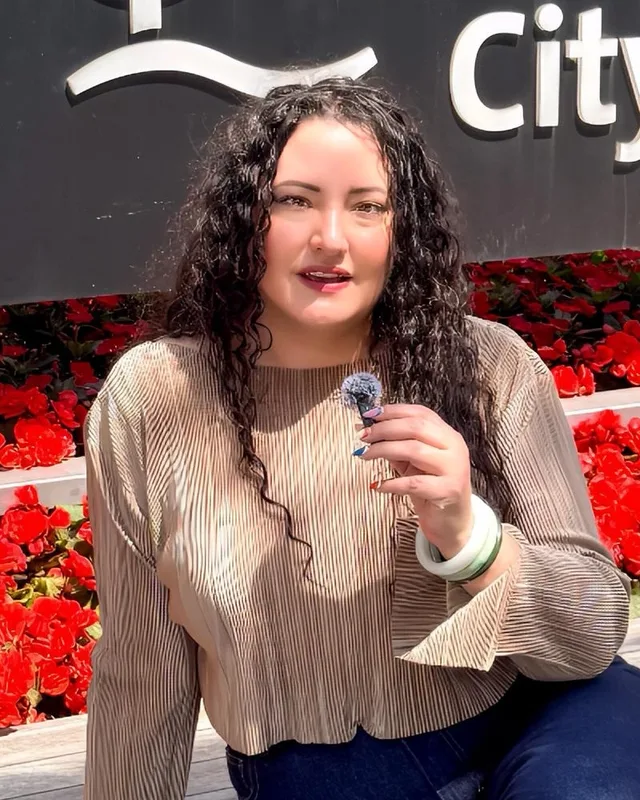
Rosalinda Thorleifson was elected to Coquitlam City Council on October 17, 2026. The City of Coquitlam's official count gives her 9,836 votes, seventh of the 20 council candidates, and the City's Chief Election Officer declared her elected on October 21, 2026. Harvey Su, sixth, had 9,968 votes, and Benjamin Perry, eighth, 9,604. The City's results print no elector organization for any candidate, and VoteMate lists her as an independent. The Tri-Cities Dispatch reported that the newcomers to council were Matthew Sebastiani, Su, Thorleifson and Perry, and Freshet News reported that the four replaced Craig Hodge, Trish Mandewo, Brent Asmundson and Dennis Marsden.
The Dispatch reported on August 19, 2026 that she announced her independent campaign on Friday, August 14, promising to manage the city's growth while attracting jobs and keeping infrastructure and services in step. It reported that she is a lifelong Coquitlam resident, that her professional background is in marketing and business growth with large companies and Canadian technology startups, that her family operated a small business in Coquitlam for nearly three decades, and that, according to her campaign, she has been president of her strata council. Freshet News reported on August 17 that she would lobby for more two- and three-bedroom homes, support small business and create jobs around the Millennium Line and in industrial areas. By her own account, on VoteMate, she holds a Bachelor of Communications from Simon Fraser University and her most recent job was marketing manager for North America at WISI America; voche.me has not checked these with the university or the company.
The Dispatch quoted her launch statement: "Now I want to bring that same drive to city hall: affordability people can actually feel, the right mix of housing so residents can keep a high quality of life, and a local economy that brings good, well-paying jobs close to home." The Dispatch reported that her Coquitlam Works proposal would recruit employers to areas near SkyTrain stations and to industrial areas such as United Boulevard, that she wants a fast-track permitting stream modelled on Surrey and Toronto, and that she would advocate against provincial funding cuts to shelter and outreach services that she argues have shifted costs onto property taxpayers.
In her answers to the Dispatch, printed on October 13, 2026, she said she had lived in Coquitlam for 40 years and that the city is getting large homes most people cannot afford and small condos with a poor quality of life. She said council's minimum bedroom size of 86 square feet is far too low and that she would be a voice to raise it. She named roads and parking as the biggest transportation problem, said the City should widen roads, add connectors and shared parking, and press TransLink for more bus stops and more frequent service. She said she had accepted no campaign contributions from developers, that the 3.37 per cent tax increase was too high for people already struggling with the cost of living, and that she would work to reduce tax increases as much as possible. She said she does not support Flock or Axon surveillance cameras, and cited a City report that counted $37.6 million in costs downloaded onto Coquitlam from 2021 to 2024.
Her platform's fourth section, Canadian Technology, Canadian Control, asks for a Coquitlam data residency policy modelled on Toronto's and for City technology contracts to favour BC and Canadian companies. Its fifth section asks the Province for wildfire prevention funding and proposes fire-resistant trees such as aspens in wildfire buffer zones, stewardship of Pinecone Burke Park, and keeping data centres away from the city's drinking water supply. Freshet News and the Dispatch reported that the new council is sworn in on November 9, 2026.