---
title: "Vancouver-Point Grey: candidates, history and census, BC provincial 2026 | voche.me"
canonical_url: "https://voche.me/bc/provincial-2026/races/mla/vancouver-point-grey"
last_updated: "2026-10-10T04:05:32.166Z"
meta:
description: "4 candidates in Vancouver-Point Grey, BC provincial 2026. Area history, results since 2005, past MLAs and the 2021 census."
"og:description": "4 candidates in Vancouver-Point Grey, BC provincial 2026. Area history, results since 2005, past MLAs and the 2021 census."
"og:title": "Vancouver-Point Grey: candidates, history and census, BC provincial 2026"
"twitter:description": "4 candidates in Vancouver-Point Grey, BC provincial 2026. Area history, results since 2005, past MLAs and the 2021 census."
"twitter:title": "Vancouver-Point Grey: candidates, history and census, BC provincial 2026"
---
**
MLA · BC PROVINCIAL 2026
# Vancouver-Point Grey.
4 candidates, one seat.
This district elects one MLA. Voters mark one name on Saturday, October 24, 2026, and the candidate with the most votes wins the seat.
Vancouver-Point Grey is a provincial electoral district on the west side of the City of Vancouver, beside the Strait of Georgia. It takes in Point Grey, the western part of Kitsilano, part of Dunbar, the University Endowment Lands and the University of British Columbia campus. The 2021 census counted 56,810 people in it, and the Electoral Boundaries Commission gives its area as 41 square kilometres.
## The candidates
In alphabetical order
[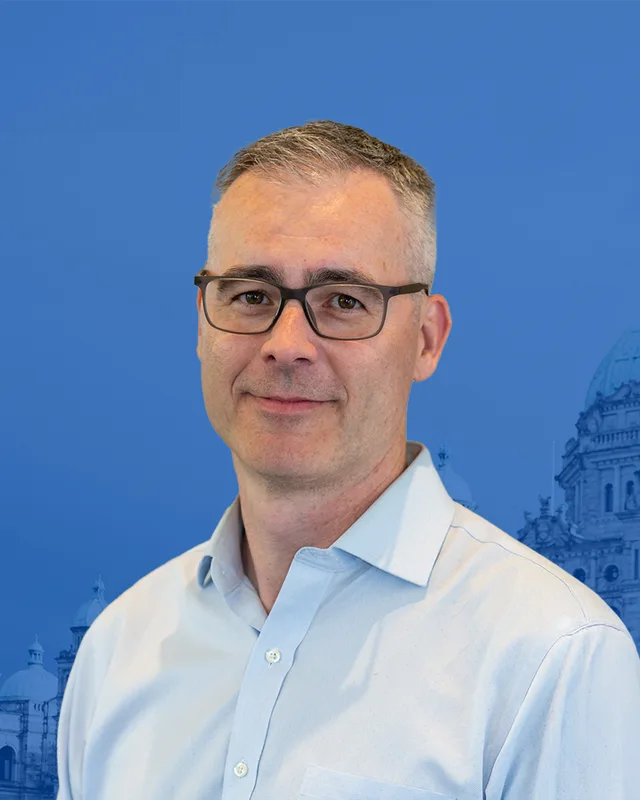MLA · Vancouver-Point Grey**Conservative Party of BC**Alex McMillan
Researched by voche.meExplore the profile ](https://voche.me/bc/provincial-2026/candidates/alex-mcmillan) [MLA · Vancouver-Point Grey**BC Green Party**Beatrice Sharpe
On the official list. Research to come.Explore the profile ](https://voche.me/bc/provincial-2026/candidates/beatrice-sharpe) [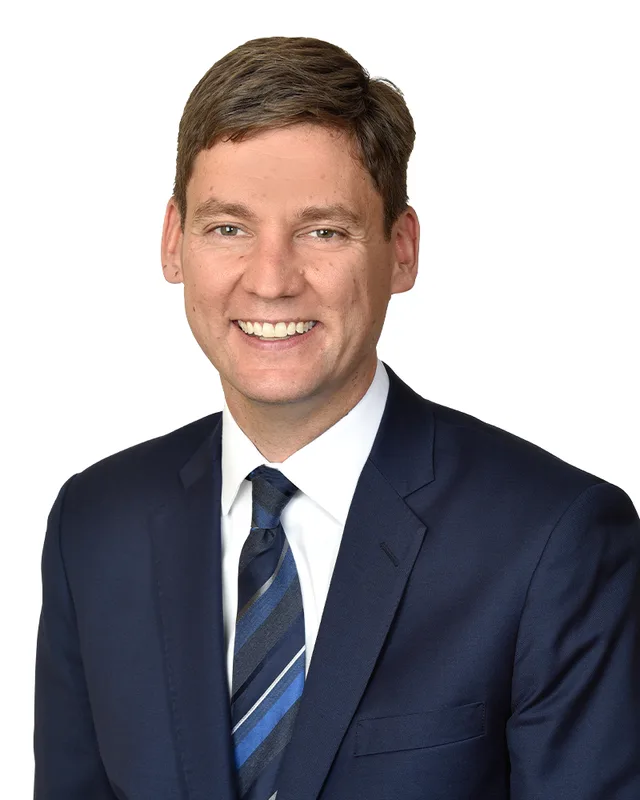MLA · Vancouver-Point Grey**BC NDP**David Eby
Researched by voche.meExplore the profile ](https://voche.me/bc/provincial-2026/candidates/david-eby) [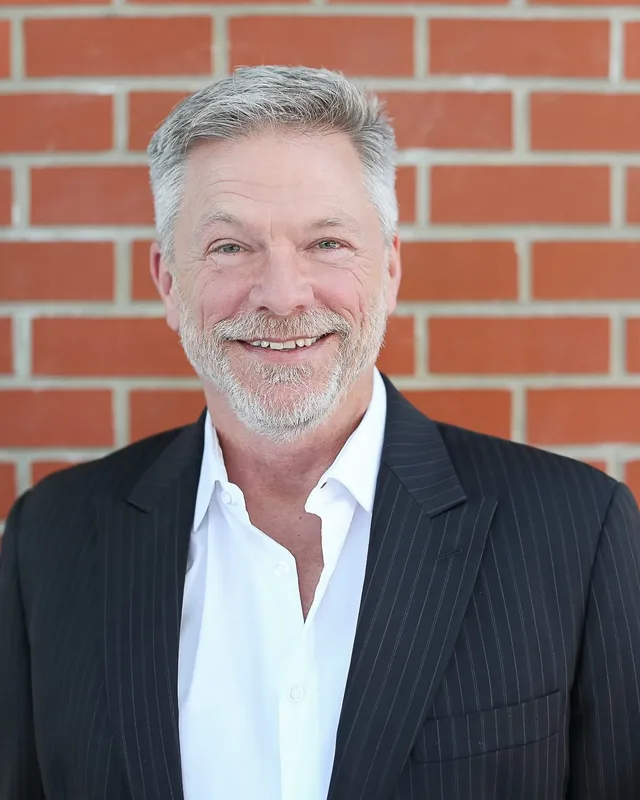MLA · Vancouver-Point Grey**Centre BC**Michael Davis
Researched by voche.meExplore the profile ](https://voche.me/bc/provincial-2026/candidates/michael-davis)
- People, 2021 census
- 56,810
- Area
- 41 km²
- Registered voters, 2024
- 34,880
- Turnout, 2024
- 63.43%
- Median age
- 37.2
- Median household income, 2020
- $87,000
THE DISTRICT
## Where Vancouver-Point Grey is
41 km² · 56,810 people
Vancouver-Point Grey lies on the west side of the City of Vancouver. The Electoral Boundaries Commission's 2023 final report says it includes the UBC Endowment Lands, Point Grey, the western part of Kitsilano and part of the Dunbar neighbourhood north of King Edward. The report says the Strait of Georgia forms its northern, western and southern boundaries, and that its eastern boundary follows Camosun Street, W King Edward Avenue, W 16th Avenue and Balsam Street. Vancouver-Quilchena lies to the south and takes in the Musqueam 2 reserve. Vancouver-South Granville lies to the east. The commission counted 56,818 people in the district, 5.7% from the average district size, and gives its area as 41 square kilometres.
Much of the land is shoreline and forest. The University Endowment Lands cover 1,200 hectares by the account of their administration, and 763 hectares of that is Pacific Spirit Regional Park. Metro Vancouver lists more than 55 km of walking trails there, and the City of Vancouver places Camosun Bog inside the park. On English Bay the City names Jericho Beach and Spanish Banks as the two popular beaches of West Point Grey. Metro Vancouver lists Chancellor Boulevard, University Boulevard, 16th Avenue and SW Marine Drive as the transit routes to the park.
Most people reach the university by bus. TransLink says the 99 B-Line on the Broadway corridor carried up to 60,000 customers a day in 2019, and that UBC had a daytime population of 80,000 people that year. TransLink is studying a SkyTrain extension from Arbutus with stations at Macdonald, Alma, Jericho and the UBC Trolley Bus Loop. The 2021 census counted 56,810 residents, of whom 37.4% are immigrants, and 20.3% of working residents are in educational services, the largest industry group. Owners hold 50.1% of homes and renters 49.9%.
- Point Grey
- West Point Grey
- Kitsilano (western part)
- Dunbar (part north of W King Edward Avenue)
- University Endowment Lands
- University of British Columbia
- University Hill and Wesbrook Village
Sources: [British Columbia Electoral Boundaries Commission (opens in a new tab)](https://elections.bc.ca/docs/rpt/BCEBC-Final-Report-April-3-2023.pdf), [University Endowment Lands Administration, Province of British Columbia (opens in a new tab)](https://www.universityendowmentlands.gov.bc.ca/about/history.htm), [Metro Vancouver (opens in a new tab)](https://metrovancouver.org/services/regional-parks/park/pacific-spirit-regional-park), [City of Vancouver (opens in a new tab)](https://vancouver.ca/news-calendar/dunbar-southlands.aspx), [City of Vancouver (opens in a new tab)](https://vancouver.ca/news-calendar/point-grey.aspx), [TransLink (opens in a new tab)](https://www.translink.ca/plans-and-projects/projects/rapid-transit-projects/millennium-line-ubc-extension), [Elections BC (opens in a new tab)](https://catalogue.data.gov.bc.ca/dataset/44914a35-de9a-4830-ac48-870001ef8935)
HISTORY
## The history of the area
Checked Thursday, October 8, 2026
### Musqueam, Squamish and Tsleil-Waututh territory, and the village at Jericho
Three Nations describe the shores of English Bay and the Fraser River estuary as part of their territory, each in its own words. Musqueam, whose name for itself is xʷməθkʷəy̓əm, says its ancestors lived throughout the Fraser River estuary and looked after it for thousands of years. Its territory page lists the UBC Endowment Lands among the places that today bear other names within its territory. The Squamish Nation, Sḵwx̱wú7mesh Úxwumixw, gives its territory as 6,732 square kilometres that stretch from Point Grey in the south to Roberts Creek in the west. Tsleil-Waututh Nation, səlilwətaɬ, calls itself the People of the Inlet and gives its territory as 1,865 square kilometres.
UBC's archives say the Point Grey campus stands where Coast Salish peoples lived, in particular Musqueam, and give the Musqueam name of Point Grey, written in English letters, as Ulksun. The same page says Squamish and Tsleil-Waututh people also used the land and its resources. The City of Vancouver names the Musqueam village at West Point Grey as Ee'yullmough. Its Jericho Lands page writes the three Nations' name for that site as ʔəy̓alməxʷ, and Bayview School says it stands near a former Musqueam village that the school writes iy'a'l'mexw.
The City adds that Musqueam people long revered Camosun Bog, which it calls 2,000 years old and places within Pacific Spirit Regional Park, as a portal to the spirit world. The Musqueam reserve itself lies in the next district, Vancouver-Quilchena, according to the commission's 2023 report.
Sources: [Musqueam Indian Band (xʷməθkʷəy̓əm) (opens in a new tab)](https://www.musqueam.bc.ca/our-story/our-territory/), [Squamish Nation (Sḵwx̱wú7mesh Úxwumixw) (opens in a new tab)](https://www.squamish.net/about-us/our-land/), [Tsleil-Waututh Nation (səlilwətaɬ) (opens in a new tab)](https://twnation.ca/about/), [University of British Columbia Archives (opens in a new tab)](https://archives.library.ubc.ca/?p=2475), [City of Vancouver (opens in a new tab)](https://vancouver.ca/news-calendar/point-grey.aspx), [City of Vancouver (opens in a new tab)](https://vancouver.ca/home-property-development/jericho-lands.aspx), [Vancouver School Board (opens in a new tab)](https://www.vsb.bc.ca/bayview/about-us), [City of Vancouver (opens in a new tab)](https://vancouver.ca/news-calendar/dunbar-southlands.aspx), [British Columbia Electoral Boundaries Commission (opens in a new tab)](https://elections.bc.ca/docs/rpt/BCEBC-Final-Report-April-3-2023.pdf)
### Spanish names, a logging camp and a beach settler, 1791 to 1897
The City of Vancouver says that the Spaniard Jose Narvaez and his crew rediscovered the site in 1791 and named it Langara Point. The next year Captains Galiano and Valdez met Captain Vancouver off the same shore, and that meeting gave Spanish Banks and English Bay their names. UBC's archives say that in the 1860s the British government made Point Grey a colonial Admiralty reserve, and that in 1865 a 21-year timber lease on the point went to the Vancouver Island Spar, Lumber and Sawmill Company, later the Hastings Sawmill Company.
The City says Jeremiah Rogers set up the first logging camp in 1865 and cut large fir trees for ship spars, and that others ran a whaling station in the 1870s. It says Rogers named the place Jericho after the Biblical Jeremiah. The Vancouver Heritage Foundation gives another account: Rogers's company, Jerry and Co., cut timber for Hastings Mill, and the name is thought to join the company name or Jerry's Cove. The City says the Vancouver Golf Club was set up in 1892 on the sand dunes of Jericho Beach and played with tomato cans for holes.
On the Kitsilano shore the City names Sam Greer as one of the first non-native settlers. He lived on the beach from 1882 until 1890 and lost a land title dispute with the Canadian Pacific Railway, which had been given the land in 1885. The City says tent campers lined the beach in summer, and that it was then called Greer's Beach after him. By 1897, the City says, only 54 property owners at Point Grey had set up homes.
Sources: [City of Vancouver (opens in a new tab)](https://vancouver.ca/news-calendar/point-grey.aspx), [University of British Columbia Archives (opens in a new tab)](https://archives.library.ubc.ca/?p=2475), [Vancouver Heritage Foundation (opens in a new tab)](https://www.vancouverheritagefoundation.org/wp-content/uploads/2021/02/HHTour-2020-Online-West-Point-Grey-to-West-Kitsilano-WEB-A.pdf), [City of Vancouver (opens in a new tab)](https://vancouver.ca/news-calendar/kitsilano.aspx)
### The Municipality of Point Grey, 1908 to 1929
The City of Vancouver Archives records that the Corporation of Point Grey was established on 1 January 1908 under letters patent of 18 December 1907. Until then the land had belonged to the District of South Vancouver since 1892. The Archives places its first boundaries south of 16th Avenue, from about Camosun Street to Cambie Street, and says Point Grey joined the City of Vancouver on 1 January 1929.
The City says the new council brought water service to West Point Grey in 1908, began work on Northwest Marine Drive and saw the Jericho Golf and Country Club open that year. A one-room school was built in 1909 for the area's 24 children. The Vancouver School Board says Queen Mary Elementary dates from 1909 and was called West Point Grey until 23 August 1915. After a tax on unimproved land, the City says building permits worth $250,000 were issued in 1912, and by 1924 forty shops lined 10th Avenue between Tolmie and Trimble Streets.
In its Dunbar-Southlands page the City says the streetcar reached Clare Road, now Dunbar Street, in 1913. Point Grey passed what the City calls the first zoning by-law in Canada in 1922, which allowed only homes and their outbuildings. Lord Byng Secondary opened in 1925 and was named for the Governor General of the time, the Vancouver School Board says. The school page adds that a wing which began as Langara Elementary in 1927 is now École Jules Quesnel.
Sources: [City of Vancouver Archives (opens in a new tab)](https://searcharchives.vancouver.ca/point-grey-b-c), [City of Vancouver (opens in a new tab)](https://vancouver.ca/news-calendar/point-grey.aspx), [Vancouver School Board (opens in a new tab)](https://www.vsb.bc.ca/queen-mary/school-history), [City of Vancouver (opens in a new tab)](https://vancouver.ca/news-calendar/dunbar-southlands.aspx), [Vancouver School Board (opens in a new tab)](https://www.vsb.bc.ca/lord-byng/school-history)
### Kitsilano: the railway company, the streetcar and a high school, 1885 to the 1960s
Kitsilano Secondary School's history page says the neighbourhood is named after Xats’alánexw (Khahtsahlanogh), a family headman of the Squamish Nation, and that his title passed to his grandson at a potlatch in 1893 at the village of Sen̓áḵw on Kitsilano Point. The City says the Canadian Pacific Railway owned most of the land east of Trafalgar Street, that the B.C. Electric Railway ran a streetcar along 4th Avenue to Alma Street, and that the Burrard Bridge, built in 1932, also made the area easier to reach. Residents lobbied for sewers and tram service as early as 1907.
The City dates the Craftsman-style houses of Kitsilano to the building period of 1910 to 1912. Kitsilano was not fully built south to 16th Avenue until the late 1940s. During the Second World War, the City says, most old estates and many single-family homes on the slope above Kitsilano Beach became rooming houses, and they stayed that way until the 1960s, when university students and young people from across North America had made the area popular.
The school page dates Kitsilano Secondary to 1917, when overflow classes from King Edward High School moved to Cecil Rhodes School. The first temporary wooden buildings went up in 1920 at Trafalgar Street and 12th Avenue, and the present building opened in 1927. The City says the Kitsilano branch of the Vancouver Public Library, also opened in 1927, is the oldest branch in the province.
Sources: [Vancouver School Board (opens in a new tab)](https://www.vsb.bc.ca/kitsilano/about-us), [City of Vancouver (opens in a new tab)](https://vancouver.ca/news-calendar/kitsilano.aspx)
### The university and the Endowment Lands, 1907 to 1929
UBC's archives say a 1907 Act funded a provincial university through the sale of Crown land, and that the University Act of 1908 established UBC. After a province-wide survey Point Grey was chosen as the campus site in 1910, with 175 acres of Crown land reserved. In 1912 the federal government agreed to cede its rights in the Point Grey reserve of the 1860s to the province. Building began in 1914, the First World War stopped it in 1915, and UBC opened that year in temporary quarters in Fairview.
In 1920 the Act was amended to exchange Crown lands in the interior for 3000 acres next to the campus site, which became known as the University Endowment Lands. In 1922 students organised the Pilgrimage, later called the Great Trek, from downtown Vancouver to Point Grey, and a petition with 56,000 signatures went to the Speaker of the Legislature. The government then authorised a loan of $1.5 million to resume construction.
The UEL administration says the first residential lots were sold at public auction in 1925. UBC's archives say that year the province removed the campus, University Hill and the Endowment Lands from the Municipality of Point Grey and began to administer them directly. UBC opened its Point Grey campus in 1925. In 1927 Musqueam agreed to sell its last house posts to the UBC Alumni Association on condition that they stood on the campus next to the Musqueam reserve, and University Hill's secondary school graduated its first class. When Point Grey joined the City in 1929 the campus, University Hill and the Endowment Lands stayed outside the city.
Sources: [University of British Columbia Archives (opens in a new tab)](https://archives.library.ubc.ca/?p=2475), [University Endowment Lands Administration, Province of British Columbia (opens in a new tab)](https://www.universityendowmentlands.gov.bc.ca/about/history.htm), [Vancouver School Board (opens in a new tab)](https://www.vsb.bc.ca/university-hill/about-us)
### The campus, the neighbourhoods and Pacific Spirit Regional Park, 1945 to 2013
UBC's archives say that in 1945 fifteen abandoned army and air force camps were shipped to Point Grey and their huts became classrooms, laboratories and residences, and that enrolment reached 9,374 in 1947. The new Museum of Anthropology, designed by Arthur Erickson, opened in 1976. The First Nations Longhouse opened in 1993, and in 2006 UBC signed a Memorandum of Affiliation with Musqueam that recognises the Point Grey campus as lying on Musqueam territory.
In 1988 UBC founded a real estate corporation whose first project was Hampton Place, a residential development near the south end of the campus. The archives say it later planned a series of neighbourhoods around the campus, known together as University Town. The Vancouver School Board says that University Hill Secondary moved in January 2013 to 3228 Ross Drive in the Wesbrook Village neighbourhood at UBC, and that its earlier building on Acadia Road had opened to students in 1954.
The UEL administration says 280 hectares have been subdivided and sold since 1925 as residential, commercial and recreational property, and that the remaining undeveloped land was conveyed in 1989 by the Province to the Greater Vancouver Regional District for Pacific Spirit Regional Park. It states that UBC has its own governing legislation and administration, separate from the Endowment Lands.
Sources: [University of British Columbia Archives (opens in a new tab)](https://archives.library.ubc.ca/?p=2475), [Vancouver School Board (opens in a new tab)](https://www.vsb.bc.ca/university-hill/about-us), [University Endowment Lands Administration, Province of British Columbia (opens in a new tab)](https://www.universityendowmentlands.gov.bc.ca/about/history.htm)
### Jericho: air station, park and the Jericho Lands, 1921 to 2025
The City says construction of the Pacific Coast Station of the Royal Canadian Air Force began at Jericho Beach in 1921, and that when the federal government decided in 1967 to move the station the future of the land became an issue. The Vancouver Heritage Foundation says the base grew onto the former golf course and the grounds of Aberthau during the Second World War, and that from 1948 to 1973 the City assembled the land into a park. Aberthau has been the West Point Grey Community Centre since 1974.
The foundation says the park hosted the 1976 Habitat Forum, and that the Vancouver Folk Music Festival, founded in 1978 in Stanley Park, moved to Jericho Beach Park a year later. It also says Musqueam, Squamish and Tsleil-Waututh Nations and Canada Lands Company acquired the rest of the former military reserve, south of the park, in 2014.
The City describes that site as the 90-acre Jericho Lands, owned by a partnership of the three Nations and Canada Lands Company. Its page says Council approved a policy statement in 2024 and an Official Development Plan on April 22, 2025. The plan provides 30 acres of park space and public open space, and the City says the UBC SkyTrain extension will have a station serving the site. TransLink lists Jericho among four proposed stations.
Sources: [City of Vancouver (opens in a new tab)](https://vancouver.ca/news-calendar/point-grey.aspx), [Vancouver Heritage Foundation (opens in a new tab)](https://www.vancouverheritagefoundation.org/wp-content/uploads/2021/02/HHTour-2020-Online-West-Point-Grey-to-West-Kitsilano-WEB-A.pdf), [City of Vancouver (opens in a new tab)](https://vancouver.ca/home-property-development/jericho-lands.aspx), [TransLink (opens in a new tab)](https://www.translink.ca/plans-and-projects/projects/rapid-transit-projects/millennium-line-ubc-extension)
THE SEAT
## Who has held the seat
Legislative Assembly records, 35th Parliament onward
The first name in this line is Richmond-Point Grey. Elections BC's volume for 1871 to 1986 lists the Constitution Amendment Act of 1923 as creating it, and prints George Alexander Walkem as its member for 1924 and Samuel Lyness Howe as its member for 1928. The same volume says the Constitution Amendment Act of 1932 split Vancouver City into four districts, among them Vancouver-Point Grey with three members. Its first results for that name are the election of 1933, won by Stanley Stewart McKeen, George Moir Weir and Robert Wilkinson, all of the Liberal Party.
The district kept three members through the election of 1963 and had two from 1966. In 1966 Patrick Lucey McGeer received 17,400 votes and Garde Basil Gardom 13,507, both Liberals, ahead of Robert William Bonner of Social Credit with 11,494. In 1986 Avril Kim Campbell of Social Credit won with 19,716 votes (23.24%) and Darlene R. Marzari of the New Democratic Party with 18,311 (21.59%), while McGeer, by then a Social Credit candidate, received 18,256 (21.52%). The volume for 1987 to 2001 prints Campbell's resignation on 27 October 1988 as the reason for the by-election of 15 March 1989. Tom Perry of the New Democratic Party won it with 14,132 votes (52.91%).
Single-member districts began with the general election of 17 October 1991. Marzari won Vancouver-Point Grey with 12,076 votes (49.26%) against 9,022 (36.80%) for Barry J. Burke of the Liberal Party. Gordon Campbell of the Liberal Party, who had won the Vancouver-Quilchena by-election on 17 February 1994, took the seat in 1996 with 12,637 votes (48.86%) and held it in 2001 with 13,430 (56.14%), in 2005 with 12,498 (45.98%) and in 2009 with 11,546 (50.38%).
For the 39th Parliament the two records differ. The legislature's record names Christy Clark for this district and lists no Campbell. Elections BC prints Campbell as the winner of 2009 and prints his resignation on March 15, 2011 as the reason for the by-election of May 11, 2011. The Province's notice of the by-election gives the same date. Clark won that by-election with 7,757 votes (48.73%) against 7,193 (45.19%) for David Eby. This profile prints both records and chooses neither.
Eby won in 2013 with 11,499 votes (47.59%) ahead of Clark with 10,436 (43.19%), and again in 2017 with 14,195 (55.94%), in 2020 with 12,602 (51.32%) and in 2024 with 12,538 (56.77%). The Province's release says he was sworn in as British Columbia's 37th premier on 18 November 2022 at the Musqueam Community Centre. The 2024 election used the boundaries of the commission's 2023 report, and Elections BC's table matches 55 of the district's 59 voting areas to the earlier Vancouver-Point Grey and 4 to Vancouver-Quilchena. The commission says it moved Dunbar south of 16th Avenue out of Vancouver-Point Grey and into Vancouver-Quilchena, and decided not to extend the eastern boundary into the western part of Vancouver-South Granville.
Sources: [British Columbia Electoral Boundaries Commission (opens in a new tab)](https://elections.bc.ca/docs/rpt/BCEBC-Final-Report-April-3-2023.pdf), [Elections BC (opens in a new tab)](https://elections.bc.ca/docs/rpt/1871-1986_ElectoralHistoryofBC.pdf), [Elections BC (opens in a new tab)](https://elections.bc.ca/docs/rpt/1987-2001-ElectionHistory.pdf), [Elections BC (opens in a new tab)](https://elections.bc.ca/docs/rpt/2002-2013-ElectionHistory.pdf), [Elections BC (opens in a new tab)](https://catalogue.data.gov.bc.ca/dataset/44914a35-de9a-4830-ac48-870001ef8935), [Legislative Assembly of British Columbia (opens in a new tab)](https://www.leg.bc.ca/members), [Province of British Columbia, BC Gov News (opens in a new tab)](https://news.gov.bc.ca/releases/2011PREM0033-000384), [Province of British Columbia, BC Gov News (opens in a new tab)](https://news.gov.bc.ca/releases/2022PREM0088-001737)
Members for Vancouver-Point Grey
| Parliament | It sat | Member | Elected as | Party on the legislature’s record |
| --- | --- | --- | --- | --- |
| 43rd | 2025 to 2026 | David Eby | BC NDP | BC NDP |
| 42nd | 2020 to 2024 | David Eby | BC NDP | BC NDP |
| 41st | 2017 to 2020 | David Eby | | BC NDP |
| 40th | 2013 to 2017 | David Eby | BC NDP | BC NDP |
| 39th | 2009 to 2013 | Christy Clark | BC Liberal Party | BC Liberal Party |
| 39th | 2009 to 2013 | Gordon Campbell | BC Liberal Party | |
| 38th | 2005 to 2009 | Gordon Campbell | BC Liberal Party | BC Liberal Party |
| 37th | 2001 to 2005 | Gordon Campbell | | BC Liberal Party |
| 36th | 1996 to 2001 | Gordon Campbell | | BC Liberal Party |
| 35th | 1992 to 1996 | Darlene Marzari | | BC NDP |
“Elected as” is the affiliation Elections BC printed with the winning result. The last column is the party the legislature’s records give for that parliament, which differs when a member changed party while in office. A row with that column empty is a winner Elections BC prints whom the legislature’s records leave out. Source: [Legislative Assembly of British Columbia (opens in a new tab)](https://www.leg.bc.ca/members)
### Boundaries since 2024
Vancouver-Point Grey has 59 voting areas. 55 of them overlap the district of the same name used from 2017 to 2024. Others overlap these districts from 2017 to 2024: Vancouver-Quilchena (4).
The commission that drew the boundaries counted 56,818 people in the district, 5.7% above the average for a district, over 41 km².
Sources: [British Columbia Electoral Boundaries Commission, Final report, April 3, 2023 (opens in a new tab)](https://elections.bc.ca/docs/rpt/BCEBC-Final-Report-April-3-2023.pdf), [Elections BC, Voting area conversion table, 2017 to 2024 (opens in a new tab)](https://catalogue.data.gov.bc.ca/dataset/fb26db04-780c-4229-a147-da4fd5311d36)
PAST RESULTS
## Every result since 2005
From Elections BC
**2024 Provincial General Election**David Eby, BC NDP, 56.77%
| Candidate | Affiliation | Votes | Share |
| --- | --- | --- | --- |
| David EbyElected | BC NDP | 12,538 | 56.77% |
| Paul Ratchford | Conservative Party | 7,622 | 34.51% |
| Devyani Singh | BC Green Party | 1,925 | 8.72% |
22,085 valid votes · 40 rejected ballots · 34,880 registered voters · 63.43% voted
**2020 General Election**David Eby, BC NDP, 51.32%
| Candidate | Affiliation | Votes | Share |
| --- | --- | --- | --- |
| David EbyElected | BC NDP | 12,602 | 51.32% |
| Mark Bowen | BC Liberal Party | 7,712 | 31.41% |
| Devyani Singh | BC Green Party | 4,241 | 17.27% |
24,555 valid votes · 96 rejected ballots
**2017 General Election**David Robert Patrick Eby, BC NDP, 55.94%
| Candidate | Affiliation | Votes | Share |
| --- | --- | --- | --- |
| David Robert Patrick EbyElected | BC NDP | 14,195 | 55.94% |
| James Lombardi | BC Liberal Party | 8,414 | 33.16% |
| Amanda Konkin | BC Green Party | 2,604 | 10.26% |
| Brian Taylor | Independent | 85 | 0.33% |
| David Stall | Your Political Party of BC (YPP) | 77 | 0.30% |
25,375 valid votes · 101 rejected ballots
**2013 General Election**David Eby, BC NDP, 47.59%
| Candidate | Affiliation | Votes | Share |
| --- | --- | --- | --- |
| David EbyElected | BC NDP | 11,499 | 47.59% |
| Christy Clark | BC Liberal Party | 10,436 | 43.19% |
| Françoise Raunet | BC Green Party | 1,636 | 6.77% |
| Duane Nickull | Conservative | 392 | 1.62% |
| William Gibbens | Independent | 72 | 0.30% |
| Marisa Palmer | Libertarian | 66 | 0.27% |
| Hollis Jacob Linschoten | Work Less Party | 51 | 0.21% |
| Bernard Bedu Yankson | The Platinum Party | 11 | 0.05% |
24,163 valid votes · 69 rejected ballots
**2011 Vancouver-Point Grey By-election**Christy Clark, BC Liberal Party, 48.73%
| Candidate | Affiliation | Votes | Share |
| --- | --- | --- | --- |
| Christy ClarkElected | BC Liberal Party | 7,757 | 48.73% |
| David Eby | BC NDP | 7,193 | 45.19% |
| Francoise Raunet | BC Green Party | 545 | 3.42% |
| Danielle Alie | BC First | 379 | 2.38% |
| William Gibbens | Independent | 28 | 0.18% |
| Eddie Petrossian | Independent | 16 | 0.10% |
15,918 valid votes · 33 rejected ballots
**2009 General Election**Gordon Campbell, BC Liberal Party, 50.38%
| Candidate | Affiliation | Votes | Share |
| --- | --- | --- | --- |
| Gordon CampbellElected | BC Liberal Party | 11,546 | 50.38% |
| Mel Lehan | BC NDP | 9,232 | 40.28% |
| Stephen Kronstein | BC Green Party | 2,012 | 8.78% |
| John Ince | The Sex Party | 130 | 0.57% |
22,920 valid votes · 134 rejected ballots
**2005 General Election**Gordon Campbell, BC Liberal Party, 45.98%
| Candidate | Affiliation | Votes | Share |
| --- | --- | --- | --- |
| Gordon CampbellElected | BC Liberal Party | 12,498 | 45.98% |
| Mel Lehan | BC NDP | 10,248 | 37.70% |
| Damian Kettlewell | BC Green Party | 4,111 | 15.12% |
| Yolanda Elizabeth Perez | BC Marijuana Party | 138 | 0.51% |
| Tom Walker | Work Less Party | 126 | 0.46% |
| Jeff Monds | Libertarian | 44 | 0.16% |
| Gudrun Kost | The Platinum Party | 18 | 0.07% |
27,183 valid votes · 130 rejected ballots
The boundaries changed before the 2009, 2017 and 2024 elections, so a result under the same name can cover a different area. Sources: [Elections BC, Provincial Voting Results (opens in a new tab)](https://catalogue.data.gov.bc.ca/dataset/44914a35-de9a-4830-ac48-870001ef8935), [Statement of Votes, 2024 Provincial General Election (opens in a new tab)](https://elections.bc.ca/docs/rpt/statement-of-votes-2024-provincial-election.pdf)
PEOPLE · 2021 CENSUS
## Who lives in Vancouver-Point Grey
56,810 residents · British Columbia beside each figure
### Age
- Median age
- 37.2BC 42.8
- Under 1512.7%BC 14.3%
- 15 to 6471.3%BC 65.3%
- 65 and over16.0%BC 20.3%
- 85 and over2.2%BC 2.4%
### Households
- Households
- 24,720
- People per household
- 2.2BC 2.4
#### Who lives together
- Couples with children22.4%BC 22.7%
- Couples without children22.6%BC 26.4%
- One-parent families8.4%BC 7.6%
- Multigenerational households1.3%BC 3.7%
- People living alone33.0%BC 29.4%
#### Household size
- 1 person33.0%BC 29.4%
- 2 persons34.8%BC 35.3%
- 3 persons15.7%BC 14.5%
- 4 persons11.9%BC 12.6%
- 5 or more persons4.7%BC 8.2%
### Homes
- Median home value
- $2,000,000BC $785,000
- Median monthly rent and utilities
- $1,860BC $1,370
- Median monthly cost for owners
- $1,480BC $1,320
#### Own or rent
- Own their home50.1%BC 66.8%
- Rent their home49.9%BC 32.8%
#### Type of home
- Single-detached house18.8%BC 42.4%
- Semi-detached house3.9%BC 3.1%
- Row house3.3%BC 8.3%
- Apartment or flat in a duplex16.8%BC 12.2%
- Apartment in a building that has fewer than five storeys38.2%BC 20.4%
- Apartment in a building that has five or more storeys18.9%BC 10.9%
- Other single-attached house0.1%BC 0.2%
#### When the home was built
- 1960 or earlier28.2%BC 12.5%
- 1961 to 198013.7%BC 27.0%
- 1981 to 19909.5%BC 14.2%
- 1991 to 200014.1%BC 16.5%
- 2001 to 20055.9%BC 6.0%
- 2006 to 20109.2%BC 8.0%
- 2011 to 20159.2%BC 6.6%
- 2016 to 202110.2%BC 9.1%
### Housing costs
- Renters paying 30% or more of income on housing49.1%BC 37.8%
- Owners paying 30% or more of income on housing30.2%BC 19.3%
- Renters in core housing need21.0%BC 24.7%
- Owners in core housing need9.9%BC 8.0%
- Renters in subsidized housing8.8%BC 11.0%
- Owners with a mortgage44.9%BC 57.5%
### Income
Income is for the year 2020.
- Median household income
- $87,000BC $85,000
- After tax
- $77,000BC $76,000
- Median income per person
- $42,800BC $40,800
#### Living on a low income (after-tax measure)
- All ages17.9%BC 10.8%
- Under 1818.2%BC 11.3%
- 18 to 6419.5%BC 9.7%
- 65 and over10.7%BC 13.8%
### Languages
#### First language learned
- English57.6%BC 67.1%
- Mandarin14.4%BC 4.1%
- Yue (Cantonese)3.2%BC 3.9%
- Spanish2.1%BC 1.2%
- Korean2.0%BC 1.2%
- French1.9%BC 1.2%
- Iranian Persian1.5%BC 0.9%
- German1.2%BC 1.0%
- Japanese1.0%BC 0.4%
- Russian0.8%BC 0.6%
#### Spoken most often at home
- English72.5%BC 78.5%
- Mandarin11.8%BC 3.3%
- Yue (Cantonese)2.0%BC 2.8%
- Korean1.4%BC 0.9%
- Spanish1.1%BC 0.6%
- Iranian Persian1.1%BC 0.7%
- French0.8%BC 0.3%
- Japanese0.6%BC 0.2%
#### English and French
- English only82.7%BC 90.1%
- English and French13.9%BC 6.6%
- Neither English nor French3.3%BC 3.3%
### Immigration
- Born outside Canada (immigrants)
- 37.4%BC 29.0%
- Non-permanent residents
- 10.7%BC 3.5%
#### Where immigrants were born
- China31.2%BC 15.3%
- United Kingdom8.8%BC 8.2%
- United States of America7.7%BC 4.2%
- Hong Kong5.3%BC 5.5%
- Taiwan3.9%BC 2.8%
- Iran3.8%BC 3.2%
- Korea, South3.5%BC 3.3%
- India2.3%BC 13.8%
- Oceania and other places of birth2.1%BC 2.3%
- Philippines2.0%BC 9.2%
#### When immigrants arrived
- Arrived before 198016.3%BC 19.7%
- 1980 to 19907.5%BC 11.5%
- 1991 to 200015.5%BC 21.0%
- 2001 to 201026.4%BC 22.2%
- 2011 to 202134.2%BC 25.6%
#### Generations in Canada
- First generation51.3%BC 33.7%
- Second generation22.2%BC 21.7%
- Third generation or more26.5%BC 44.5%
### Identity and origins
- Indigenous identity
- 1.2%BC 5.9%
- Visible minority
- 43.1%BC 34.4%
#### Visible minority groups
- Chinese24.8%BC 11.2%
- South Asian3.7%BC 9.6%
- Korean2.5%BC 1.5%
- West Asian2.1%BC 1.4%
- Latin American1.9%BC 1.3%
- Japanese1.7%BC 0.9%
- Multiple visible minorities1.4%BC 1.2%
- Filipino1.2%BC 3.5%
- Southeast Asian1.1%BC 1.5%
- Arab1.1%BC 0.6%
- Black1.0%BC 1.3%
- Visible minority (other)0.5%BC 0.4%
#### Ethnic or cultural origins reported most often
- Chinese22.6%BC 10.5%
- English17.8%BC 20.7%
- Scottish14.2%BC 15.8%
- Irish13.9%BC 12.8%
- German8.5%BC 11.0%
- Canadian6.0%BC 9.3%
- French5.5%BC 6.4%
- British Isles4.5%BC 3.9%
- Italian3.2%BC 3.3%
- Ukrainian3.1%BC 4.3%
### Religion
- No religion60.7%BC 52.1%
- Christian28.3%BC 34.3%
- Muslim3.2%BC 2.6%
- Jewish2.6%BC 0.5%
- Buddhist2.5%BC 1.7%
- Other religions1.1%BC 1.0%
- Hindu1.0%BC 1.7%
- Sikh0.5%BC 5.9%
- Traditional Indigenous spirituality0.0%BC 0.2%
### Education
Highest level completed, ages 25 to 64.
- No certificate, diploma or degree1.7%BC 8.0%
- High school diploma11.2%BC 25.8%
- College, trades or other certificate below a bachelor’s degree16.1%BC 31.2%
- Bachelor’s degree or higher71.0%BC 35.0%
### Work
- In the labour force
- 63.9%BC 63.3%
- Employed
- 57.7%BC 57.9%
- Unemployment rate at the census
- 9.6%BC 8.4%
#### Industries with the most workers
- Educational services20.3%BC 7.4%
- Professional, scientific and technical services17.8%BC 9.2%
- Health care and social assistance10.5%BC 12.3%
- Retail trade8.1%BC 11.6%
- Accommodation and food services5.2%BC 7.0%
- Finance and insurance5.1%BC 3.7%
- Information and cultural industries4.4%BC 2.7%
- Construction3.9%BC 9.0%
#### Kinds of work
- Occupations in education, law and social, community and government services23.0%BC 11.9%
- Business, finance and administration occupations19.7%BC 17.1%
- Sales and service occupations17.8%BC 25.6%
- Natural and applied sciences and related occupations12.4%BC 8.0%
- Occupations in art, culture, recreation and sport8.1%BC 4.2%
- Health occupations7.8%BC 7.7%
- Trades, transport and equipment operators and related occupations6.8%BC 18.0%
- Legislative and senior management occupations2.6%BC 1.2%
- Occupations in manufacturing and utilities0.9%BC 3.4%
- Natural resources, agriculture and related production occupations0.8%BC 2.8%
### Getting to work
#### Where people worked
- Worked at home43.7%BC 22.6%
- Worked outside Canada1.3%BC 0.4%
- No fixed workplace address8.4%BC 15.3%
- Worked at a usual workplace46.6%BC 61.6%
#### How commuters travelled
- Car, truck or van54.4%BC 79.9%
- Public transit18.9%BC 9.3%
- On foot13.5%BC 6.5%
- Bicycle9.4%BC 2.0%
- Other method3.9%BC 2.3%
#### Length of the trip
- Less than 15 minutes24.8%BC 31.8%
- 15 to 29 minutes40.6%BC 34.0%
- 30 to 44 minutes22.0%BC 19.7%
- 45 to 59 minutes7.0%BC 7.3%
- 60 minutes and over5.6%BC 7.2%
### Moving
Where residents lived five years before the census.
- Lived at the same address49.0%BC 56.2%
- Moved within the same municipality16.0%BC 16.1%
- Moved from elsewhere in BC11.8%BC 17.0%
- Moved from another province6.5%BC 4.6%
- Moved from another country16.7%BC 6.1%
Counts in the census are rounded to the nearest 5, and shares are worked out from those counts. Source: [BC Stats, from Statistics Canada tabulations, 2021 Census Profile for BC Provincial Electoral Districts (2023 Redistribution) (opens in a new tab)](https://catalogue.data.gov.bc.ca/dataset/census-profiles-for-bc-provincial-electoral-districts)
QUESTIONS
## Questions about Vancouver-Point Grey
10 answers
### Where is Vancouver-Point Grey?
Vancouver-Point Grey is a provincial electoral district on the west side of the City of Vancouver. The Electoral Boundaries Commission's 2023 final report says it includes the UBC Endowment Lands, Point Grey, the western part of Kitsilano and part of Dunbar north of King Edward. The Strait of Georgia forms its northern, western and southern boundaries, and the commission gives its area as 41 square kilometres.
### Which neighbourhoods are in Vancouver-Point Grey?
Vancouver-Point Grey includes Point Grey, the western part of Kitsilano, part of Dunbar north of W King Edward Avenue and the University Endowment Lands, according to the Electoral Boundaries Commission. Elections BC's 2024 voting places also show the University of British Columbia campus and University Hill inside the district, with polling at the AMS Student Nest, University Hill Secondary and the University Golf Club.
### Who is the MLA for Vancouver-Point Grey?
David Eby of the BC NDP is the member for Vancouver-Point Grey. He won the seat in 2024 with 12,538 votes, which was 56.77% of the valid votes. He has won it in 2013, 2017, 2020 and 2024. The Province says he was sworn in as British Columbia's 37th premier on 18 November 2022 at the Musqueam Community Centre.
### Who held Vancouver-Point Grey before David Eby?
Christy Clark held Vancouver-Point Grey before David Eby, after winning a by-election on May 11, 2011, with 7,757 votes (48.73%). The by-election followed the resignation of Gordon Campbell, who had won the seat in 1996, 2001, 2005 and 2009. Eby won the seat from Clark in the 2013 general election with 11,499 votes (47.59%).
### How did Vancouver-Point Grey vote in 2024?
In 2024 Vancouver-Point Grey elected David Eby of the BC NDP with 12,538 votes (56.77%). Paul Ratchford of the Conservative Party received 7,622 votes (34.51%) and Devyani Singh of the BC Green Party received 1,925 (8.72%). Turnout was 63.43% of the 34,880 registered voters, according to Elections BC.
### How did the 2023 boundary change affect Vancouver-Point Grey?
The 2023 boundary change kept most of Vancouver-Point Grey and moved some land to Vancouver-Quilchena. Elections BC matches 55 of the district's 59 voting areas to the earlier Vancouver-Point Grey and 4 to Vancouver-Quilchena. The commission's final report says it moved Dunbar south of 16th Avenue out of Vancouver-Point Grey and into Vancouver-Quilchena.
### How many people live in Vancouver-Point Grey?
The 2021 census counted 56,810 people in Vancouver-Point Grey. The Electoral Boundaries Commission counted 56,818 people over 41 square kilometres, which is 5.7% from the average district. Of residents, 37.4% are immigrants, and 50.1% of homes are owned while 49.9% are rented. Educational services employ 20.3% of working residents, the largest industry group.
### Whose traditional territory is Vancouver-Point Grey on?
Vancouver-Point Grey lies on land that three Nations describe as part of their territory. Musqueam lists the UBC Endowment Lands among the places in its territory. The Squamish Nation says its territory stretches from Point Grey in the south to Roberts Creek in the west. Tsleil-Waututh Nation describes a territory of 1,865 square kilometres. The Musqueam reserve lies in the next district, Vancouver-Quilchena.
### What are the University Endowment Lands in Vancouver-Point Grey?
The University Endowment Lands are the legacy of the University Endowment Land Act of 1907, which set up a lands trust to raise money for the founding of the University of British Columbia. Their administration gives their area as 1,200 hectares, of which 763 hectares are Pacific Spirit Regional Park. The first residential lots were sold at auction in 1925. The University of British Columbia has its own governing legislation, separate from the Endowment Lands.
### When did Point Grey stop being its own municipality?
The Municipality of Point Grey joined the City of Vancouver on 1 January 1929. The City of Vancouver Archives records that Point Grey was established on 1 January 1908, after belonging to South Vancouver since 1892. UBC, University Hill and the Endowment Lands stayed outside the city in 1929.
SOURCES
## Where this page comes from
Figures read Thursday, October 8, 2026
1. [2021 Census Profile for BC Provincial Electoral Districts (2023 Redistribution) (opens in a new tab)](https://catalogue.data.gov.bc.ca/dataset/census-profiles-for-bc-provincial-electoral-districts)BC Stats, from Statistics Canada tabulations · read Thursday, October 8, 2026
2. [Provincial Voting Results (opens in a new tab)](https://catalogue.data.gov.bc.ca/dataset/44914a35-de9a-4830-ac48-870001ef8935)Elections BC · read Thursday, October 8, 2026
3. [Statement of Votes, 2024 Provincial General Election (opens in a new tab)](https://elections.bc.ca/docs/rpt/statement-of-votes-2024-provincial-election.pdf)Elections BC · read Thursday, October 8, 2026
4. [Voting area conversion table, 2017 to 2024 (opens in a new tab)](https://catalogue.data.gov.bc.ca/dataset/fb26db04-780c-4229-a147-da4fd5311d36)Elections BC · read Thursday, October 8, 2026
5. [Final report, April 3, 2023 (opens in a new tab)](https://elections.bc.ca/docs/rpt/BCEBC-Final-Report-April-3-2023.pdf)British Columbia Electoral Boundaries Commission · read Thursday, October 8, 2026
6. [Members of the Legislative Assembly, 35th to 43rd Parliament (opens in a new tab)](https://www.leg.bc.ca/members)Legislative Assembly of British Columbia · read Thursday, October 8, 2026
7. [Final report, April 3, 2023 (opens in a new tab)](https://elections.bc.ca/docs/rpt/BCEBC-Final-Report-April-3-2023.pdf)British Columbia Electoral Boundaries Commission · read Thursday, October 8, 2026
8. [Electoral History of British Columbia, 1871 to 1986 (opens in a new tab)](https://elections.bc.ca/docs/rpt/1871-1986_ElectoralHistoryofBC.pdf)Elections BC · read Thursday, October 8, 2026
9. [Electoral History of British Columbia, Supplement, 1987 to 2001 (opens in a new tab)](https://elections.bc.ca/docs/rpt/1987-2001-ElectionHistory.pdf)Elections BC · read Thursday, October 8, 2026
10. [Electoral History of British Columbia, Supplement, 2002 to 2013 (opens in a new tab)](https://elections.bc.ca/docs/rpt/2002-2013-ElectionHistory.pdf)Elections BC · read Thursday, October 8, 2026
11. [Provincial Voting Results (opens in a new tab)](https://catalogue.data.gov.bc.ca/dataset/44914a35-de9a-4830-ac48-870001ef8935)Elections BC · read Thursday, October 8, 2026
12. [Members of the Legislative Assembly, 35th to 43rd Parliament (opens in a new tab)](https://www.leg.bc.ca/members)Legislative Assembly of British Columbia · read Thursday, October 8, 2026
13. [Byelection called for Vancouver-Point Grey (opens in a new tab)](https://news.gov.bc.ca/releases/2011PREM0033-000384)Province of British Columbia, BC Gov News · read Thursday, October 8, 2026
14. [David Eby sworn in as premier, announces cost-of-living credits for people (opens in a new tab)](https://news.gov.bc.ca/releases/2022PREM0088-001737)Province of British Columbia, BC Gov News · read Thursday, October 8, 2026
15. [Musqueam Territory (opens in a new tab)](https://www.musqueam.bc.ca/our-story/our-territory/)Musqueam Indian Band (xʷməθkʷəy̓əm) · read Thursday, October 8, 2026
16. [Our Land (opens in a new tab)](https://www.squamish.net/about-us/our-land/)Squamish Nation (Sḵwx̱wú7mesh Úxwumixw) · read Thursday, October 8, 2026
17. [About Tsleil-Waututh Nation (opens in a new tab)](https://twnation.ca/about/)Tsleil-Waututh Nation (səlilwətaɬ) · read Thursday, October 8, 2026
18. [A Brief History of UBC (opens in a new tab)](https://archives.library.ubc.ca/?p=2475)University of British Columbia Archives · read Thursday, October 8, 2026
19. [University Endowment Lands: historical facts, and facts and figures (opens in a new tab)](https://www.universityendowmentlands.gov.bc.ca/about/history.htm)University Endowment Lands Administration, Province of British Columbia · read Thursday, October 8, 2026
20. [Pacific Spirit Regional Park (opens in a new tab)](https://metrovancouver.org/services/regional-parks/park/pacific-spirit-regional-park)Metro Vancouver · read Thursday, October 8, 2026
21. [West Point Grey, neighbourhood history and heritage (opens in a new tab)](https://vancouver.ca/news-calendar/point-grey.aspx)City of Vancouver · read Thursday, October 8, 2026
22. [Kitsilano, neighbourhood history and heritage (opens in a new tab)](https://vancouver.ca/news-calendar/kitsilano.aspx)City of Vancouver · read Thursday, October 8, 2026
23. [Dunbar-Southlands, neighbourhood history and heritage (opens in a new tab)](https://vancouver.ca/news-calendar/dunbar-southlands.aspx)City of Vancouver · read Thursday, October 8, 2026
24. [Jericho Lands Planning Program (opens in a new tab)](https://vancouver.ca/home-property-development/jericho-lands.aspx)City of Vancouver · read Thursday, October 8, 2026
25. [Point Grey (B.C.), administrative history (opens in a new tab)](https://searcharchives.vancouver.ca/point-grey-b-c)City of Vancouver Archives · read Thursday, October 8, 2026
26. [Heritage House Tour 2020 Online: West Point Grey to West Kitsilano (opens in a new tab)](https://www.vancouverheritagefoundation.org/wp-content/uploads/2021/02/HHTour-2020-Online-West-Point-Grey-to-West-Kitsilano-WEB-A.pdf)Vancouver Heritage Foundation · read Thursday, October 8, 2026
27. [Kitsilano Secondary School, About Us (opens in a new tab)](https://www.vsb.bc.ca/kitsilano/about-us)Vancouver School Board · read Thursday, October 8, 2026
28. [Lord Byng Secondary School, School History (opens in a new tab)](https://www.vsb.bc.ca/lord-byng/school-history)Vancouver School Board · read Thursday, October 8, 2026
29. [Queen Mary Elementary School, School History (opens in a new tab)](https://www.vsb.bc.ca/queen-mary/school-history)Vancouver School Board · read Thursday, October 8, 2026
30. [University Hill Secondary School, About Us (opens in a new tab)](https://www.vsb.bc.ca/university-hill/about-us)Vancouver School Board · read Thursday, October 8, 2026
31. [Bayview Community School, About Us (opens in a new tab)](https://www.vsb.bc.ca/bayview/about-us)Vancouver School Board · read Thursday, October 8, 2026
32. [Millennium Line UBC Extension (opens in a new tab)](https://www.translink.ca/plans-and-projects/projects/rapid-transit-projects/millennium-line-ubc-extension)TransLink · read Thursday, October 8, 2026
## Official information
From Elections BC
Your district
### [Check which district an address is in](https://elections.bc.ca/resources/maps/find-your-district/)
Look up your address to be sure this district is yours.
[Look it up (opens in a new tab)](https://elections.bc.ca/resources/maps/find-your-district/)
Candidates
### [The official candidate list](https://www.elections.bc.ca/docs/fin/GE-2026-10-24-Candidate-Website-Report.PDF)
The list this page is built from, published by Elections BC.
[Open the list (opens in a new tab)](https://www.elections.bc.ca/docs/fin/GE-2026-10-24-Candidate-Website-Report.PDF)
Voting
### [Where and when to vote](https://elections.bc.ca/2026-provincial-election/where-to-vote/)
Voting places and hours for general voting day and advance voting.
[Find your voting place (opens in a new tab)](https://elections.bc.ca/2026-provincial-election/where-to-vote/)
## Sitemap
See the full [sitemap](/bc/provincial-2026/sitemap.md) for all pages.