---
title: "Skeena: candidates, history, past results and census, BC provincial 2026 | voche.me"
canonical_url: "https://voche.me/bc/provincial-2026/races/mla/skeena"
last_updated: "2026-10-10T04:05:28.033Z"
meta:
description: "4 candidates in Skeena for the BC provincial 2026 election. The history of the area, every result since 2005, past MLAs and the 2021 census profile."
"og:description": "4 candidates in Skeena for the BC provincial 2026 election. The history of the area, every result since 2005, past MLAs and the 2021 census profile."
"og:title": "Skeena: candidates, history, past results and census, BC provincial 2026"
"twitter:description": "4 candidates in Skeena for the BC provincial 2026 election. The history of the area, every result since 2005, past MLAs and the 2021 census profile."
"twitter:title": "Skeena: candidates, history, past results and census, BC provincial 2026"
---
**
MLA · BC PROVINCIAL 2026
# Skeena.
4 candidates, one seat.
This district elects one MLA. Voters mark one name on Saturday, October 24, 2026, and the candidate with the most votes wins the seat.
Skeena is a provincial electoral district in northwest British Columbia. It takes in Terrace, Thornhill, Kitimat and the Nisg̱a’a villages on the Nass River, and it covers 31,610 square kilometres. The 2021 census counted 30,145 people, and 27.8% of them reported an Indigenous identity. The Nisg̱a’a Final Agreement has been in effect since May 11, 2000, and the Kitselas, Kitsumkalum and Haisla Nations also have territory here.
## The candidates
In alphabetical order
[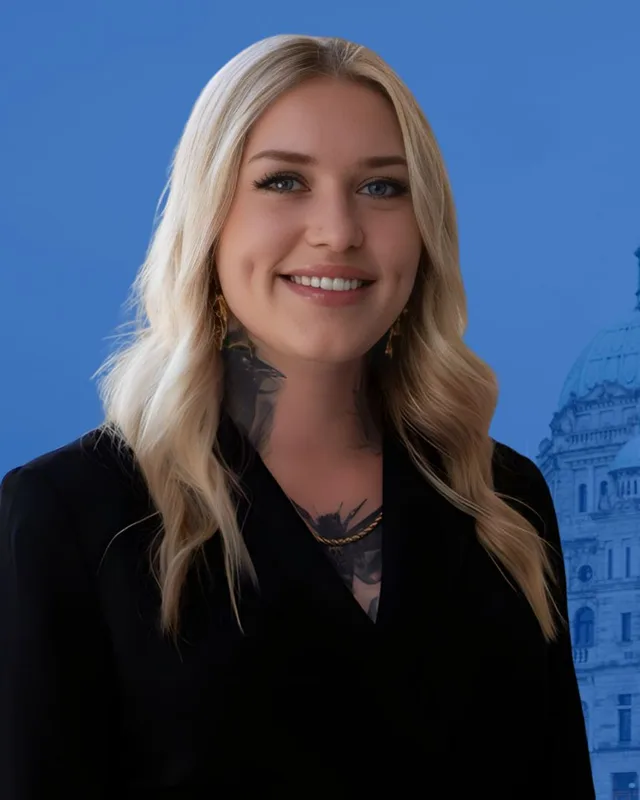MLA · Skeena**Conservative Party of BC**Claire Rattée
Researched by voche.meExplore the profile ](https://voche.me/bc/provincial-2026/candidates/claire-rattee) [MLA · Skeena**OneBC**Larry Eugene Taylor
On the official list. Research to come.Explore the profile ](https://voche.me/bc/provincial-2026/candidates/larry-eugene-taylor) [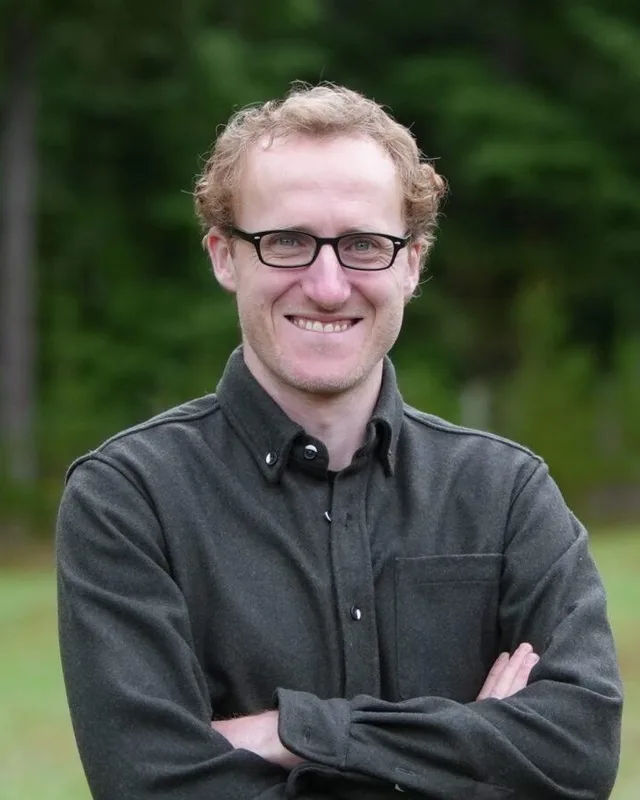MLA · Skeena**BC Green Party**Nick Gottlieb
Researched by voche.meExplore the profile ](https://voche.me/bc/provincial-2026/candidates/nick-gottlieb) [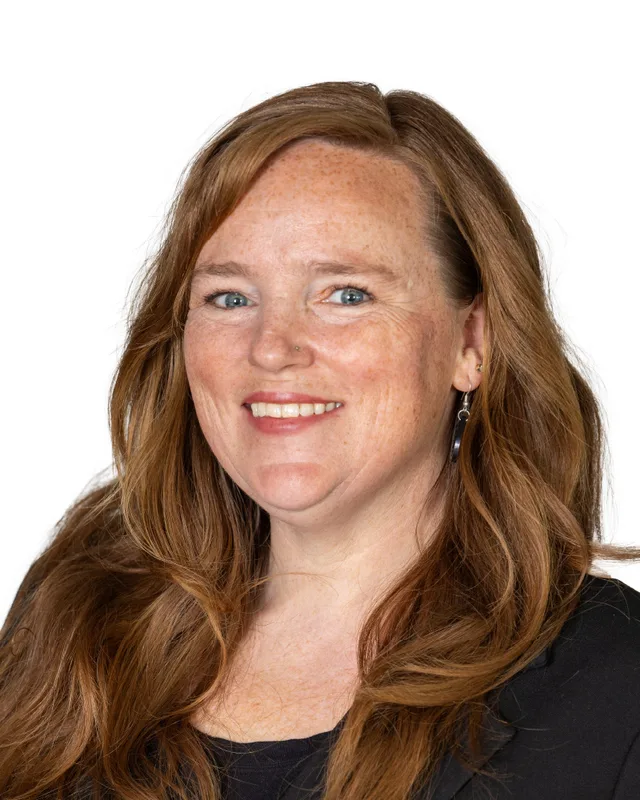MLA · Skeena**BC NDP**Sarah Zimmerman
Researched by voche.meExplore the profile ](https://voche.me/bc/provincial-2026/candidates/sarah-zimmerman)
- People, 2021 census
- 30,145
- Area
- 31,610 km²
- Registered voters, 2024
- 21,885
- Turnout, 2024
- 55.82%
- Median age
- 40.4
- Median household income, 2020
- $92,000
THE DISTRICT
## Where Skeena is
31,610 km² · 30,145 people
Skeena lies in northwest British Columbia. The Electoral Boundaries Commission's 2023 final report says the district includes Terrace, Kitimat and the Nisga'a Territories, as well as Gitwinksihlkw, Kitselas and Usk. It extends northwest to take in Portland Inlet and the Nisga'a Treaty Lands. The report sets the eastern and western boundaries at the borders of the Regional District of Kitimat-Stikine and the southern boundary at the 53rd parallel north. The commission gives the area as 31,610 square kilometres and the population count as 30,148, which is 43.9% below the average district.
The commission describes Skeena as a mountainous district with climate challenges that make communication and transportation difficult. It says the district's communities are connected by Highways 16, 37 and 113, and that all three are subject to adverse conditions for much of the year. The commission considered combining Skeena with its neighbours and decided against it, because the large size of the neighbouring districts would add to the difficulty of representing residents. It proposed no change to the boundaries of the districts in the North.
The Regional District of Kitimat-Stikine describes its Electoral Area A as the Nass Valley, with the Nisg̱a’a Nation and its four communities Gingolx, Laxgalts'ap, Gitwinksihlkw and Gitlaxt'aamiks. It describes Electoral Area C as many rural communities around Terrace and Thornhill, along the Skeena and Kalum rivers and Lakelse Lake, among them Kitsumkalum, Gitaus (Kitselas), Rosswood, Usk and Kitamaat Village. Thornhill, in Electoral Area E, is a large unincorporated community across the river from Terrace. Elections BC's 2024 results file lists 14 voting places inside the district, among them Coast Mountain College, the Terrace Sportsplex Arena, Thornhill Elem School, the Kitselas Band Admin Office, the Kitsumkalum Comm Centre, Rosswood Comm Hall, Gingolx Long House and the Gitwinksihlkw Village Admin Office.
- Terrace
- Thornhill
- Kitimat
- Kitselas
- Kitsumkalum
- Rosswood
- Gitlax̱t’aamiks (New Aiyansh)
- Gitwinksihlkw
- Lax̱g̱alts’ap
- Ging̱olx
Sources: [British Columbia Electoral Boundaries Commission (opens in a new tab)](https://elections.bc.ca/docs/rpt/BCEBC-Final-Report-April-3-2023.pdf), [Regional District of Kitimat-Stikine (opens in a new tab)](https://rdks.bc.ca/government/board/electoral_areas-_municipalities-_first_nations), [Elections BC (opens in a new tab)](https://catalogue.data.gov.bc.ca/dataset/44914a35-de9a-4830-ac48-870001ef8935)
HISTORY
## The history of the area
Checked Thursday, October 8, 2026
### Tsimshian, Nisg̱a’a and the Nass lava flow
The City of Terrace says the city and its surrounding lands lie in the traditional territories of the Tsimshian First Nation. Before European settlers arrived, it says, the Tsimshian galts’ap (villages) of Kitsumkalum and Kitselas, on the banks of the Skeena River west and east of present day Terrace, were the dominant communities. Kitselas calls its people the Gitselasu, People of the Canyon, and says they have lived in their territory for close to 5,000 years. Kitsumkalum calls itself an original tribe of the Ts’msyen and says its connection to the land, rivers and coast goes back to time immemorial.
Parks Canada designated Kitselas Canyon a national historic site in 1972. It estimates that people have settled the canyon for 5000 years, and says two permanent Tsimshian villages stood there in the 19th century. They gave the people control of trade between the coast and the interior, including trade with the Hudson's Bay Company. Parks Canada adds that Gitlaxdzok was a fortified village, which makes it unique on the north coast.
The Nisg̱a’a Lisims Government says the Nisg̱a’a people have lived in the Nass River Valley since before recorded time and names the river K’alii-Aksim-Lisims. BC Parks sets out the Nisg̱a’a account of a volcano whose lava flow covered the valley bottom, redirected the Nass River and destroyed two villages, and says 2000 Nisg̱a’a people died. BC Parks estimates that the lava spilled from the crater 250 years ago, and BC Geographical Names gives the date as c1750. The Province established the Nisga'a Memorial Lava Bed Park on 29 April 1992, and BC Parks calls it the first park in British Columbia to be jointly managed by a First Nation and BC Parks.
Sources: [City of Terrace (opens in a new tab)](https://www.terrace.ca/node/41), [Kitselas First Nation (opens in a new tab)](https://kitselas.com/about/our-land/), [Kitsumkalum First Nation (opens in a new tab)](https://kitsumkalum.com/about/), [Parks Canada (opens in a new tab)](https://pc.gc.ca/apps/dfhd/page_nhs_eng.aspx?id=61), [Nisg̱a’a Lisims Government (opens in a new tab)](https://www.nisgaanation.ca/government/history/the-land-question/), [BC Parks (opens in a new tab)](https://bcparks.ca/anhluutukwsim-laxmihl-angwingaasanskwhl-nisgaa-park-aka-nisgaa-memorial-lava-bed-park/), [BC Geographical Names Office (opens in a new tab)](https://apps.gov.bc.ca/pub/bcgnws/names/49819.html)
### The Haisla and Kitamaat Village, 1876 to 1956
The Haisla Nation writes its people’s name as x̄á’isla and says it means river mouth dwellers or downstream dwellers. The Nation says its people have lived on their unceded territory since time immemorial, and that harvesting oolichan, a fish rich in oil, has been a key part of its diet and economy and was historically a major trade item. BC Geographical Names records that Kitimat Mission was established on Kitimat Indian Reserve 2 in the 1890s, in a village that Tsimshian neighbours called Gitamaat, meaning people of the snow. The Kitamaat Post Office opened on 1 March 1900. The Province places Kitamaat Village 10 km south of Kitimat.
The Haisla Nation says the Indian Act of 1876 changed its way of life and that its people were confined to a single location, c̓imáuc̓a. It reports that on November 10, 1893 a Kitamaat Council resolution declared that anyone holding a Feast or Potlatch would be fined $140. In 1916 Chief John Bolton applied for a small piece of land in the Kitimat Valley that held ceremonial meaning for the Haisla, and the request went to the Farmers’ Institute on January 14, 1918. The Nation says the settlers there rejected it. In 1956 the book Tales of Kitamaat made Haisla oral stories available in writing beyond the community for the first time.
Sources: [Haisla Nation (opens in a new tab)](https://haisla.ca/haisla-history/), [BC Geographical Names Office (opens in a new tab)](https://apps.gov.bc.ca/pub/bcgnws/names/38016.html), [Province of British Columbia (opens in a new tab)](https://www2.gov.bc.ca/gov/content/environment/natural-resource-stewardship/consulting-with-first-nations/first-nations-negotiations/first-nations-a-z-listing/haisla-first-nation-kitimaat-village-council)
### The Nisg̱a’a land question and the treaty, 1887 to 2005
The Nisg̱a’a Lisims Government dates the land question to 1887, when Nisg̱a’a Chiefs travelled by water to Victoria and Premier William Smithe turned them away on the steps of the legislature. In 1913 the Nisg̱a’a Land Committee sent a petition to the British Privy Council in London. Chief Frank Calder was elected to the British Columbia legislature in 1949. In 1973 the Supreme Court of Canada ruled in the Calder case that the Nisg̱a’a had held Aboriginal title before settlers came, and the judges split evenly on whether it continued. The Nisg̱a’a began negotiating with Ottawa in 1976, British Columbia joined in 1990, and the Agreement in Principle was signed on March 22, 1996.
The treaty was initialled on August 4, 1998, and on November 7 the Nisg̱a’a Nation voted to ratify the Final Agreement and adopt the Nisg̱a’a Constitution. The Final Agreement came into effect on May 11, 2000, which the Nation describes as the end of a 113-year journey, and from that date the Indian Act ceased to apply to Nisg̱a’a people. The Nation lists 2,019 square kilometres of land and $196.1 million in 1999 dollars among what the treaty and related agreements provide. The Province notes that it was negotiated outside the B.C. treaty process and became the first modern day comprehensive treaty in British Columbia.
The treaty provides for the Nisg̱a’a Lisims Government, four village governments (Gitlax̱t’aamiks, Gitwinksihlkw, Lax̱g̱alts’ap and Ging̱olx) and three urban locals for citizens who live outside the Nass Valley. The Nation reports that the 28-kilometre Kincolith Extension of the Nisg̱a’a Highway, which joined Ging̱olx to the road network, was completed in December 2002. The upgrade of 90 kilometres of Highway 113 to a paved, two-lane road was complete in 2005. The Nisg̱a’a Museum opened on May 11, 2011 and holds artifacts returned to the Nation under the Final Agreement.
Sources: [Nisg̱a’a Lisims Government (opens in a new tab)](https://www.nisgaanation.ca/government/history/timeline/), [Nisg̱a’a Lisims Government (opens in a new tab)](https://www.nisgaanation.ca/government/nisgaa-treaty/understanding-the-treaty/), [Nisg̱a’a Lisims Government (opens in a new tab)](https://www.nisgaanation.ca/government/history/the-land-question/), [Province of British Columbia (opens in a new tab)](https://www2.gov.bc.ca/gov/content/environment/natural-resource-stewardship/consulting-with-first-nations/first-nations-negotiations/first-nations-a-z-listing/nisga-a-lisims-government)
### Riverboats, the railway and Terrace, 1892 to 1987
The City of Terrace says Tom Thornhill arrived in the area in 1892 and is the namesake of Thornhill, across the Skeena River. Ed Eby staked land in 1907 downstream on the Skeena River and set up a riverboat landing with a store and hotel, which became known as Eby’s Landing. George Little acquired 435 acres between 1907 and 1911, land that now makes up much of downtown Terrace, and offered the Grand Trunk Pacific Railway free land for its station. The City says the completion of the railway in 1914 replaced the riverboats with trains, and that Terrace, with its station, became the dominant community in the valley.
Little had a townsite surveyed in 1912 and proposed the name Littleton, which was apparently rejected because another Littleton already existed. BC Geographical Names records that the Terrace Post Office opened on 1 January 1912, and quotes a reference book saying that Little looked at the terraces rising above the Skeena and chose that name. Terrace became a village municipality in December 1927. The City says it was called the Cedar Pole Capital of the World for the telephone and power poles it supplied.
In 1942 the army came to Terrace as a military base, followed by the Royal Canadian Air Force in early 1943. The City gives 3000 as the number of soldiers and 3000 as the number of construction workers who arrived with the army. Wartime projects included a highway west to Prince Rupert and east to Hazelton and a community water system. The Province opened the 40-bed Mills Memorial Hospital in 1961 to replace a 10-bed Red Cross hospital. BC Geographical Names records that Terrace was re-incorporated as a district municipality on 1 January 1960 and as a city on 22 January 1987. Coast Mountain College says it was established in Terrace in 1975, and its Terrace campus stands on the unceded territory of the Kitsumkalum First Nation.
Sources: [City of Terrace (opens in a new tab)](https://www.terrace.ca/node/41), [BC Geographical Names Office (opens in a new tab)](https://apps.gov.bc.ca/pub/bcgnws/names/27511.html), [Coast Mountain College (opens in a new tab)](https://www.coastmountaincollege.ca/about-cmtn/about), [Coast Mountain College (opens in a new tab)](https://coastmountaincollege.ca/about-cmtn/campus-locations/terrace)
### Alcan builds Kitimat, 1950 to 1956
The Kitimat Museum and Archives records that on December 30, 1950 the British Columbia government and the Aluminum Company of Canada, known as Alcan, signed a power agreement. It let Alcan lease the region’s land and water for 50 years and flood up to 300 square miles for hydroelectric power. In return Alcan would provide a large payroll, a smelter and a new town in northern British Columbia, and it proposed to spend up to $500 million. Between 1951 and 1954, 6,000 construction workers built the dam, tunnel, powerhouse, transmission line, smelter and town.
The Museum says Kitimat was the first planned community in British Columbia. The plan came from the American architect and town planner Clarence S. Stein and the New York planners Mayer & Whittlesey, and it separated pedestrians from vehicles around open green spaces. Work began on the Nechako neighbourhood first, then Kildala, and the city centre was done by 1956. BC Geographical Names records that the Kitimat Post Office was re-established on 8 May 1952 and that the District of Kitimat was incorporated on 31 March 1953. The Museum adds that it was the first town without residents to be incorporated in British Columbia.
The Haisla Nation records a different effect of the project. It says Alcan’s arrival in the 1950s disrupted the x̄á’isla way of life, displaced their land, diverted rivers and put limits on traditional fishing.
Sources: [Kitimat Museum and Archives (opens in a new tab)](https://search.kitimatmuseum.ca/s/alcanprojecthistory/page/vision), [Kitimat Museum and Archives (opens in a new tab)](https://search.kitimatmuseum.ca/s/alcanprojecthistory/page/makingithappen), [Kitimat Museum and Archives (opens in a new tab)](https://search.kitimatmuseum.ca/s/alcanprojecthistory/page/town), [BC Geographical Names Office (opens in a new tab)](https://apps.gov.bc.ca/pub/bcgnws/names/36122.html), [Haisla Nation (opens in a new tab)](https://haisla.ca/haisla-history/)
### Treaty talks with Kitselas, Kitsumkalum and the Haisla, 1993 to 2026
The Province says Kitselas and Kitsumkalum have been in treaty negotiations with Canada and British Columbia since the early 1990s, and that Kitselas entered talks in 1993. They negotiated at a common table but the result is two separate treaties. Negotiators signed agreements-in-principle, which set out the main terms, with each Nation in 2015. Chief negotiators initialled the Kitselas Treaty on June 24, 2024 and the Kitsumkalum Treaty on June 25, 2024, which marked the end of the main negotiations. Eligible Kitselas voters approved their treaty and self-government constitution on April 10, 2025. At Kitsumkalum on November 1, 2025, 625 of 705 eligible voters cast ballots on the treaty and 569 voted yes.
On April 15, 2026 British Columbia introduced the Kitselas Treaty Act in the legislature as the first step in the Province’s formal approval, called ratification, and says it aims to introduce a Kitsumkalum Treaty Act in 2026. The Province says the parts of such a law that bring a treaty into effect are put in force later by regulation, and that Canada must also pass its own law. The Canadian Press reported on May 28, 2026 that Minister Spencer Chandra Herbert said the Act would not come to a vote until the fall. It reported that a coalition of the Lax Kw’alaams and Nine Allied Tribes said the treaty would affect large parts of their territories.
On April 28, 2026 the Haisla Nation asked the Province and Canada to pause ratification of the Kitselas Treaty until overlapping territorial issues are addressed. The Nation says it supports the right of all Nations, including Kitselas, to pursue treaties. The Province’s page on the Haisla, updated May 7, 2024, lists the Nation in Stage 4 of the B.C. treaty process, negotiating an Agreement-in-Principle, with a Haisla Incremental Treaty Agreement completed in September 2015.
Sources: [Province of British Columbia (opens in a new tab)](https://engage.gov.bc.ca/govtogetherbc/engagement/kitselas-and-kitsumkalum-treaty-negotiations/), [Office of the Premier, Province of British Columbia (opens in a new tab)](https://news.gov.bc.ca/releases/2026PREM0019-000416), [The Canadian Press (opens in a new tab)](https://nationalnewswatch.com/2026/05/28/a-first-nation-treaty-decades-in-making-faces-further-delays-says-b-c-minister), [Haisla Nation (opens in a new tab)](https://haisla.ca/haisla-nation-has-released-a-statement-regarding-the-kitselas-treaty-and-the-crowns-treaty-implementation-process/), [Province of British Columbia (opens in a new tab)](https://www2.gov.bc.ca/gov/content/environment/natural-resource-stewardship/consulting-with-first-nations/first-nations-negotiations/first-nations-a-z-listing/haisla-first-nation-kitimaat-village-council)
### LNG at Kitimat, 2018 to 2025
LNG Canada says it made its final investment decision in October 2018. On June 30, 2025 it reported that it had loaded a first cargo of liquefied natural gas at its export facility in Kitimat. LNG Canada says the facility stands in the traditional territory of the Haisla Nation, and that it will first export from two processing units with a combined capacity of 14 million tonnes per year. It lists a contract worth CAD$500 million with HaiSea Marine, a joint venture of the Haisla Nation and Seaspan, for harbour and escort tugboat services.
Cedar LNG, a partnership of Pembina Pipeline Corporation and the Haisla Nation, describes itself as the world’s first Indigenous majority-owned LNG project and its facility as a proposed floating plant in Kitimat. It says it received an Environmental Assessment Certificate from British Columbia and a Decision Statement from the federal government in March 2023.
Sources: [LNG Canada, distributed by Newswire (opens in a new tab)](https://www.newswire.ca/news-releases/first-cargo-puts-canada-on-the-map-of-lng-exporting-nations-827062948.html), [Cedar LNG (opens in a new tab)](https://www.cedarlng.com/)
THE SEAT
## Who has held the seat
Legislative Assembly records, 35th Parliament onward
Elections BC's volume for 1871 to 1986 first prints a district named Skeena at the 10th general election, held in 1903. Charles William Digby Clifford of the Conservative Party won it with 197 votes (55.97%), ahead of Peter Herman of the Liberal Party with 155 (44.03%). The same volume prints Skeena at later elections. Frank Howard of the New Democratic Party won in 1979 with 7,561 votes (50.29%) and in 1983 with 9,682 (51.12%). In 1986 David Fletcher Hewlett Parker of Social Credit won with 8,259 votes (48.61%), ahead of Howard with 7,101 (41.79%).
Elections BC's volume for 1987 to 2001 prints Skeena at the 35th general election, held on 17 October 1991. Helmut Giesbrecht of the New Democratic Party won with 5,597 votes (46.67%), ahead of Dave Parker of Social Credit with 4,766 (39.74%). Giesbrecht won again in 1996 with 5,353 votes (40.34%), ahead of Rick Wozney of the Liberal Party with 4,718 (35.56%). Roger Harris of the Liberal Party won in 2001 with 8,653 votes (65.15%), and Giesbrecht received 2,644 (19.91%).
Robin Austin of the BC NDP won Skeena in 2005 with 6,166 votes (48.12%), ahead of Harris with 5,807 (45.32%). Austin won again in 2009 with 5,865 votes (50.77%) and in 2013 with 5,609 (47.71%). Ellis Ross won for the BC Liberal Party in 2017 with 6,772 votes (52.23%) and again in 2020 with 5,810 (52.06%). The Haisla Nation's history page names Ellis Ross among its previous leaders.
The commission's 2023 final report proposed no change to the boundaries of the districts in the North, and Skeena kept its name. All 45 of the district's voting areas in the 2017 to 2024 districts were in Skeena. In 2024 Claire Rattée of the Conservative Party won with 6,243 votes (51.2%). Sarah Zimmerman of the BC NDP received 5,419 (44.44%), Teri Young of the BC Green Party 406 (3.33%) and Irwin Jeffrey of the Christian Heritage Party of B.C. 126 (1.03%). Turnout was 55.82% of 21,885 registered voters.
Sources: [Elections BC (opens in a new tab)](https://elections.bc.ca/docs/rpt/1871-1986_ElectoralHistoryofBC.pdf), [Elections BC (opens in a new tab)](https://elections.bc.ca/docs/rpt/1987-2001-ElectionHistory.pdf), [Elections BC (opens in a new tab)](https://elections.bc.ca/docs/rpt/2002-2013-ElectionHistory.pdf), [Elections BC (opens in a new tab)](https://catalogue.data.gov.bc.ca/dataset/44914a35-de9a-4830-ac48-870001ef8935), [British Columbia Electoral Boundaries Commission (opens in a new tab)](https://elections.bc.ca/docs/rpt/BCEBC-Final-Report-April-3-2023.pdf), [Haisla Nation (opens in a new tab)](https://haisla.ca/haisla-history/)
Members for Skeena
| Parliament | It sat | Member | Elected as | Party on the legislature’s record |
| --- | --- | --- | --- | --- |
| 43rd | 2025 to 2026 | Claire Rattée | Conservative Party | Conservative Party of BC |
| 42nd | 2020 to 2024 | Ellis Ross | BC Liberal Party | BC United |
| 41st | 2017 to 2020 | Ellis Ross | BC Liberal Party | BC Liberal Party |
| 40th | 2013 to 2017 | Robin Austin | BC NDP | BC NDP |
| 39th | 2009 to 2013 | Robin Austin | BC NDP | BC NDP |
| 38th | 2005 to 2009 | Robin Austin | BC NDP | BC NDP |
| 37th | 2001 to 2005 | Roger Harris | | BC Liberal Party |
| 36th | 1996 to 2001 | Helmut Giesbrecht | | BC NDP |
| 35th | 1992 to 1996 | Helmut Giesbrecht | | BC NDP |
“Elected as” is the affiliation Elections BC printed with the winning result. The last column is the party the legislature’s records give for that parliament, which differs when a member changed party while in office. A row with that column empty is a winner Elections BC prints whom the legislature’s records leave out. Source: [Legislative Assembly of British Columbia (opens in a new tab)](https://www.leg.bc.ca/members)
### Boundaries since 2024
Skeena has 45 voting areas. 45 of them overlap the district of the same name used from 2017 to 2024.
The commission that drew the boundaries counted 30,148 people in the district, 43.9% below the average for a district, over 31,610 km².
Sources: [British Columbia Electoral Boundaries Commission, Final report, April 3, 2023 (opens in a new tab)](https://elections.bc.ca/docs/rpt/BCEBC-Final-Report-April-3-2023.pdf), [Elections BC, Voting area conversion table, 2017 to 2024 (opens in a new tab)](https://catalogue.data.gov.bc.ca/dataset/fb26db04-780c-4229-a147-da4fd5311d36)
PAST RESULTS
## Every result since 2005
From Elections BC
**2024 Provincial General Election**Claire Rattée, Conservative Party, 51.20%
| Candidate | Affiliation | Votes | Share |
| --- | --- | --- | --- |
| Claire RattéeElected | Conservative Party | 6,243 | 51.20% |
| Sarah Zimmerman | BC NDP | 5,419 | 44.44% |
| Teri Young | BC Green Party | 406 | 3.33% |
| Irwin Jeffrey | Christian Heritage Party of B.C. | 126 | 1.03% |
12,194 valid votes · 23 rejected ballots · 21,885 registered voters · 55.82% voted
**2020 General Election**Ellis Ross, BC Liberal Party, 52.06%
| Candidate | Affiliation | Votes | Share |
| --- | --- | --- | --- |
| Ellis RossElected | BC Liberal Party | 5,810 | 52.06% |
| Nicole Halbauer | BC NDP | 4,961 | 44.45% |
| Martin Holzbauer | Independent | 389 | 3.49% |
11,160 valid votes · 59 rejected ballots
**2017 General Election**Ellis Ross, BC Liberal Party, 52.23%
| Candidate | Affiliation | Votes | Share |
| --- | --- | --- | --- |
| Ellis RossElected | BC Liberal Party | 6,772 | 52.23% |
| Bruce Alan Bidgood | BC NDP | 5,613 | 43.29% |
| Merv Ritchie | Land Air Water-The L.A.W. | 580 | 4.47% |
12,965 valid votes · 75 rejected ballots
**2013 General Election**Robin Austin, BC NDP, 47.71%
| Candidate | Affiliation | Votes | Share |
| --- | --- | --- | --- |
| Robin AustinElected | BC NDP | 5,609 | 47.71% |
| Carol Joan Leclerc | BC Liberal Party | 5,087 | 43.27% |
| Mike Brousseau | Conservative | 797 | 6.78% |
| Trevor Hendry | British Columbia Party | 263 | 2.24% |
11,756 valid votes · 65 rejected ballots
**2009 General Election**Robin Austin, BC NDP, 50.77%
| Candidate | Affiliation | Votes | Share |
| --- | --- | --- | --- |
| Robin AustinElected | BC NDP | 5,865 | 50.77% |
| Donny van Dyk | BC Liberal Party | 4,328 | 37.46% |
| Mike Brousseau | Conservative | 893 | 7.73% |
| Anita Norman | BC Green Party | 467 | 4.04% |
11,553 valid votes · 64 rejected ballots
**2005 General Election**Robin Austin, BC NDP, 48.12%
| Candidate | Affiliation | Votes | Share |
| --- | --- | --- | --- |
| Robin AustinElected | BC NDP | 6,166 | 48.12% |
| Roger Harris | BC Liberal Party | 5,807 | 45.32% |
| Patrick Hayes | BC Green Party | 616 | 4.81% |
| Daniel Stelmacker | BC Unity Party | 224 | 1.75% |
12,813 valid votes · 89 rejected ballots
The boundaries changed before the 2009, 2017 and 2024 elections, so a result under the same name can cover a different area. Sources: [Elections BC, Provincial Voting Results (opens in a new tab)](https://catalogue.data.gov.bc.ca/dataset/44914a35-de9a-4830-ac48-870001ef8935), [Statement of Votes, 2024 Provincial General Election (opens in a new tab)](https://elections.bc.ca/docs/rpt/statement-of-votes-2024-provincial-election.pdf)
PEOPLE · 2021 CENSUS
## Who lives in Skeena
30,145 residents · British Columbia beside each figure
### Age
- Median age
- 40.4BC 42.8
- Under 1517.7%BC 14.3%
- 15 to 6465.5%BC 65.3%
- 65 and over16.7%BC 20.3%
- 85 and over1.3%BC 2.4%
### Households
- Households
- 12,365
- People per household
- 2.4BC 2.4
#### Who lives together
- Couples with children23.0%BC 22.7%
- Couples without children27.3%BC 26.4%
- One-parent families8.9%BC 7.6%
- Multigenerational households3.0%BC 3.7%
- People living alone28.5%BC 29.4%
#### Household size
- 1 person28.5%BC 29.4%
- 2 persons36.0%BC 35.3%
- 3 persons14.8%BC 14.5%
- 4 persons12.4%BC 12.6%
- 5 or more persons8.2%BC 8.2%
### Homes
- Median home value
- $400,000BC $785,000
- Median monthly rent and utilities
- $1,020BC $1,370
- Median monthly cost for owners
- $1,090BC $1,320
#### Own or rent
- Own their home72.6%BC 66.8%
- Rent their home23.6%BC 32.8%
- Home provided by a local government or First Nation3.8%BC 0.5%
#### Type of home
- Single-detached house67.3%BC 42.4%
- Semi-detached house6.3%BC 3.1%
- Row house7.0%BC 8.3%
- Apartment or flat in a duplex3.6%BC 12.2%
- Apartment in a building that has fewer than five storeys8.5%BC 20.4%
- Other single-attached house0.4%BC 0.2%
- Movable dwelling6.8%BC 2.5%
#### When the home was built
- 1960 or earlier18.6%BC 12.5%
- 1961 to 198041.5%BC 27.0%
- 1981 to 199013.7%BC 14.2%
- 1991 to 200013.7%BC 16.5%
- 2001 to 20052.0%BC 6.0%
- 2006 to 20102.9%BC 8.0%
- 2011 to 20153.2%BC 6.6%
- 2016 to 20214.6%BC 9.1%
### Housing costs
- Renters paying 30% or more of income on housing25.2%BC 37.8%
- Owners paying 30% or more of income on housing9.5%BC 19.3%
- Renters in core housing need17.4%BC 24.7%
- Owners in core housing need5.3%BC 8.0%
- Renters in subsidized housing15.7%BC 11.0%
- Owners with a mortgage59.4%BC 57.5%
### Income
Income is for the year 2020.
- Median household income
- $92,000BC $85,000
- After tax
- $81,000BC $76,000
- Median income per person
- $45,200BC $40,800
#### Living on a low income (after-tax measure)
- All ages9.5%BC 10.8%
- Under 1810.6%BC 11.3%
- 18 to 647.8%BC 9.7%
- 65 and over14.3%BC 13.8%
### Languages
#### First language learned
- English83.8%BC 67.1%
- Portuguese2.2%BC 0.5%
- French2.0%BC 1.2%
- Punjabi (Panjabi)1.4%BC 4.9%
- German1.2%BC 1.0%
- Nisga'a0.9%BC 0.0%
- Tagalog (Pilipino, Filipino)0.6%BC 1.7%
- Dutch0.3%BC 0.4%
- Spanish0.3%BC 1.2%
- Italian0.3%BC 0.4%
#### Spoken most often at home
- English93.9%BC 78.5%
- Punjabi (Panjabi)0.8%BC 3.8%
- French0.8%BC 0.3%
- Portuguese0.4%BC 0.3%
- Korean0.2%BC 0.9%
- Tagalog (Pilipino, Filipino)0.2%BC 0.9%
- German0.2%BC 0.1%
- Nisga'a0.2%BC 0.0%
#### English and French
- English only93.6%BC 90.1%
- French only0.1%BC 0.0%
- English and French5.9%BC 6.6%
- Neither English nor French0.4%BC 3.3%
### Immigration
- Born outside Canada (immigrants)
- 10.1%BC 29.0%
- Non-permanent residents
- 1.7%BC 3.5%
#### Where immigrants were born
- Portugal15.5%BC 0.5%
- United Kingdom13.2%BC 8.2%
- Philippines8.9%BC 9.2%
- India8.6%BC 13.8%
- Germany8.1%BC 2.2%
- United States of America7.7%BC 4.2%
- Netherlands3.3%BC 1.1%
- Italy2.5%BC 0.9%
- South Africa, Republic of2.5%BC 1.1%
- Oceania and other places of birth2.3%BC 2.3%
#### When immigrants arrived
- Arrived before 198053.8%BC 19.7%
- 1980 to 199010.4%BC 11.5%
- 1991 to 20008.9%BC 21.0%
- 2001 to 20109.2%BC 22.2%
- 2011 to 202117.6%BC 25.6%
#### Generations in Canada
- First generation12.5%BC 33.7%
- Second generation15.0%BC 21.7%
- Third generation or more72.5%BC 44.5%
### Identity and origins
- Indigenous identity
- 27.8%BC 5.9%
- Visible minority
- 7.1%BC 34.4%
#### Visible minority groups
- South Asian2.9%BC 9.6%
- Filipino1.3%BC 3.5%
- Black0.7%BC 1.3%
- Chinese0.6%BC 11.2%
- Japanese0.4%BC 0.9%
- Korean0.3%BC 1.5%
- Latin American0.3%BC 1.3%
- Multiple visible minorities0.2%BC 1.2%
- Southeast Asian0.2%BC 1.5%
- Arab0.1%BC 0.6%
#### Ethnic or cultural origins reported most often
- English20.9%BC 20.7%
- Scottish17.1%BC 15.8%
- German14.2%BC 11.0%
- Irish14.1%BC 12.8%
- Canadian12.2%BC 9.3%
- French8.2%BC 6.4%
- First Nations (North American Indian)5.9%BC 2.1%
- Portuguese5.6%BC 0.8%
- Dutch5.1%BC 3.9%
- Norwegian4.5%BC 2.8%
### Religion
- No religion55.4%BC 52.1%
- Christian39.5%BC 34.3%
- Sikh1.4%BC 5.9%
- Other religions1.2%BC 1.0%
- Traditional Indigenous spirituality0.9%BC 0.2%
- Hindu0.6%BC 1.7%
- Muslim0.5%BC 2.6%
- Buddhist0.3%BC 1.7%
- Jewish0.2%BC 0.5%
### Education
Highest level completed, ages 25 to 64.
- No certificate, diploma or degree12.4%BC 8.0%
- High school diploma31.4%BC 25.8%
- College, trades or other certificate below a bachelor’s degree37.5%BC 31.2%
- Bachelor’s degree or higher18.7%BC 35.0%
### Work
- In the labour force
- 64.8%BC 63.3%
- Employed
- 58.9%BC 57.9%
- Unemployment rate at the census
- 9.1%BC 8.4%
#### Industries with the most workers
- Health care and social assistance14.6%BC 12.3%
- Construction11.8%BC 9.0%
- Retail trade10.9%BC 11.6%
- Manufacturing8.9%BC 5.9%
- Educational services7.9%BC 7.4%
- Public administration7.7%BC 5.5%
- Accommodation and food services5.7%BC 7.0%
- Transportation and warehousing5.2%BC 5.5%
#### Kinds of work
- Trades, transport and equipment operators and related occupations24.8%BC 18.0%
- Sales and service occupations22.7%BC 25.6%
- Occupations in education, law and social, community and government services14.0%BC 11.9%
- Business, finance and administration occupations13.4%BC 17.1%
- Health occupations7.9%BC 7.7%
- Natural and applied sciences and related occupations5.9%BC 8.0%
- Occupations in manufacturing and utilities5.3%BC 3.4%
- Natural resources, agriculture and related production occupations3.2%BC 2.8%
- Occupations in art, culture, recreation and sport2.0%BC 4.2%
- Legislative and senior management occupations0.7%BC 1.2%
### Getting to work
#### Where people worked
- Worked at home9.2%BC 22.6%
- Worked outside Canada0.1%BC 0.4%
- No fixed workplace address15.1%BC 15.3%
- Worked at a usual workplace75.7%BC 61.6%
#### How commuters travelled
- Car, truck or van89.7%BC 79.9%
- Public transit2.2%BC 9.3%
- On foot5.9%BC 6.5%
- Bicycle1.1%BC 2.0%
- Other method1.2%BC 2.3%
#### Length of the trip
- Less than 15 minutes63.3%BC 31.8%
- 15 to 29 minutes23.9%BC 34.0%
- 30 to 44 minutes4.1%BC 19.7%
- 45 to 59 minutes3.5%BC 7.3%
- 60 minutes and over5.1%BC 7.2%
### Moving
Where residents lived five years before the census.
- Lived at the same address59.5%BC 56.2%
- Moved within the same municipality16.4%BC 16.1%
- Moved from elsewhere in BC16.6%BC 17.0%
- Moved from another province5.4%BC 4.6%
- Moved from another country2.1%BC 6.1%
Counts in the census are rounded to the nearest 5, and shares are worked out from those counts. Source: [BC Stats, from Statistics Canada tabulations, 2021 Census Profile for BC Provincial Electoral Districts (2023 Redistribution) (opens in a new tab)](https://catalogue.data.gov.bc.ca/dataset/census-profiles-for-bc-provincial-electoral-districts)
QUESTIONS
## Questions about Skeena
10 answers
### Where is Skeena?
Skeena is a provincial electoral district in northwest British Columbia. The Electoral Boundaries Commission says it includes Terrace, Kitimat and the Nisg̱a’a territories, and extends northwest to Portland Inlet. Its eastern and western boundaries follow the borders of the Regional District of Kitimat-Stikine, and its southern boundary is the 53rd parallel north. The district covers 31,610 square kilometres.
### Which communities are in Skeena?
Skeena includes the city of Terrace, the District of Kitimat, the unincorporated community of Thornhill, Kitselas, Kitsumkalum, Usk, Rosswood, Kitamaat Village and the four Nisg̱a’a villages Gitlax̱t’aamiks, Gitwinksihlkw, Lax̱g̱alts’ap and Ging̱olx. The commission names Terrace, Kitimat, the Nisg̱a’a territories, Gitwinksihlkw, Kitselas and Usk. The other places come from the regional district's list and Elections BC's 2024 voting places.
### Who won Skeena in the 2024 provincial election?
Claire Rattée of the Conservative Party won Skeena in 2024 with 6,243 votes. Sarah Zimmerman of the BC NDP received 5,419 votes, Teri Young of the BC Green Party 406 and Irwin Jeffrey of the Christian Heritage Party of B.C. 126. Turnout was 55.82% of 21,885 registered voters, according to the results Elections BC published.
### Who held the Skeena seat before 2024?
Ellis Ross held the Skeena seat before 2024. He won it in 2017 with 6,772 votes and again in 2020 with 5,810 votes. Robin Austin held the seat before him, winning in 2005, 2009 and 2013. Every result in this answer comes from Elections BC. The Skeena name appears in Elections BC's volumes from the 10th general election in 1903.
### How did the boundaries of Skeena change in 2023?
The 2023 Electoral Boundaries Commission proposed no change to the boundaries of Skeena or of the other districts in the North. It listed Skeena among five northern districts with populations below the usual range, and said that combining it with a neighbour would add to the difficulty of representing residents. All 45 of the district's voting areas in the 2017 to 2024 districts were in Skeena.
### Whose territory is Skeena on?
Skeena lies in the territories of several First Nations. The Nisg̱a’a Nation holds Nisg̱a’a Lands on the Nass River under a treaty in effect since May 11, 2000. The City of Terrace places Terrace in Tsimshian territory, where Kitselas and Kitsumkalum are based. The Haisla Nation, whose village Kitamaat Village is near Kitimat, calls the Kitimat region its unceded territory.
### What is the Nisg̱a’a Final Agreement?
The Nisg̱a’a Final Agreement is a treaty between the Nisg̱a’a Nation, Canada and British Columbia, in effect in the Skeena district since May 11, 2000. The Nation lists 2,019 square kilometres of land among what it provides. The Province calls it the first modern day comprehensive treaty in British Columbia. It set up the Nisg̱a’a Lisims Government and four village governments.
### What is the status of the Kitselas and Kitsumkalum treaties?
Kitselas and Kitsumkalum, both in the Skeena district, negotiated two separate treaties together. Their members voted to ratify them on April 10, 2025 and November 1, 2025. British Columbia introduced the Kitselas Treaty Act on April 15, 2026, and the Canadian Press reported on May 28, 2026 that it would not come to a vote until the fall. The Province aims to introduce a Kitsumkalum Treaty Act in 2026.
### When did Terrace become a city?
Terrace, in the Skeena district, became a city on 22 January 1987, according to BC Geographical Names. It was incorporated as a village in December 1927 and as a district municipality on 1 January 1960. The City of Terrace says George Little founded the townsite after he offered the Grand Trunk Pacific Railway free land for its station, and that the railway was completed in 1914.
### Why was Kitimat built?
Kitimat, in the Skeena district, was built for the Aluminum Company of Canada, known as Alcan. A power agreement signed on December 30, 1950 let Alcan use the region's land and water for a hydroelectric project that would power a smelter. Alcan also planned the town, and the District of Kitimat was incorporated on 31 March 1953, as BC Geographical Names records.
SOURCES
## Where this page comes from
Figures read Thursday, October 8, 2026
1. [2021 Census Profile for BC Provincial Electoral Districts (2023 Redistribution) (opens in a new tab)](https://catalogue.data.gov.bc.ca/dataset/census-profiles-for-bc-provincial-electoral-districts)BC Stats, from Statistics Canada tabulations · read Thursday, October 8, 2026
2. [Provincial Voting Results (opens in a new tab)](https://catalogue.data.gov.bc.ca/dataset/44914a35-de9a-4830-ac48-870001ef8935)Elections BC · read Thursday, October 8, 2026
3. [Statement of Votes, 2024 Provincial General Election (opens in a new tab)](https://elections.bc.ca/docs/rpt/statement-of-votes-2024-provincial-election.pdf)Elections BC · read Thursday, October 8, 2026
4. [Voting area conversion table, 2017 to 2024 (opens in a new tab)](https://catalogue.data.gov.bc.ca/dataset/fb26db04-780c-4229-a147-da4fd5311d36)Elections BC · read Thursday, October 8, 2026
5. [Final report, April 3, 2023 (opens in a new tab)](https://elections.bc.ca/docs/rpt/BCEBC-Final-Report-April-3-2023.pdf)British Columbia Electoral Boundaries Commission · read Thursday, October 8, 2026
6. [Members of the Legislative Assembly, 35th to 43rd Parliament (opens in a new tab)](https://www.leg.bc.ca/members)Legislative Assembly of British Columbia · read Thursday, October 8, 2026
7. [Final report, April 3, 2023 (opens in a new tab)](https://elections.bc.ca/docs/rpt/BCEBC-Final-Report-April-3-2023.pdf)British Columbia Electoral Boundaries Commission · read Thursday, October 8, 2026
8. [Electoral History of British Columbia, 1871 to 1986 (opens in a new tab)](https://elections.bc.ca/docs/rpt/1871-1986_ElectoralHistoryofBC.pdf)Elections BC · read Thursday, October 8, 2026
9. [Electoral History of British Columbia, Supplement, 1987 to 2001 (opens in a new tab)](https://elections.bc.ca/docs/rpt/1987-2001-ElectionHistory.pdf)Elections BC · read Thursday, October 8, 2026
10. [Electoral History of British Columbia, Supplement, 2002 to 2013 (opens in a new tab)](https://elections.bc.ca/docs/rpt/2002-2013-ElectionHistory.pdf)Elections BC · read Thursday, October 8, 2026
11. [Provincial election results by voting area (opens in a new tab)](https://catalogue.data.gov.bc.ca/dataset/44914a35-de9a-4830-ac48-870001ef8935)Elections BC · read Thursday, October 8, 2026
12. [Electoral Areas, Municipalities, First Nations (opens in a new tab)](https://rdks.bc.ca/government/board/electoral_areas-_municipalities-_first_nations)Regional District of Kitimat-Stikine · read Thursday, October 8, 2026
13. [Nisg̱a’a timeline (opens in a new tab)](https://www.nisgaanation.ca/government/history/timeline/)Nisg̱a’a Lisims Government · read Thursday, October 8, 2026
14. [Understanding the Treaty (opens in a new tab)](https://www.nisgaanation.ca/government/nisgaa-treaty/understanding-the-treaty/)Nisg̱a’a Lisims Government · read Thursday, October 8, 2026
15. [The Land Question (opens in a new tab)](https://www.nisgaanation.ca/government/history/the-land-question/)Nisg̱a’a Lisims Government · read Thursday, October 8, 2026
16. [Nisga'a Nation (opens in a new tab)](https://www2.gov.bc.ca/gov/content/environment/natural-resource-stewardship/consulting-with-first-nations/first-nations-negotiations/first-nations-a-z-listing/nisga-a-lisims-government)Province of British Columbia · read Thursday, October 8, 2026
17. [Anhluut'ukwsim Lax̱mihl Angwinga'asanskwhl Nisg̱a'a Park (opens in a new tab)](https://bcparks.ca/anhluutukwsim-laxmihl-angwingaasanskwhl-nisgaa-park-aka-nisgaa-memorial-lava-bed-park/)BC Parks · read Thursday, October 8, 2026
18. [Anhluut'ukwsim Laxmihl Angwinga'asanskwhl Nisga'a (opens in a new tab)](https://apps.gov.bc.ca/pub/bcgnws/names/49819.html)BC Geographical Names Office · read Thursday, October 8, 2026
19. [Our Land (opens in a new tab)](https://kitselas.com/about/our-land/)Kitselas First Nation · read Thursday, October 8, 2026
20. [Kitselas Canyon National Historic Site of Canada (opens in a new tab)](https://pc.gc.ca/apps/dfhd/page_nhs_eng.aspx?id=61)Parks Canada · read Thursday, October 8, 2026
21. [About Kitsumkalum (opens in a new tab)](https://kitsumkalum.com/about/)Kitsumkalum First Nation · read Thursday, October 8, 2026
22. [Haisla History (opens in a new tab)](https://haisla.ca/haisla-history/)Haisla Nation · read Thursday, October 8, 2026
23. [Kitamaat Village (opens in a new tab)](https://apps.gov.bc.ca/pub/bcgnws/names/38016.html)BC Geographical Names Office · read Thursday, October 8, 2026
24. [Kitimat (opens in a new tab)](https://apps.gov.bc.ca/pub/bcgnws/names/36122.html)BC Geographical Names Office · read Thursday, October 8, 2026
25. [Haisla First Nation (Kitimaat Village Council) (opens in a new tab)](https://www2.gov.bc.ca/gov/content/environment/natural-resource-stewardship/consulting-with-first-nations/first-nations-negotiations/first-nations-a-z-listing/haisla-first-nation-kitimaat-village-council)Province of British Columbia · read Thursday, October 8, 2026
26. [Statement on the Kitselas Treaty, April 28, 2026 (opens in a new tab)](https://haisla.ca/haisla-nation-has-released-a-statement-regarding-the-kitselas-treaty-and-the-crowns-treaty-implementation-process/)Haisla Nation · read Thursday, October 8, 2026
27. [Terrace History (opens in a new tab)](https://www.terrace.ca/node/41)City of Terrace · read Thursday, October 8, 2026
28. [Terrace (opens in a new tab)](https://apps.gov.bc.ca/pub/bcgnws/names/27511.html)BC Geographical Names Office · read Thursday, October 8, 2026
29. [About Coast Mountain College (opens in a new tab)](https://www.coastmountaincollege.ca/about-cmtn/about)Coast Mountain College · read Thursday, October 8, 2026
30. [Terrace campus (opens in a new tab)](https://coastmountaincollege.ca/about-cmtn/campus-locations/terrace)Coast Mountain College · read Thursday, October 8, 2026
31. [Alcan Project History: The Vision (opens in a new tab)](https://search.kitimatmuseum.ca/s/alcanprojecthistory/page/vision)Kitimat Museum and Archives · read Thursday, October 8, 2026
32. [Alcan Project History: The Town (opens in a new tab)](https://search.kitimatmuseum.ca/s/alcanprojecthistory/page/town)Kitimat Museum and Archives · read Thursday, October 8, 2026
33. [Alcan Project History: Making It Happen (opens in a new tab)](https://search.kitimatmuseum.ca/s/alcanprojecthistory/page/makingithappen)Kitimat Museum and Archives · read Thursday, October 8, 2026
34. [Kitselas Treaty and Kitsumkalum Treaty Negotiations (opens in a new tab)](https://engage.gov.bc.ca/govtogetherbc/engagement/kitselas-and-kitsumkalum-treaty-negotiations/)Province of British Columbia · read Thursday, October 8, 2026
35. [Kitselas Treaty Act introduced in B.C. legislature (opens in a new tab)](https://news.gov.bc.ca/releases/2026PREM0019-000416)Office of the Premier, Province of British Columbia · read Thursday, October 8, 2026
36. [A First Nation treaty decades in making faces further delays, says B.C. minister (opens in a new tab)](https://nationalnewswatch.com/2026/05/28/a-first-nation-treaty-decades-in-making-faces-further-delays-says-b-c-minister)The Canadian Press · read Thursday, October 8, 2026
37. [First Cargo Puts Canada on the Map of LNG Exporting Nations, news release of June 30, 2025 (opens in a new tab)](https://www.newswire.ca/news-releases/first-cargo-puts-canada-on-the-map-of-lng-exporting-nations-827062948.html)LNG Canada, distributed by Newswire · read Thursday, October 8, 2026
38. [Cedar LNG (opens in a new tab)](https://www.cedarlng.com/)Cedar LNG · read Thursday, October 8, 2026
## Official information
From Elections BC
Your district
### [Check which district an address is in](https://elections.bc.ca/resources/maps/find-your-district/)
Look up your address to be sure this district is yours.
[Look it up (opens in a new tab)](https://elections.bc.ca/resources/maps/find-your-district/)
Candidates
### [The official candidate list](https://www.elections.bc.ca/docs/fin/GE-2026-10-24-Candidate-Website-Report.PDF)
The list this page is built from, published by Elections BC.
[Open the list (opens in a new tab)](https://www.elections.bc.ca/docs/fin/GE-2026-10-24-Candidate-Website-Report.PDF)
Voting
### [Where and when to vote](https://elections.bc.ca/2026-provincial-election/where-to-vote/)
Voting places and hours for general voting day and advance voting.
[Find your voting place (opens in a new tab)](https://elections.bc.ca/2026-provincial-election/where-to-vote/)
## Sitemap
See the full [sitemap](/bc/provincial-2026/sitemap.md) for all pages.