---
title: "Courtenay-Comox: candidates, history and census, BC provincial 2026 | voche.me"
canonical_url: "https://voche.me/bc/provincial-2026/races/mla/courtenay-comox"
last_updated: "2026-10-10T04:05:17.447Z"
meta:
description: "4 candidates in Courtenay-Comox for the BC provincial 2026 election. The history of the area, every result since 2017, past MLAs and the 2021 census profile."
"og:description": "4 candidates in Courtenay-Comox for the BC provincial 2026 election. The history of the area, every result since 2017, past MLAs and the 2021 census profile."
"og:title": "Courtenay-Comox: candidates, history and census, BC provincial 2026"
"twitter:description": "4 candidates in Courtenay-Comox for the BC provincial 2026 election. The history of the area, every result since 2017, past MLAs and the 2021 census profile."
"twitter:title": "Courtenay-Comox: candidates, history and census, BC provincial 2026"
---
**
MLA · BC PROVINCIAL 2026
# Courtenay-Comox.
4 candidates, one seat.
This district elects one MLA. Voters mark one name on Saturday, October 24, 2026, and the candidate with the most votes wins the seat.
Courtenay-Comox is a provincial electoral district on the east side of Vancouver Island, facing the Strait of Georgia. It takes in the City of Courtenay, the Town of Comox, and the communities of Little River, Merville and Black Creek. The 2021 census counted 60,350 people in it, and the Electoral Boundaries Commission gives its area as 1,587 square kilometres.
## The candidates
In alphabetical order
[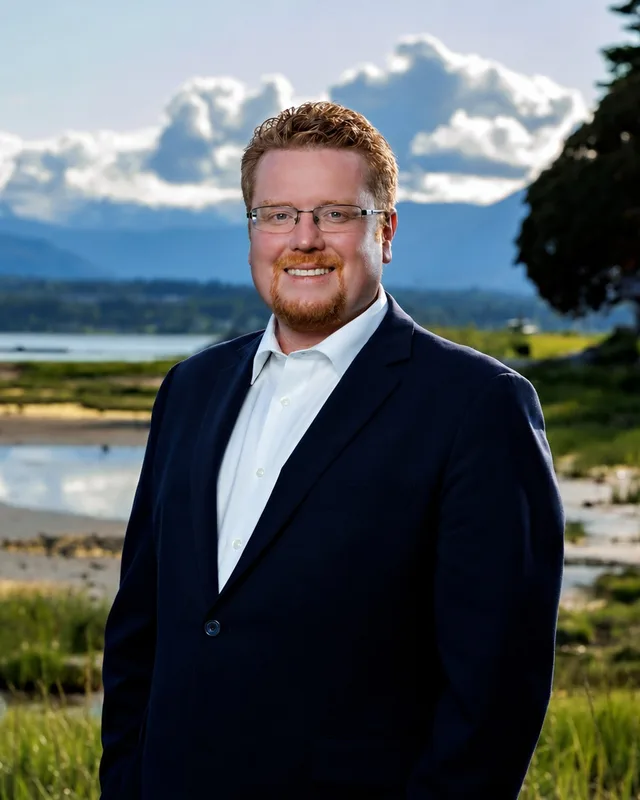MLA · Courtenay-Comox**Conservative Party of BC**Brennan Day
Researched by voche.meExplore the profile ](https://voche.me/bc/provincial-2026/candidates/brennan-day) [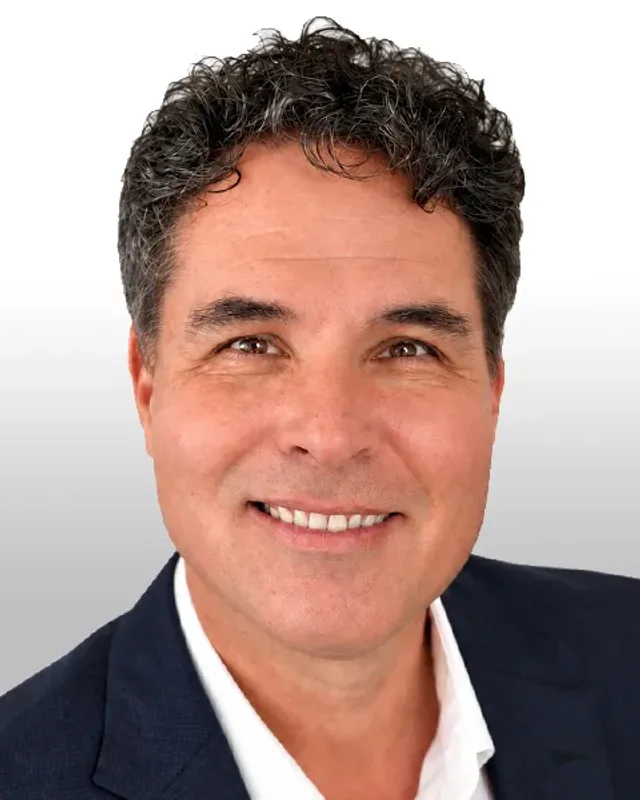MLA · Courtenay-Comox**Centre BC**Jason Cook
Researched by voche.meExplore the profile ](https://voche.me/bc/provincial-2026/candidates/jason-cook) [MLA · Courtenay-Comox**BC Green Party**Jay Van Oostdam
Researched by voche.meExplore the profile ](https://voche.me/bc/provincial-2026/candidates/jay-van-oostdam) [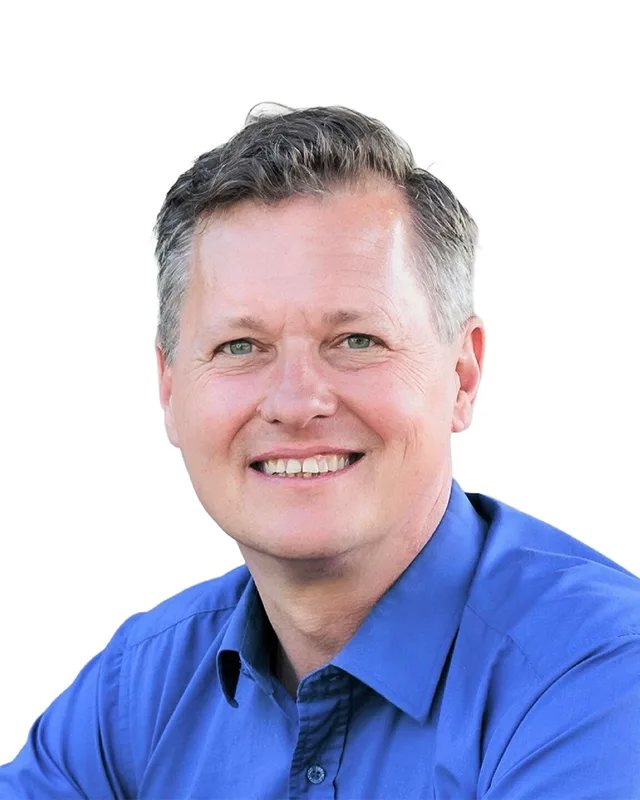MLA · Courtenay-Comox**BC NDP**Will Cole-Hamilton
Researched by voche.meExplore the profile ](https://voche.me/bc/provincial-2026/candidates/will-cole-hamilton)
- People, 2021 census
- 60,350
- Area
- 1,587 km²
- Registered voters, 2024
- 50,583
- Turnout, 2024
- 68.71%
- Median age
- 50.8
- Median household income, 2020
- $78,000
THE DISTRICT
## Where Courtenay-Comox is
1,587 km² · 60,350 people
Courtenay-Comox lies on the east side of Vancouver Island, facing the Strait of Georgia. The Electoral Boundaries Commission's 2023 final report says the district includes Courtenay, Comox, Little River, Merville and Black Creek. It states that the boundaries follow Comox Valley Regional District Electoral Area C and the northern municipal boundary of the Village of Cumberland, and it places Cumberland in the Mid Island-Pacific Rim district. The report gives the district 60,354 people and an area of 1,587 square kilometres.
BC Geographical Names records where the main communities sit. Courtenay is on eastern Vancouver Island between Comox and Campbell River. Comox is on the east side of the island, just east of Courtenay. Little River is a community north of Comox Harbour, and Black Creek lies between Courtenay and Campbell River. The Puntledge River and the Tsolum River meet and form the Courtenay River. The Comox Valley Regional District, created on 15 February 2008, surrounds Courtenay and Comox.
The commission's chapter on Vancouver Island says the island has good transportation and communications networks, and it names Courtenay among the places where growth is faster than in neighbouring districts. Parks Canada records that the railway station at Courtenay, built in 1914, stood at the most northerly point of the Esquimalt and Nanaimo Railway line. The Comox Air Force Museum states that 19 Wing is based at Canadian Forces Base Comox on Vancouver Island.
- Courtenay
- Comox
- Little River
- Merville
- Black Creek
Sources: [British Columbia Electoral Boundaries Commission (opens in a new tab)](https://elections.bc.ca/docs/rpt/BCEBC-Final-Report-April-3-2023.pdf), [BC Geographical Names Office (opens in a new tab)](https://apps.gov.bc.ca/pub/bcgnws/names/4059.html), [BC Geographical Names Office (opens in a new tab)](https://apps.gov.bc.ca/pub/bcgnws/names/38659.html), [BC Geographical Names Office (opens in a new tab)](https://apps.gov.bc.ca/pub/bcgnws/names/2511.html), [BC Geographical Names Office (opens in a new tab)](https://apps.gov.bc.ca/pub/bcgnws/names/5168.html), [BC Geographical Names Office (opens in a new tab)](https://apps.gov.bc.ca/pub/bcgnws/names/21344.html), [BC Geographical Names Office (opens in a new tab)](https://apps.gov.bc.ca/pub/bcgnws/names/59320.html), [Parks Canada (opens in a new tab)](https://www.pc.gc.ca/apps/dfhd/page_hrs_eng.aspx?id=2133), [Comox Air Force Museum (opens in a new tab)](https://comoxairforcemuseum.ca/wp-content/uploads/RCAF-2024-Exhibit.pdf)
HISTORY
## The history of the area
Checked Thursday, October 8, 2026
### K’ómoks territory
The K’ómoks First Nation describes the Comox Valley as its homeland. Its website says K’ómoks people lived at many places in the territory, among them Salmon River, the Quinsam and Campbell rivers, Quadra Island, Kye Bay, Comox Harbour and its estuary, and Baynes Sound. Its Cultures page says the Nation today consists of several formerly separate tribes. The Sathloot, Sasitla, Ieeksen and Xa’xe are culturally K’ómoks, and each has its own origin story. The Pentlatch had a similar culture but spoke a distinct language, and they also have their own origin story.
The same page says K’ómoks ancestors came to occupy territory from the Salmon River in the north to the Englishman River in the south, including Quadra, Denman and Hornby islands. The BC Treaty Commission describes the traditional territory as the central eastern part of Vancouver Island, extending into Johnstone Strait. BC Geographical Names records that Dr. Robert Brown of the Vancouver Island Exploring Expedition named the Puntledge River in 1864 after the tribe that lived on its banks, and that Commander Mayne had earlier noted the name Puntluch River.
Sources: [K’ómoks First Nation (opens in a new tab)](https://komoks.ca), [K’ómoks First Nation (opens in a new tab)](https://komoks.ca/cultures/), [BC Treaty Commission (opens in a new tab)](https://bctreaty.ca/wp-content/uploads/2026/05/BC-Komoks-Treaty-Act-Ratified-May-28-2026.pdf), [BC Geographical Names Office (opens in a new tab)](https://apps.gov.bc.ca/pub/bcgnws/names/21344.html)
### Smallpox, reserves and the Comox Indian Band, 1782 to 1876
The K’ómoks timeline records two smallpox epidemics. The first, in 1782, eradicated between 50 and 90 per cent of the Indigenous population of the Coast Salish world. The second, in 1862, killed an estimated half of K’ómoks people and perhaps up to 90 per cent of Pentlatch people, leaving a combined population of fewer than 200.
In 1862 colonists arrived by boat from Victoria, and officials allocated a single reserve to the K’ómoks and Pentlatch at the mouth of the Courtenay River, called Comox IR#1. The Nation says this opened the rest of the territory to settlement, and that the colonists took former village sites and the best farmland in the valley. In 1875 the E&N Railway Act transferred Crown land to the railway company in exchange for building the line up Vancouver Island, which the Nation says removed that land from K’ómoks hands. In 1876 a joint reserve commission merged the K’ómoks tribes with the Pentlatch to create the Comox Indian Band, now the K’ómoks First Nation. It set out reserves at Comox (IR#1), Puntledge (IR#2) and Goose Spit (IR#3), and it refused a request for a reserve on Denman Island.
Sources: [K’ómoks First Nation (opens in a new tab)](https://komoks.ca/cultures/)
### Settlers, logging and the Courtenay name, 1862 to 1893
BC Geographical Names records that European settlement at Comox began in 1862, when settlers from Victoria arrived on HMS Grappler at the request of Governor Douglas. A post office opened at Comox on 1 July 1872. The K’ómoks timeline names the Comox Logging & Railway Company as the largest logging company in the British Empire, cutting in the region from the 1880s to 1940, and it says logging was the main economic driver of the valley from 1860 to 1960. The Courtenay & District Museum places two of the company's camps, Camp 4 and Camp 5, in the area that later became Merville.
BC Geographical Names states that the city of Courtenay was named after Captain George William Conway Courtenay, later a rear admiral, who commanded HMS Constance from 1846 to 1849. The name relates to the neighbouring Courtenay River. The same record says the Courtenay townsite was established in 1891 and its post office opened on 1 July 1893.
Sources: [BC Geographical Names Office (opens in a new tab)](https://apps.gov.bc.ca/pub/bcgnws/names/38659.html), [BC Geographical Names Office (opens in a new tab)](https://apps.gov.bc.ca/pub/bcgnws/names/4059.html), [K’ómoks First Nation (opens in a new tab)](https://komoks.ca/cultures/), [Courtenay & District Museum (opens in a new tab)](https://www.courtenaymuseum.ca/?p=5066)
### The railway and the city, 1914 to 1915
The Esquimalt and Nanaimo Railway reached Courtenay in 1914. Parks Canada's heritage record for the former station says the building was finished that year and stood at the most northerly point of the E&N line. It was designed by R. A. Bainbridge, divisional engineer of the Canadian Pacific Railway. The record says the railway supported Courtenay's role as the supply and distribution centre for local farming, logging and mining. Parks Canada designated the station on 7 January 1994 under the Heritage Railway Stations Protection Act.
The Courtenay & District Museum describes a debate over making Courtenay a city. A Daily Colonist article of 1 May 1914 reported that the proposed municipal area covered 600 acres. Supporters expected that Courtenay would soon have a railway connection and become a distributing and industrial centre. Opponents said the population was too small to manage municipal affairs in hard financial times. BC Geographical Names records that Courtenay was incorporated as a city on 1 January 1915.
Sources: [Parks Canada (opens in a new tab)](https://www.pc.gc.ca/apps/dfhd/page_hrs_eng.aspx?id=2133), [Courtenay & District Museum (opens in a new tab)](https://www.courtenaymuseum.ca/?p=2872), [BC Geographical Names Office (opens in a new tab)](https://apps.gov.bc.ca/pub/bcgnws/names/4059.html)
### Merville and Black Creek, 1919 to 1950
After the First World War, Merville became a settlement for returned soldiers. The Courtenay & District Museum says the Comox Logging & Railway Company's Camp 4 stood at the corner of today's Merville Road and the west side of the Island Highway, and that the Soldier Settlement Board took it over after the war. By May 1919 the Land Settlement Board had put up bunkhouses for single men, a cook house, an office, stables and a general store along the highway. By July there were fifty shacks for settler families.
The Prince of Wales visited the Comox Valley on 26 September 1919, and the museum says the importance of Merville as a soldier settlement led to the visit. The Erskine & May sawmill began cutting north of Nurmi Road in 1920 and was destroyed by fire in 1922. BC Geographical Names records that the post office at Black Creek opened on 1 June 1936 and took its name from the adjacent creek. It records Little River as a settlement name adopted on 2 November 1950.
Sources: [Courtenay & District Museum (opens in a new tab)](https://www.courtenaymuseum.ca/?p=5066), [Courtenay & District Museum (opens in a new tab)](https://www.courtenaymuseum.ca/?p=4731), [Courtenay & District Museum (opens in a new tab)](https://www.courtenaymuseum.ca/newsletter/mailing145/news_145web.html), [BC Geographical Names Office (opens in a new tab)](https://apps.gov.bc.ca/pub/bcgnws/names/5168.html), [BC Geographical Names Office (opens in a new tab)](https://apps.gov.bc.ca/pub/bcgnws/names/2511.html)
### The air base and the town of Comox, 1942 to 1967
The Comox Air Force Museum says the airfield at Comox opened as a Royal Air Force base in 1942 and was constituted as a Royal Canadian Air Force aerodrome on 1 May 1943. Its timeline shows RCAF Station Comox reopening in 1952, with 407 Squadron activated there that year. The wing is now 19 Wing Comox, based at Canadian Forces Base Comox under the command of 1 Canadian Air Division. The museum lists 407 Squadron, whose Aurora aircraft patrol the Pacific Ocean, 442 Squadron, which carries out search and rescue, and the Canadian Forces School of Search and Rescue among the wing's units.
BC Geographical Names records that the Village of Comox was incorporated on 14 January 1946 and became a town on 1 April 1967.
Sources: [Comox Air Force Museum (opens in a new tab)](https://comoxairforcemuseum.ca/wp-content/uploads/RCAF-2024-Exhibit.pdf), [BC Geographical Names Office (opens in a new tab)](https://apps.gov.bc.ca/pub/bcgnws/names/38659.html)
### The K’ómoks Treaty, 1994 to 2026
The K’ómoks First Nation entered the BC treaty negotiations process in 1994. The Province's engagement page lists the Agreement in Principle as signed on 24 March 2012, and the Nation's Cultures page records it as approved and signed by the Nation, Canada and British Columbia in 2012. The BC Treaty Commission adds that the Province and K’ómoks signed an Incremental Treaty Agreement in 2017, and that the parties signed an agreement in 2019 to speed up negotiations. Chief negotiators initialled the treaty on 22 July 2024. K’ómoks members voted on 8 March 2025 to ratify the treaty and the Nation's constitution, and the Province's page says more than half of eligible voters took part and more than half voted yes.
The BC Legislature passed the K’ómoks Treaty Act, Bill 20, on 28 May 2026, after its introduction on 14 April 2026. The Treaty Commission says the next step is ratification by the Parliament of Canada, after which the parties will set an effective date. The Commission gives the Nation 350 members, a figure it marks as an estimate. Once the process is complete, K’ómoks will be the ninth Modern Treaty Nation in British Columbia. In March 2025 the City of Courtenay, the Comox Valley Regional District, the Town of Comox and the Village of Cumberland committed to supporting the Nation's move to self-government.
Sources: [Government of British Columbia (opens in a new tab)](https://engage.gov.bc.ca/KomoksTreaty), [K’ómoks First Nation (opens in a new tab)](https://komoks.ca/cultures/), [BC Treaty Commission (opens in a new tab)](https://bctreaty.ca/wp-content/uploads/2026/05/BC-Komoks-Treaty-Act-Ratified-May-28-2026.pdf), [City of Courtenay (opens in a new tab)](https://www.courtenay.ca/node/712)
THE SEAT
## Who has held the seat
Legislative Assembly records, 41st Parliament onward
The seat has a long record under the earlier name Comox. Elections BC's volume for 1871 to 1986 lists Comox among the districts of the 1871 election, where John Ash won with 16 votes (66.67%) against 8 (33.33%) for Robert Cameron Coleman. The same volume lists Colin Cameron of the Co-operative Commonwealth Federation as elected in 1937 and 1941, and Daniel Robert John Campbell of Social Credit in 1956, 1960, 1963, 1966 and 1969. Karen Elizabeth Sanford of the New Democratic Party won in 1972, 1975, 1979 and 1983. Stanley Brian Hagen of Social Credit won in 1986 with 15,833 votes (51.15%), against 13,562 (43.82%) for Sanford.
From 1991 the volumes print the district as Comox Valley. The 1987 to 2001 volume records the Electoral Districts Act (SBC 1990 c. 39), assented to on 27 July 1990, as the law that set out 75 single-member districts, and it describes the 1991 election as the first held without multi-member districts. Margaret Lord of the New Democratic Party won Comox Valley in 1991 with 10,355 votes (39.20%). Evelyn Gillespie of the New Democratic Party won in 1996 with 13,230 votes (42.77%). Stan Hagen of the Liberal Party won in 2001 with 15,569 votes (56.32%) and in 2005 with 14,068 votes (45.73%). Don McRae of the Liberal Party won in 2009 with 13,886 votes (47.30%) and in 2013 with 14,248 votes (44.27%).
Bill 42 of 2015, the Electoral Districts Act, gave the district its present name. The bill says it gives effect to the commission's final report of 24 September 2015, sets 87 districts, repeals the 2008 Act and lists Courtenay-Comox in Schedule 1, with no district called Comox Valley. It comes into force on the day the 40th Parliament is dissolved. Elections BC's results files list Courtenay-Comox for the 2017 and 2020 elections. Ronna-Rae Leonard of the BC NDP won in 2017 with 10,886 votes (37.36%), ahead of Jim Benninger of the BC Liberal Party with 10,697 (36.72%), and again in 2020 with 14,663 votes (50.56%). In 2024 Brennan Day of the Conservative Party won with 13,481 votes (38.83%), and Leonard received 13,388 (38.56%). The Legislative Assembly's member records list Brennan Day as Independent in the 43rd Parliament.
The commission's 2023 final report proposed 93 districts in place of 87 and kept the name Courtenay-Comox in its table of Vancouver Island districts. It lists the district at 60,354 people, 12.2 per cent above the electoral quotient of 53,773, and an area of 1,587 square kilometres. The appendix for the 87 districts then in use lists it at 60,354 people and 1,584 square kilometres. The report says the commission heard proposals to move Cumberland into Courtenay-Comox and decided not to propose them. Elections BC's conversion table lists 80 voting areas in common with the former Courtenay-Comox, 4 with Mid Island-Pacific Rim and 1 with Powell River-Sunshine Coast.
Sources: [Elections BC (opens in a new tab)](https://elections.bc.ca/docs/rpt/1871-1986_ElectoralHistoryofBC.pdf), [Elections BC (opens in a new tab)](https://elections.bc.ca/docs/rpt/1987-2001-ElectionHistory.pdf), [Elections BC (opens in a new tab)](https://elections.bc.ca/docs/rpt/2002-2013-ElectionHistory.pdf), [Elections BC (opens in a new tab)](https://catalogue.data.gov.bc.ca/dataset/44914a35-de9a-4830-ac48-870001ef8935), [Elections BC (opens in a new tab)](https://elections.bc.ca/docs/rpt/statement-of-votes-2024-provincial-election.pdf), [Legislative Assembly of British Columbia (opens in a new tab)](https://lims.leg.bc.ca/pdms/ldp/40th4th/1st_read/gov42-1.htm), [Legislative Assembly of British Columbia (opens in a new tab)](https://www.leg.bc.ca/members), [British Columbia Electoral Boundaries Commission (opens in a new tab)](https://elections.bc.ca/docs/rpt/BCEBC-Final-Report-April-3-2023.pdf)
Members for Courtenay-Comox
| Parliament | It sat | Member | Elected as | Party on the legislature’s record |
| --- | --- | --- | --- | --- |
| 43rd | 2025 to 2026 | Brennan Day | Conservative Party | Independent |
| 42nd | 2020 to 2024 | Ronna-Rae Leonard | BC NDP | BC NDP |
| 41st | 2017 to 2020 | Ronna-Rae Leonard | BC NDP | BC NDP |
“Elected as” is the affiliation Elections BC printed with the winning result. The last column is the party the legislature’s records give for that parliament, which differs when a member changed party while in office. A row with that column empty is a winner Elections BC prints whom the legislature’s records leave out. Source: [Legislative Assembly of British Columbia (opens in a new tab)](https://www.leg.bc.ca/members)
### Boundaries since 2024
Courtenay-Comox has 81 voting areas. 80 of them overlap the district of the same name used from 2017 to 2024. Others overlap these districts from 2017 to 2024: Mid Island-Pacific Rim (4), Powell River-Sunshine Coast (1).
The commission that drew the boundaries counted 60,354 people in the district, 12.2% above the average for a district, over 1,587 km².
Sources: [British Columbia Electoral Boundaries Commission, Final report, April 3, 2023 (opens in a new tab)](https://elections.bc.ca/docs/rpt/BCEBC-Final-Report-April-3-2023.pdf), [Elections BC, Voting area conversion table, 2017 to 2024 (opens in a new tab)](https://catalogue.data.gov.bc.ca/dataset/fb26db04-780c-4229-a147-da4fd5311d36)
PAST RESULTS
## Every result since 2017
From Elections BC
**2024 Provincial General Election**Brennan Day, Conservative Party, 38.83%
| Candidate | Affiliation | Votes | Share |
| --- | --- | --- | --- |
| Brennan DayElected | Conservative Party | 13,481 | 38.83% |
| Ronna-Rae Leonard | BC NDP | 13,388 | 38.56% |
| Arzeena Hamir | BC Green Party | 7,202 | 20.74% |
| John Hedican | Independent | 504 | 1.45% |
| Devin Howell | Independent | 143 | 0.41% |
34,718 valid votes · 37 rejected ballots · 50,583 registered voters · 68.71% voted
**2020 General Election**Ronna-Rae Leonard, BC NDP, 50.56%
| Candidate | Affiliation | Votes | Share |
| --- | --- | --- | --- |
| Ronna-Rae LeonardElected | BC NDP | 14,663 | 50.56% |
| Brennan Day | BC Liberal Party | 8,655 | 29.85% |
| Gillian Anderson | BC Green Party | 5,681 | 19.59% |
28,999 valid votes · 187 rejected ballots
**2017 General Election**Ronna-Rae Leonard, BC NDP, 37.36%
| Candidate | Affiliation | Votes | Share |
| --- | --- | --- | --- |
| Ronna-Rae LeonardElected | BC NDP | 10,886 | 37.36% |
| Jim Benninger | BC Liberal Party | 10,697 | 36.72% |
| Ernie Sellentin | BC Green Party | 5,351 | 18.37% |
| Leah Catherine McCulloch | Conservative | 2,201 | 7.55% |
29,135 valid votes · 77 rejected ballots
The boundaries changed before the 2009, 2017 and 2024 elections, so a result under the same name can cover a different area. Sources: [Elections BC, Provincial Voting Results (opens in a new tab)](https://catalogue.data.gov.bc.ca/dataset/44914a35-de9a-4830-ac48-870001ef8935), [Statement of Votes, 2024 Provincial General Election (opens in a new tab)](https://elections.bc.ca/docs/rpt/statement-of-votes-2024-provincial-election.pdf)
PEOPLE · 2021 CENSUS
## Who lives in Courtenay-Comox
60,350 residents · British Columbia beside each figure
### Age
- Median age
- 50.8BC 42.8
- Under 1513.6%BC 14.3%
- 15 to 6457.8%BC 65.3%
- 65 and over28.6%BC 20.3%
- 85 and over3.4%BC 2.4%
### Households
- Households
- 26,540
- People per household
- 2.2BC 2.4
#### Who lives together
- Couples with children19.0%BC 22.7%
- Couples without children33.8%BC 26.4%
- One-parent families7.3%BC 7.6%
- Multigenerational households1.9%BC 3.7%
- People living alone29.3%BC 29.4%
#### Household size
- 1 person29.3%BC 29.4%
- 2 persons42.0%BC 35.3%
- 3 persons13.0%BC 14.5%
- 4 persons10.4%BC 12.6%
- 5 or more persons5.3%BC 8.2%
### Homes
- Median home value
- $650,000BC $785,000
- Median monthly rent and utilities
- $1,200BC $1,370
- Median monthly cost for owners
- $960BC $1,320
#### Own or rent
- Own their home76.5%BC 66.8%
- Rent their home23.4%BC 32.8%
- Home provided by a local government or First Nation0.1%BC 0.5%
#### Type of home
- Single-detached house63.5%BC 42.4%
- Semi-detached house10.1%BC 3.1%
- Row house5.9%BC 8.3%
- Apartment or flat in a duplex2.4%BC 12.2%
- Apartment in a building that has fewer than five storeys13.7%BC 20.4%
- Apartment in a building that has five or more storeys0.2%BC 10.9%
- Other single-attached house0.2%BC 0.2%
- Movable dwelling4.1%BC 2.5%
#### When the home was built
- 1960 or earlier9.5%BC 12.5%
- 1961 to 198026.7%BC 27.0%
- 1981 to 199014.9%BC 14.2%
- 1991 to 200021.5%BC 16.5%
- 2001 to 20056.2%BC 6.0%
- 2006 to 20108.4%BC 8.0%
- 2011 to 20155.1%BC 6.6%
- 2016 to 20217.5%BC 9.1%
### Housing costs
- Renters paying 30% or more of income on housing39.3%BC 37.8%
- Owners paying 30% or more of income on housing14.7%BC 19.3%
- Renters in core housing need22.0%BC 24.7%
- Owners in core housing need4.5%BC 8.0%
- Renters in subsidized housing10.7%BC 11.0%
- Owners with a mortgage53.2%BC 57.5%
### Income
Income is for the year 2020.
- Median household income
- $78,000BC $85,000
- After tax
- $70,000BC $76,000
- Median income per person
- $40,000BC $40,800
#### Living on a low income (after-tax measure)
- All ages9.7%BC 10.8%
- Under 1810.4%BC 11.3%
- 18 to 648.9%BC 9.7%
- 65 and over10.8%BC 13.8%
### Languages
#### First language learned
- English89.4%BC 67.1%
- French2.3%BC 1.2%
- German1.3%BC 1.0%
- Dutch0.5%BC 0.4%
- Tagalog (Pilipino, Filipino)0.4%BC 1.7%
- Spanish0.4%BC 1.2%
- Mandarin0.3%BC 4.1%
- Vietnamese0.3%BC 0.7%
- Yue (Cantonese)0.3%BC 3.9%
- Punjabi (Panjabi)0.3%BC 4.9%
#### Spoken most often at home
- English96.1%BC 78.5%
- French0.9%BC 0.3%
- Punjabi (Panjabi)0.3%BC 3.8%
- Tagalog (Pilipino, Filipino)0.2%BC 0.9%
- Korean0.2%BC 0.9%
- Vietnamese0.2%BC 0.4%
- Yue (Cantonese)0.2%BC 2.8%
- Spanish0.1%BC 0.6%
#### English and French
- English only89.8%BC 90.1%
- English and French9.9%BC 6.6%
- Neither English nor French0.3%BC 3.3%
### Immigration
- Born outside Canada (immigrants)
- 12.6%BC 29.0%
- Non-permanent residents
- 0.9%BC 3.5%
#### Where immigrants were born
- United Kingdom32.5%BC 8.2%
- United States of America11.4%BC 4.2%
- Germany8.1%BC 2.2%
- Philippines5.6%BC 9.2%
- Netherlands3.3%BC 1.1%
- Oceania and other places of birth3.2%BC 2.3%
- Viet Nam3.2%BC 2.3%
- France2.0%BC 0.5%
- India2.0%BC 13.8%
- Korea, South1.9%BC 3.3%
#### When immigrants arrived
- Arrived before 198049.6%BC 19.7%
- 1980 to 199011.6%BC 11.5%
- 1991 to 200010.0%BC 21.0%
- 2001 to 201013.0%BC 22.2%
- 2011 to 202115.9%BC 25.6%
#### Generations in Canada
- First generation15.0%BC 33.7%
- Second generation18.8%BC 21.7%
- Third generation or more66.2%BC 44.5%
### Identity and origins
- Indigenous identity
- 7.4%BC 5.9%
- Visible minority
- 5.9%BC 34.4%
#### Visible minority groups
- Filipino1.0%BC 3.5%
- South Asian1.0%BC 9.6%
- Chinese1.0%BC 11.2%
- Black0.7%BC 1.3%
- Southeast Asian0.6%BC 1.5%
- Japanese0.4%BC 0.9%
- Korean0.3%BC 1.5%
- Latin American0.3%BC 1.3%
- Multiple visible minorities0.3%BC 1.2%
- Visible minority (other)0.2%BC 0.4%
- Arab0.1%BC 0.6%
- West Asian0.1%BC 1.4%
#### Ethnic or cultural origins reported most often
- English33.4%BC 20.7%
- Scottish26.1%BC 15.8%
- Irish19.3%BC 12.8%
- German14.3%BC 11.0%
- Canadian13.7%BC 9.3%
- French9.9%BC 6.4%
- British Isles6.5%BC 3.9%
- Ukrainian5.3%BC 4.3%
- Dutch5.2%BC 3.9%
- Norwegian3.9%BC 2.8%
### Religion
- No religion62.3%BC 52.1%
- Christian34.6%BC 34.3%
- Other religions1.4%BC 1.0%
- Buddhist0.4%BC 1.7%
- Hindu0.3%BC 1.7%
- Muslim0.3%BC 2.6%
- Sikh0.3%BC 5.9%
- Jewish0.2%BC 0.5%
- Traditional Indigenous spirituality0.2%BC 0.2%
### Education
Highest level completed, ages 25 to 64.
- No certificate, diploma or degree8.0%BC 8.0%
- High school diploma29.2%BC 25.8%
- College, trades or other certificate below a bachelor’s degree37.7%BC 31.2%
- Bachelor’s degree or higher25.1%BC 35.0%
### Work
- In the labour force
- 55.3%BC 63.3%
- Employed
- 50.8%BC 57.9%
- Unemployment rate at the census
- 8.1%BC 8.4%
#### Industries with the most workers
- Health care and social assistance14.7%BC 12.3%
- Retail trade14.4%BC 11.6%
- Construction9.9%BC 9.0%
- Public administration8.6%BC 5.5%
- Accommodation and food services7.2%BC 7.0%
- Educational services6.9%BC 7.4%
- Professional, scientific and technical services6.8%BC 9.2%
- Agriculture, forestry, fishing and hunting5.1%BC 2.3%
#### Kinds of work
- Sales and service occupations27.6%BC 25.6%
- Trades, transport and equipment operators and related occupations18.5%BC 18.0%
- Occupations in education, law and social, community and government services13.5%BC 11.9%
- Business, finance and administration occupations13.0%BC 17.1%
- Health occupations9.7%BC 7.7%
- Natural and applied sciences and related occupations6.1%BC 8.0%
- Natural resources, agriculture and related production occupations4.8%BC 2.8%
- Occupations in art, culture, recreation and sport3.8%BC 4.2%
- Occupations in manufacturing and utilities2.2%BC 3.4%
- Legislative and senior management occupations0.8%BC 1.2%
### Getting to work
#### Where people worked
- Worked at home16.8%BC 22.6%
- Worked outside Canada0.2%BC 0.4%
- No fixed workplace address17.4%BC 15.3%
- Worked at a usual workplace65.5%BC 61.6%
#### How commuters travelled
- Car, truck or van85.7%BC 79.9%
- Public transit2.1%BC 9.3%
- On foot5.6%BC 6.5%
- Bicycle3.0%BC 2.0%
- Other method3.5%BC 2.3%
#### Length of the trip
- Less than 15 minutes50.1%BC 31.8%
- 15 to 29 minutes32.1%BC 34.0%
- 30 to 44 minutes8.5%BC 19.7%
- 45 to 59 minutes3.6%BC 7.3%
- 60 minutes and over5.7%BC 7.2%
### Moving
Where residents lived five years before the census.
- Lived at the same address55.4%BC 56.2%
- Moved within the same municipality10.1%BC 16.1%
- Moved from elsewhere in BC24.8%BC 17.0%
- Moved from another province7.5%BC 4.6%
- Moved from another country2.1%BC 6.1%
Counts in the census are rounded to the nearest 5, and shares are worked out from those counts. Source: [BC Stats, from Statistics Canada tabulations, 2021 Census Profile for BC Provincial Electoral Districts (2023 Redistribution) (opens in a new tab)](https://catalogue.data.gov.bc.ca/dataset/census-profiles-for-bc-provincial-electoral-districts)
QUESTIONS
## Questions about Courtenay-Comox
10 answers
### Where is Courtenay-Comox?
Courtenay-Comox is a provincial electoral district on the east side of Vancouver Island, facing the Strait of Georgia. The Electoral Boundaries Commission's 2023 final report gives its area as 1,587 square kilometres and its population as 60,354. The district includes Courtenay, Comox, Little River, Merville and Black Creek, and its boundaries follow Comox Valley Regional District Electoral Area C.
### Which communities are in Courtenay-Comox?
According to the commission's 2023 final report, Courtenay-Comox includes Courtenay, Comox, Little River, Merville and Black Creek. Elections BC's 2024 results list 12 voting places in the district, among them the Comox Community Centre and the Black Creek Community Centre. The northern municipal boundary of the Village of Cumberland, which lies in Mid Island-Pacific Rim, forms part of the district's edge.
### Who is the MLA for Courtenay-Comox?
The Legislative Assembly's records list Brennan Day as the member for Courtenay-Comox in the 43rd Parliament, with his party shown as Independent. Day won the seat in the 2024 provincial general election as a candidate of the Conservative Party, with 13,481 votes (38.83%). Ronna-Rae Leonard of the BC NDP received 13,388 votes (38.56%).
### Who held the Courtenay-Comox seat before Brennan Day?
Ronna-Rae Leonard of the BC NDP held Courtenay-Comox for the 41st and 42nd Parliaments, from 2017 to 2024. She won in 2017 with 10,886 votes (37.36%) and in 2020 with 14,663 votes (50.56%). Before 2017 Elections BC printed the district as Comox Valley, where Don McRae of the Liberal Party won in 2009 and 2013.
### How did Courtenay-Comox vote in 2024?
In 2024 Brennan Day of the Conservative Party won Courtenay-Comox with 13,481 votes (38.83%). Ronna-Rae Leonard of the BC NDP received 13,388 (38.56%) and Arzeena Hamir of the BC Green Party 7,202 (20.74%). Independents John Hedican and Devin Howell received 504 (1.45%) and 143 (0.41%). Turnout was 68.71% of 50,583 registered voters.
### How did the boundaries of Courtenay-Comox change in 2023?
The Electoral Boundaries Commission's 2023 final report proposed 93 districts in place of 87 and kept the name Courtenay-Comox. It lists the district at 1,587 square kilometres, and its appendix for the 87 earlier districts lists 1,584. The commission heard proposals to move Cumberland into Courtenay-Comox and decided not to propose them.
### Whose territory is Courtenay-Comox on?
Courtenay-Comox lies in the traditional territory of the K’ómoks First Nation. The BC Treaty Commission describes that territory as the central eastern part of Vancouver Island, extending into Johnstone Strait. The Nation entered treaty negotiations in 1994, and the BC Legislature passed the K’ómoks Treaty Act on 28 May 2026. Ratification by the Parliament of Canada is the next step.
### Who lives in Courtenay-Comox?
The 2021 census counted 60,350 people in Courtenay-Comox. The median age was 50.8 years against 42.8 for British Columbia. Indigenous identity was reported by 7.4 per cent of residents, which is 4,375 people, and 12.6 per cent were immigrants against 29 per cent in the province. Among residents, 2415 were born in the United Kingdom.
### When did Courtenay become a city?
Courtenay, in the Courtenay-Comox district, was incorporated as a city on 1 January 1915, according to BC Geographical Names. The Esquimalt and Nanaimo Railway had reached the town in 1914, and Parks Canada dates the Courtenay station to that year. The city is named after Captain George William Conway Courtenay, who commanded HMS Constance from 1846 to 1849.
### What was Courtenay-Comox called before 2017?
Elections BC's volumes print the area as Comox for elections from 1871 to 1986 and as Comox Valley from 1991 to 2013. The name Courtenay-Comox appears in Bill 42 of 2015, and Elections BC's results files list it for the 2017 and 2020 elections. Courtenay-Comox replaced the name Comox Valley in 2017.
SOURCES
## Where this page comes from
Figures read Thursday, October 8, 2026
1. [2021 Census Profile for BC Provincial Electoral Districts (2023 Redistribution) (opens in a new tab)](https://catalogue.data.gov.bc.ca/dataset/census-profiles-for-bc-provincial-electoral-districts)BC Stats, from Statistics Canada tabulations · read Thursday, October 8, 2026
2. [Provincial Voting Results (opens in a new tab)](https://catalogue.data.gov.bc.ca/dataset/44914a35-de9a-4830-ac48-870001ef8935)Elections BC · read Thursday, October 8, 2026
3. [Statement of Votes, 2024 Provincial General Election (opens in a new tab)](https://elections.bc.ca/docs/rpt/statement-of-votes-2024-provincial-election.pdf)Elections BC · read Thursday, October 8, 2026
4. [Voting area conversion table, 2017 to 2024 (opens in a new tab)](https://catalogue.data.gov.bc.ca/dataset/fb26db04-780c-4229-a147-da4fd5311d36)Elections BC · read Thursday, October 8, 2026
5. [Final report, April 3, 2023 (opens in a new tab)](https://elections.bc.ca/docs/rpt/BCEBC-Final-Report-April-3-2023.pdf)British Columbia Electoral Boundaries Commission · read Thursday, October 8, 2026
6. [Members of the Legislative Assembly, 35th to 43rd Parliament (opens in a new tab)](https://www.leg.bc.ca/members)Legislative Assembly of British Columbia · read Thursday, October 8, 2026
7. [Final report, April 3, 2023 (opens in a new tab)](https://elections.bc.ca/docs/rpt/BCEBC-Final-Report-April-3-2023.pdf)British Columbia Electoral Boundaries Commission · read Thursday, October 8, 2026
8. [Electoral History of British Columbia, 1871 to 1986 (opens in a new tab)](https://elections.bc.ca/docs/rpt/1871-1986_ElectoralHistoryofBC.pdf)Elections BC · read Thursday, October 8, 2026
9. [Electoral History of British Columbia, Supplement, 1987 to 2001 (opens in a new tab)](https://elections.bc.ca/docs/rpt/1987-2001-ElectionHistory.pdf)Elections BC · read Thursday, October 8, 2026
10. [Electoral History of British Columbia, Supplement, 2002 to 2013 (opens in a new tab)](https://elections.bc.ca/docs/rpt/2002-2013-ElectionHistory.pdf)Elections BC · read Thursday, October 8, 2026
11. [Provincial Voting Results (opens in a new tab)](https://catalogue.data.gov.bc.ca/dataset/44914a35-de9a-4830-ac48-870001ef8935)Elections BC · read Thursday, October 8, 2026
12. [Statement of Votes, 2024 Provincial General Election (opens in a new tab)](https://elections.bc.ca/docs/rpt/statement-of-votes-2024-provincial-election.pdf)Elections BC · read Thursday, October 8, 2026
13. [Members of the Legislative Assembly, 35th to 43rd Parliament (opens in a new tab)](https://www.leg.bc.ca/members)Legislative Assembly of British Columbia · read Thursday, October 8, 2026
14. [Bill 42, 2015, Electoral Districts Act, first reading (opens in a new tab)](https://lims.leg.bc.ca/pdms/ldp/40th4th/1st_read/gov42-1.htm)Legislative Assembly of British Columbia · read Thursday, October 8, 2026
15. [K’ómoks First Nation home page (opens in a new tab)](https://komoks.ca)K’ómoks First Nation · read Thursday, October 8, 2026
16. [K’ómoks First Nation Origin Stories and timeline (opens in a new tab)](https://komoks.ca/cultures/)K’ómoks First Nation · read Thursday, October 8, 2026
17. [K’ómoks Treaty Receives Royal Assent in the BC Legislature, May 29, 2026 (opens in a new tab)](https://bctreaty.ca/wp-content/uploads/2026/05/BC-Komoks-Treaty-Act-Ratified-May-28-2026.pdf)BC Treaty Commission · read Thursday, October 8, 2026
18. [K’ómoks Treaty (opens in a new tab)](https://engage.gov.bc.ca/KomoksTreaty)Government of British Columbia · read Thursday, October 8, 2026
19. [Comox Valley local governments congratulate K'ómoks First Nation on historic treaty ratification (opens in a new tab)](https://www.courtenay.ca/node/712)City of Courtenay · read Thursday, October 8, 2026
20. [Courtenay, city (opens in a new tab)](https://apps.gov.bc.ca/pub/bcgnws/names/4059.html)BC Geographical Names Office · read Thursday, October 8, 2026
21. [Comox, town (opens in a new tab)](https://apps.gov.bc.ca/pub/bcgnws/names/38659.html)BC Geographical Names Office · read Thursday, October 8, 2026
22. [Puntledge River (opens in a new tab)](https://apps.gov.bc.ca/pub/bcgnws/names/21344.html)BC Geographical Names Office · read Thursday, October 8, 2026
23. [Black Creek, community (opens in a new tab)](https://apps.gov.bc.ca/pub/bcgnws/names/5168.html)BC Geographical Names Office · read Thursday, October 8, 2026
24. [Little River, community (opens in a new tab)](https://apps.gov.bc.ca/pub/bcgnws/names/2511.html)BC Geographical Names Office · read Thursday, October 8, 2026
25. [Comox Valley Regional District (opens in a new tab)](https://apps.gov.bc.ca/pub/bcgnws/names/59320.html)BC Geographical Names Office · read Thursday, October 8, 2026
26. [Former Canadian Pacific Railway Station (VIA Rail), Courtenay (opens in a new tab)](https://www.pc.gc.ca/apps/dfhd/page_hrs_eng.aspx?id=2133)Parks Canada · read Thursday, October 8, 2026
27. [Courtenay centennial activities and the 1914 incorporation debate (opens in a new tab)](https://www.courtenaymuseum.ca/?p=2872)Courtenay & District Museum · read Thursday, October 8, 2026
28. [Merville, 100 Years and Counting, logging camps and the Soldier Settlement Board (opens in a new tab)](https://www.courtenaymuseum.ca/?p=5066)Courtenay & District Museum · read Thursday, October 8, 2026
29. [Merville, 100 Years and Counting, the soldier settlement in 1919 and 1920 (opens in a new tab)](https://www.courtenaymuseum.ca/?p=4731)Courtenay & District Museum · read Thursday, October 8, 2026
30. [Museum newsletter 145, September 2019 (opens in a new tab)](https://www.courtenaymuseum.ca/newsletter/mailing145/news_145web.html)Courtenay & District Museum · read Thursday, October 8, 2026
31. [RCAF 1924 to 2024: Celebrating 100 years of service on the West Coast of Canada (opens in a new tab)](https://comoxairforcemuseum.ca/wp-content/uploads/RCAF-2024-Exhibit.pdf)Comox Air Force Museum · read Thursday, October 8, 2026
## Official information
From Elections BC
Your district
### [Check which district an address is in](https://elections.bc.ca/resources/maps/find-your-district/)
Look up your address to be sure this district is yours.
[Look it up (opens in a new tab)](https://elections.bc.ca/resources/maps/find-your-district/)
Candidates
### [The official candidate list](https://www.elections.bc.ca/docs/fin/GE-2026-10-24-Candidate-Website-Report.PDF)
The list this page is built from, published by Elections BC.
[Open the list (opens in a new tab)](https://www.elections.bc.ca/docs/fin/GE-2026-10-24-Candidate-Website-Report.PDF)
Voting
### [Where and when to vote](https://elections.bc.ca/2026-provincial-election/where-to-vote/)
Voting places and hours for general voting day and advance voting.
[Find your voting place (opens in a new tab)](https://elections.bc.ca/2026-provincial-election/where-to-vote/)
## Sitemap
See the full [sitemap](/bc/provincial-2026/sitemap.md) for all pages.